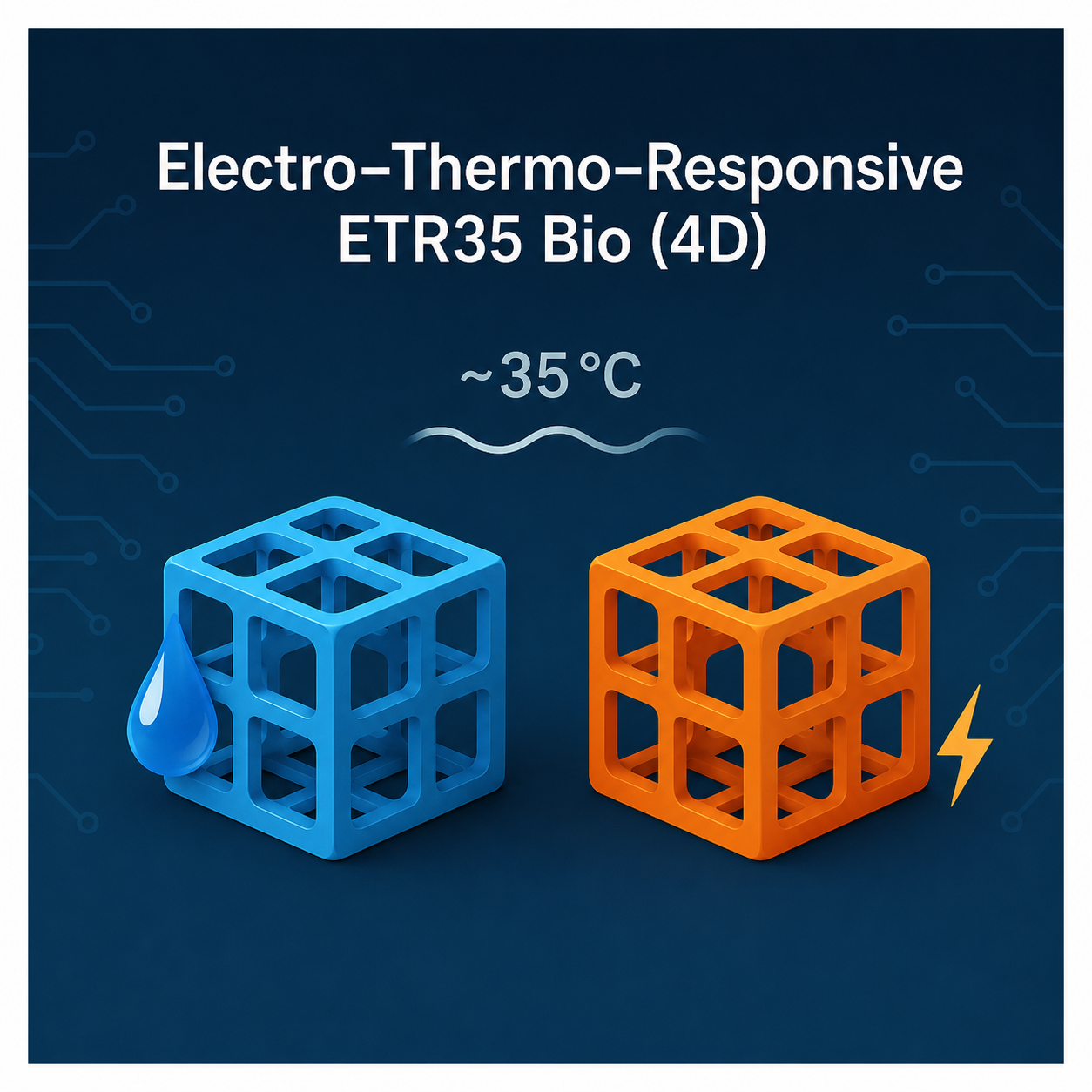
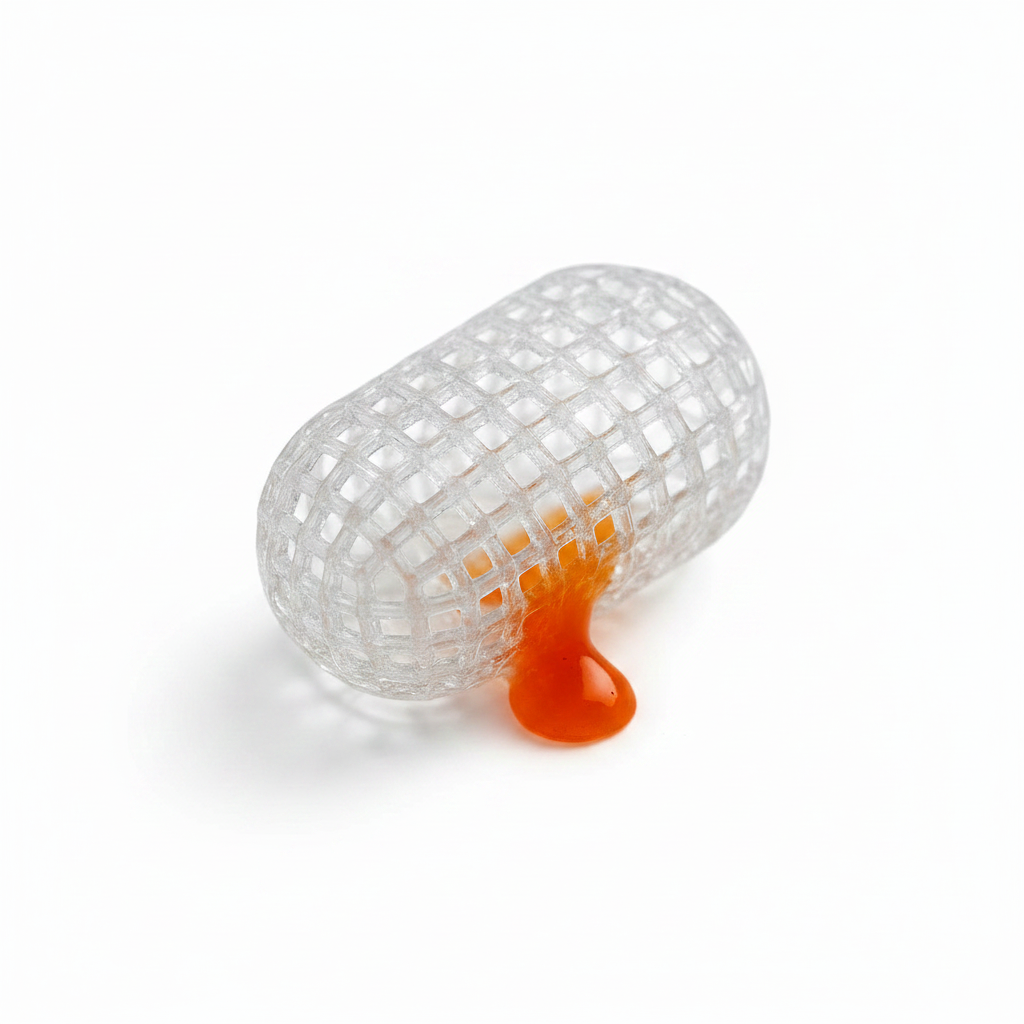
Bio-scaffold 3D resins organized for porous architectures, biomedical research workflows and tissue engineering applications in SLA, DLP and LCD/MSLA printing.
This collection supports comparison of materials designed for controlled internal geometries, high-resolution lattice structures and research-grade scaffold fabrication.
Navigate by: scaffold architecture, porosity control, biomedical research workflow or tissue engineering application.
Select the grade according to scaffold design and workflow requirements and validate the final resin choice for the intended printer, post-processing protocol and biological application.
Bio-scaffold oriented material platform
This collection is structured for advanced biomedical and research workflows requiring controlled porosity, internal architecture precision and reproducible scaffold fabrication.
It supports tissue engineering, cell culture systems and regenerative medicine research where geometry, resolution and material behavior are critical design variables.
Quick selection by application
Material navigation
Choose your scaffold application
Use the routes below to access the most relevant scaffold design and biomedical workflow.
Typical routes
Key features & benefits
Material profile
Bio-scaffold oriented photopolymers
These materials are designed for fabrication of porous and complex scaffold architectures requiring high resolution and controlled internal geometry.
Main advantages
- Bio-scaffold oriented material selection
- Printability for porous and complex architectures
- High resolution for controlled internal features
- Compatibility with research-grade biomedical workflows
- Suitable for lattice structures and scaffold geometries
- Stable processing within controlled experimental environments
Typical uses
Typical applications
These resins are relevant for biomedical research and development workflows where scaffold geometry, porosity and internal architecture are key functional parameters.
Application examples
- Tissue engineering scaffolds
- Cell culture structures
- Porous lattice constructs
- Biomedical research prototypes
- Regenerative medicine R&D geometries
Collection overview
Products in this collection
Products in this collection are shown below.
This collection includes materials positioned for scaffold fabrication, porous structures and biomedical research workflows requiring controlled geometry and reproducibility.
Selection logic
Decision guide
How to choose the right bio-scaffold resin
Select the most suitable grade according to scaffold geometry, required porosity, resolution and the biological or research workflow.
Decision guide
-
Need scaffold structures for tissue engineering → choose materials optimized for porous architectures and internal resolution
-
Need cell culture platforms → prioritize geometry control and workflow compatibility
-
Need complex lattice or porous constructs → select high-resolution printable systems
-
Need research-grade biomedical prototypes → choose materials aligned with experimental reproducibility and scaffold design requirements
Workflow principle
Scaffold performance depends on geometry and process control
Final scaffold performance depends on printing resolution, exposure strategy, post-processing, sterilization approach and the interaction with biological systems.
These materials should be interpreted as research tools where geometry, material behavior and biological context must be evaluated together.
These materials are intended for research and development workflows. Final suitability depends on scaffold design, printing parameters, post-processing, sterilization and biological validation for the intended application.
These products should be understood as materials for research-grade scaffold fabrication rather than validated medical devices. Final validation and regulatory compliance remain the responsibility of the user depending on the intended application.