Functional & Engineering Applications
3Dresyns® photopolymer systems are used for functional and engineering applications where mechanical performance, dimensional stability, thermal behavior and process reliability are critical requirements.
These applications extend beyond visual prototyping and focus on producing parts intended to perform mechanical, structural or functional roles within defined operating conditions.
Scope of functional and engineering use cases
Functional and engineering applications may include housings, fixtures, brackets, connectors, enclosures, tooling components, mechanical interfaces and other parts subjected to mechanical or thermal loads.
Such applications often require a balanced optimization of stiffness, toughness, heat resistance, accuracy and durability rather than maximization of a single property.
Process- and workflow-dependent performance
The final performance of functional and engineering parts depends on multiple interacting variables. These include resin formulation, selected version, printer technology, exposure strategy, build orientation, layer thickness, post-processing workflow and post-curing conditions.
Mechanical properties and thermal behavior are therefore outcomes of the complete manufacturing system rather than intrinsic constants of the liquid resin alone.
Material systems for engineering applications
Functional and engineering applications are supported by dedicated photopolymer systems within the 3Dresyns portfolio, designed to deliver controlled performance envelopes when processed according to qualified workflows.
Depending on application requirements, different system configurations may be selected to optimize parameters such as strength, impact resistance, heat deflection, stiffness or printing efficiency.
From prototyping to functional use
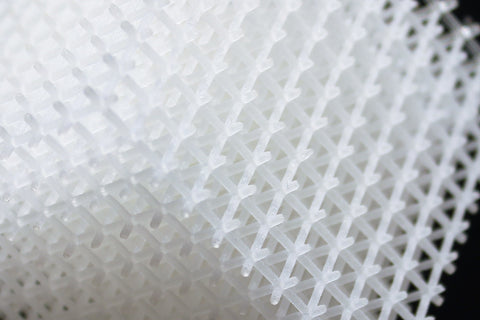
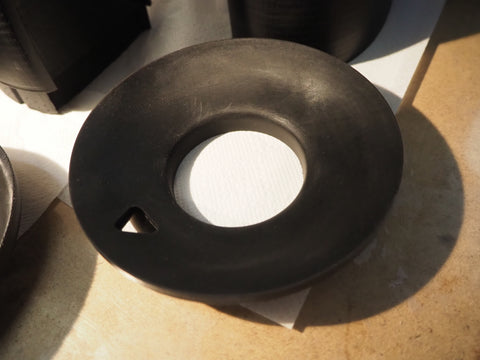
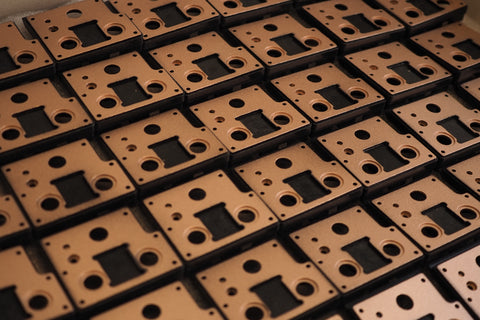
The showcased applications illustrate the transition of photopolymer additive manufacturing from prototyping to functional and engineering use cases.
By combining appropriate material systems with controlled workflows and post-processing, reliable and repeatable results can be achieved for demanding engineering applications.
Governing principle
Functional and engineering application examples represent typical outcomes obtained under specific printing and post-processing conditions. Mechanical and thermal performance are not intrinsic material constants and may vary depending on workflow variables.
This principle ensures transparent and responsible interpretation of functional and engineering applications within a system-based and process-aware additive manufacturing approach.