
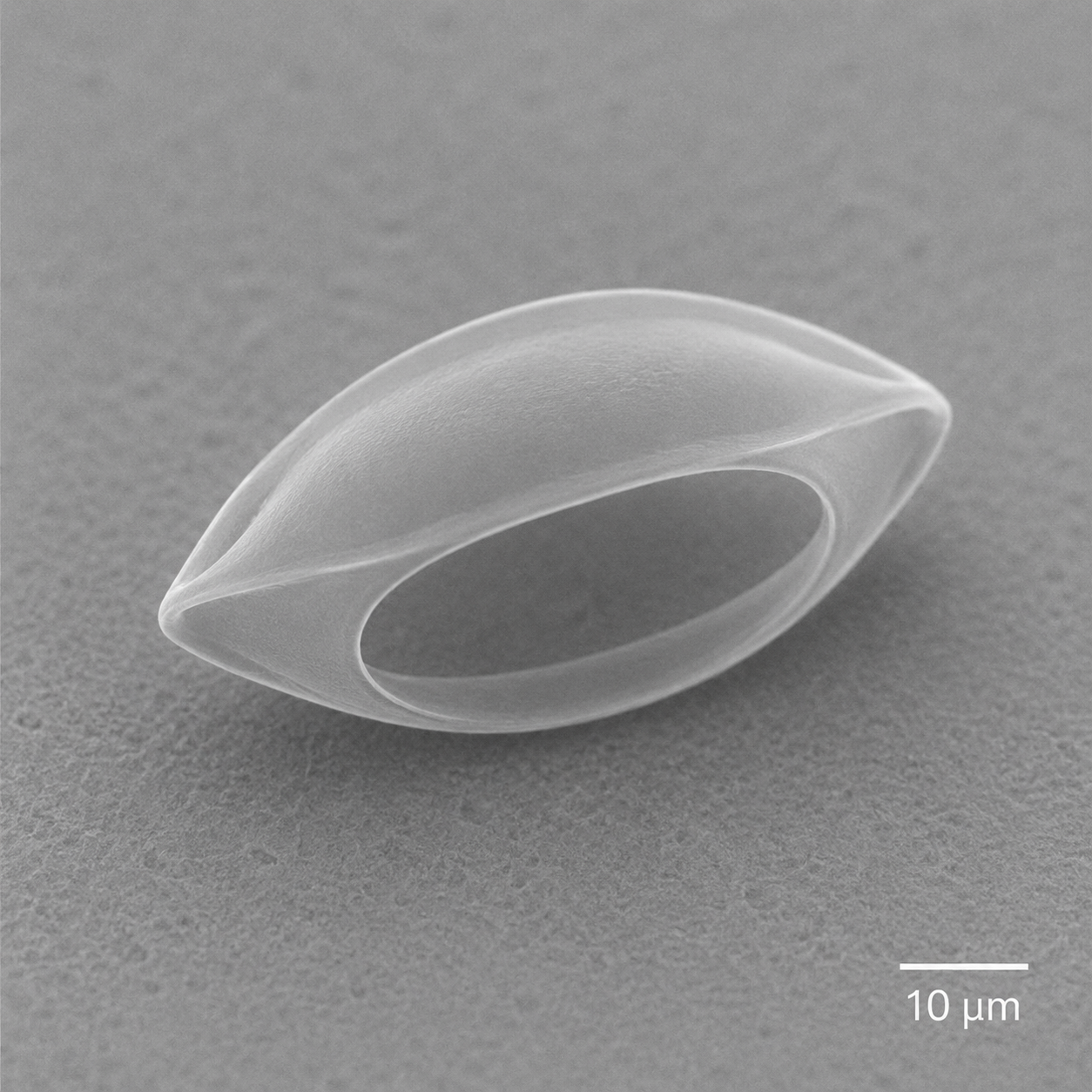
3Dresyn 2PP Bio Soya2, Biocompatible & Bio based photopolymer for two photon polymerization
Product description
3Dresyn 2PP Bio Soya2 is a biocompatible and bio based photopolymer for two photon polymerization.
It is designed as a negative photoresist for fast writing speed additive manufacturing of biocompatible and bio based 3D nano and microstructures, offering an excellent balance of resolution and writing speed.
Application framework
Designed for two photon polymerization workflows, including Dip-in two-photon lithography DTPL / Dip-in Laser Lithography DiLL and conventional Two Photon Lithography TPL configurations, for fabrication of biocompatible and bio based 3D nano and microstructures.
Typical applications
- Fast writing speed additive manufacturing of biocompatible and bio based 3D nano and microstructures
- Dip-in two-photon lithography DTPL / Dip-in Laser Lithography DiLL
- Conventional two photon polymerization systems / Two Photon Lithography TPL
Measured mechanical properties
- Tensile strength: <40 MPa (ISO 527-1 / ISO 527-2)
- Flexural strength: <40 MPa (ISO 178)
- Young’s modulus: 1500-2500 MPa (ISO 527)
- Elongation at break: <10% (ISO 527)
- Shore hardness: D70 (ISO 868)
Measured physical properties
- Water absorption: <15 µg/mm3 (ISO 20795-1)
- Water solubility: ≤ 1,6 µg/mm3 (ISO 20795-1)
- Shrinkage: <6%
- Optical transparency: 100% from 440 nm onwards into the Near Infrared NIR
- Achievable feature sizes: 100-200 nm
- Viscosity, LV version: <1000 mPas at 23°C ± 2°C (ISO 3219)
- Viscosity, HV version: >2000 mPas at 23°C ± 2°C (ISO 3219)
Functional performance characteristics
- Ideal 2PP biocompatible and bio based photocurable resin negative photoresist for fast writing speed additive manufacturing of biocompatible and bio based 3D nano & microstructures
- Excellent balance of resolution shape accuracy and writing speed
- Photoreactive from 200 to 410 nm with Fine Tuner 2PP FT8 Bio (single 1 photon absorption)
- Photoreactive from 600 to 810 nm with Fine Tuner 2PP FT8 Bio (two photon absorption)
- Rigid
- Good adhesion on glass and other substrates
- Clear
Processing and handling performance
- Designed for Dip-in two-photon lithography DTPL also referred as Dip-in Laser Lithography DiLL where the 2PP resin is immersed upside down in the microscope objective
- Designed for conventional 2PP systems also refered as Two Photon Lithography TPL where the 2PP resin is positioned upright on the substrate
- Easy handling by direct drop casting
- Printable by most commercial two photon polymerization printers with wavelengths from 600 nm to 800 nm
- Supplied at different writing speeds: fast, intermediate, slow, and non reactive for custom control of writing speed and resolution
- Tunable with the free sampled Fine Tuner 2PP FT8 Bio for custom adjustment of writing speed
- Tunable with the free sampled Fine Tuner 2PP LB3 Bio for maximum resolution with submicron feature sizes
- Supplied in a relatively low and high viscosity version
- Choose a LV low viscosity version (<1000 mPas) for easy development or cleaning of uncured resin with conventional 2PP upright configurations
- Choose a HV high viscosity version (>2000 mPas) for upside down DiLL configurations
- Easy removal of uncured resin with conventional developers such as isopropanol IPA and propylene glycol methyl ether acetate (PGMEA)
- Ideally use our biocompatible Cleaning Fluid UNW1 Bio to preserve transparency, prevent whitening and chemical attack of IPA and conventional alcohols
Chemical and safety characteristics
- Biocompatible and bio based
- Safe and biocompatible, compliant with the Quality requirements of FDA, ISO 20795, 13485 & 10993
- Synthetic
- Hydrophobic
- Organo-tin free
Testing & processing disclaimer
Final writing speed, resolution, feature size, adhesion, printability, transparency and cleaning performance depend on the selected version, printer configuration, wavelength, substrate, developer and full processing workflow. Performance must be validated by the user for each specific application.
Disclaimer
This material is supplied as a professional manufacturing material and is not marketed as a finished medical device. Final part performance and suitability must be validated by the user according to the intended application.
This technical datasheet should be used together with the relevant processing, calibration, safety and workflow documentation available in the 3Dresyns® Resources section.
Document reference: TDS-3DRESYN-2PP-BIO-SOYA2-EN | Version: 1.0 | Last updated: March 2026
Choose options