
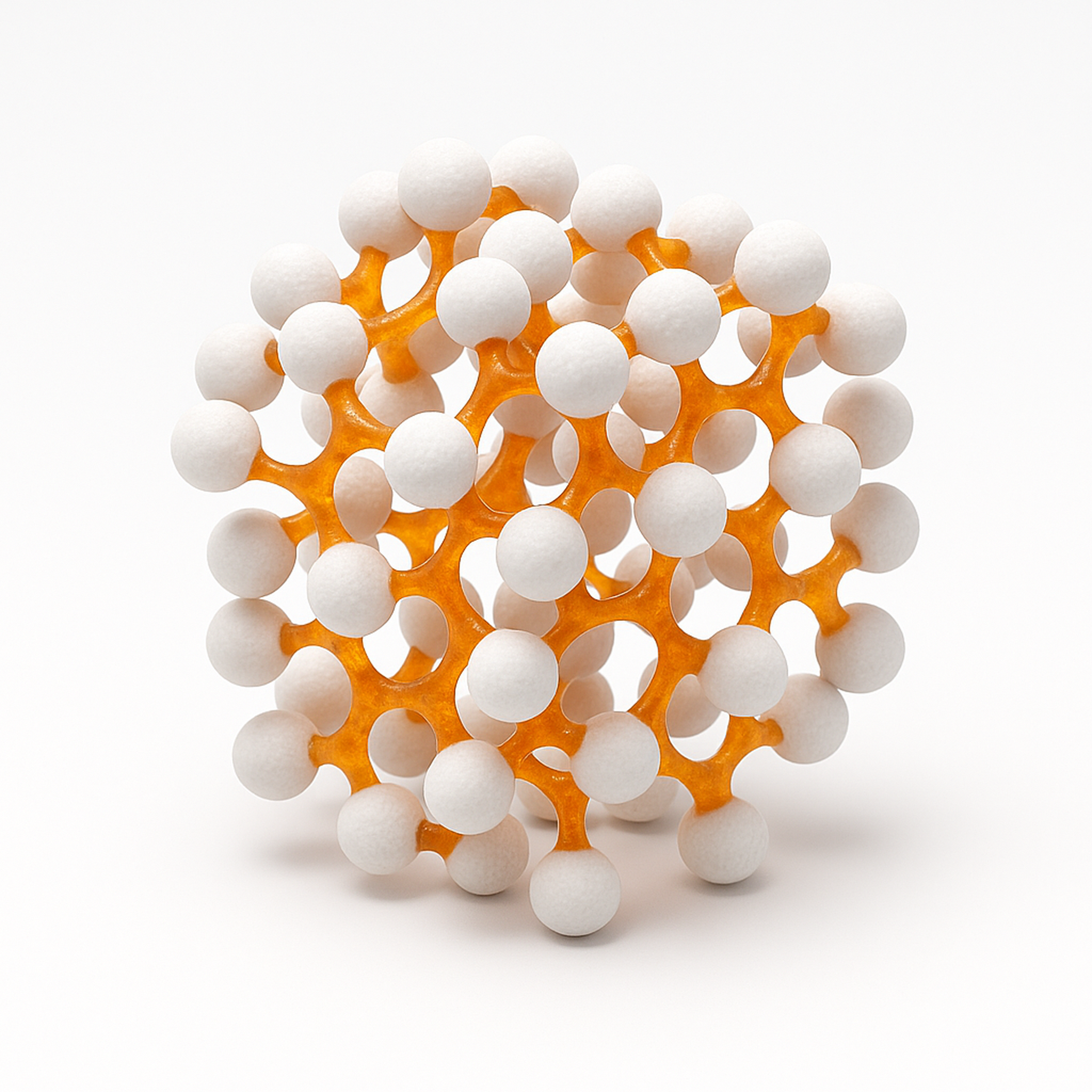
3Dresyn EB1, Eco Binder for water debinding and sintering of Ceramic, Metal & Polymer powder slurries
Product description
3Dresyn EB1 is a Universal Eco Binder for water debinding and sintering ceramics, metals, polymers, and exotic powders feedstock injection in 3D printed durable or sacrificial injection molds.
This binder is designed for dispersing, debinding and sintering ceramics, metals, polymers and exotic powders, including nanowires and microfibers, with most of the debinding carried out with water.
Application framework
Designed for feedstock and slurry preparation, hot injection and subsequent debinding and sintering of ceramics, metals, polymers and exotic powders in molding and additive manufacturing workflows using durable or sacrificial 3D printed injection molds.
Typical applications
- Feedstock injection of ceramics, metals, polymers and exotic powders in 3D printed durable injection molds
- Feedstock injection of ceramics, metals, polymers and exotic powders in 3D printed sacrificial injection molds
- Ceramic, metal, polymer and exotic material slurry jetting
- Manufacturing of green parts for subsequent debinding and sintering
Measured mechanical properties
- Tensile strength: (ISO 527-1 / ISO 527-2)
- Flexural strength: (ISO 178)
- Young’s modulus: MPa (ISO 527)
- Elongation at break: (ISO 527)
- Shore hardness: (ISO 868)
Measured physical properties
- Powder loading: up to 60% volume concentrations for powders, lower for nanoparticles, nanowires and microfibers
- Final product resolution: 20 microns
- Mixing temperature: 160ºC
- Water debinding temperature: 65ºC
- Viscosity: mPas at 23°C ± 2°C (ISO 3219)
Functional performance characteristics
- Universal Eco Binder for water debinding and sintering ceramics, metals, polymers and exotic powders
- Ideal for dispersing, debinding and sintering ceramics, metals, polymers and exotic powders without defects since most of the debinding is done with water
- Excellent dispersability and flow of post added micron and submicron ceramics, metals, polymers, such as polyimide, and exotic powders including nanowires and microfibers
- Part of the binder has good water solubility for debinding without imperfections nor cracking
- Part of the binder is not water soluble but exhibits excellent thermal debinding without imperfections nor cracking
- Controlled and reproducible process shrinkage which depends on final powder percentage and resin binder
- Minimum expansion coefficient to prevent micro-fractures
- Relative low slurry viscosity, good flow
- Eco friendly process
Processing and handling performance
- Supplied in aluminum bottles for heating and melting the binder at 150-160ºC without deforming the bottle
- Recommended feedstock or slurry mixing: mix the solid binder 3Dresyn EB1 with your chosen ceramic, metal, or polymer powder with powder volume concentrations of up to 50-60% in a powder kneader mixer or similar at 160ºC for 30 minutes
- Slurries can be poured hot in metal cartridges of 22 or 25 mm external diameter for direct injection in low cost manual injection machines
- Slurries can be injected in 3D printed molds made with our durable and sacrificial 3D resins
- After demolding green parts are obtained
- Recommended debinding and sintering process of green parts:
- First step: water debinding at 65ºC for 5 hours
- Second step: thermal debinding
- Insert flask in the preheated oven at 65ºC
- Ramp 1-2ºC/minute up to 250ºC
- Hold at 250ºC for 60 minutes
- Ramp 1-2ºC/minute up to 450ºC
- Hold at 450ºC for 30 minutes
- Ramp 2-5ºC/minute up to sintering temperature
- Hold at sintering temperature for 180 minutes
- Ramp -2ºC/minute down to 640ºC
Chemical and safety characteristics
- Organo-tin free
- Suitable for ceramics, metals, polymers and exotic powders including nanowires and microfibers
- Partially water soluble binder system
Testing & processing disclaimer
Final debinding behavior, sintering behavior, shrinkage, defect formation, powder dispersion, flow, and final part performance depend on the selected powder system, powder loading, mold design, thermal cycle and full processing workflow, and must be validated by the user.
Disclaimer
This material is supplied as a professional manufacturing material and is not marketed as a finished medical device. Final part performance and suitability must be validated by the user according to the intended application.
This technical datasheet should be used together with the relevant processing, calibration, safety and workflow documentation available in the 3Dresyns® Resources section.
Document reference: TDS-3DRESYN-EB1-EN | Version: 1.0 | Last updated: March 2026
Choose options