
3D resins for printing foams
3D resins for printing foams organized for foam-like structures, lightweight geometries and cushioning-oriented applications in SLA, DLP and LCD/MSLA workflows.
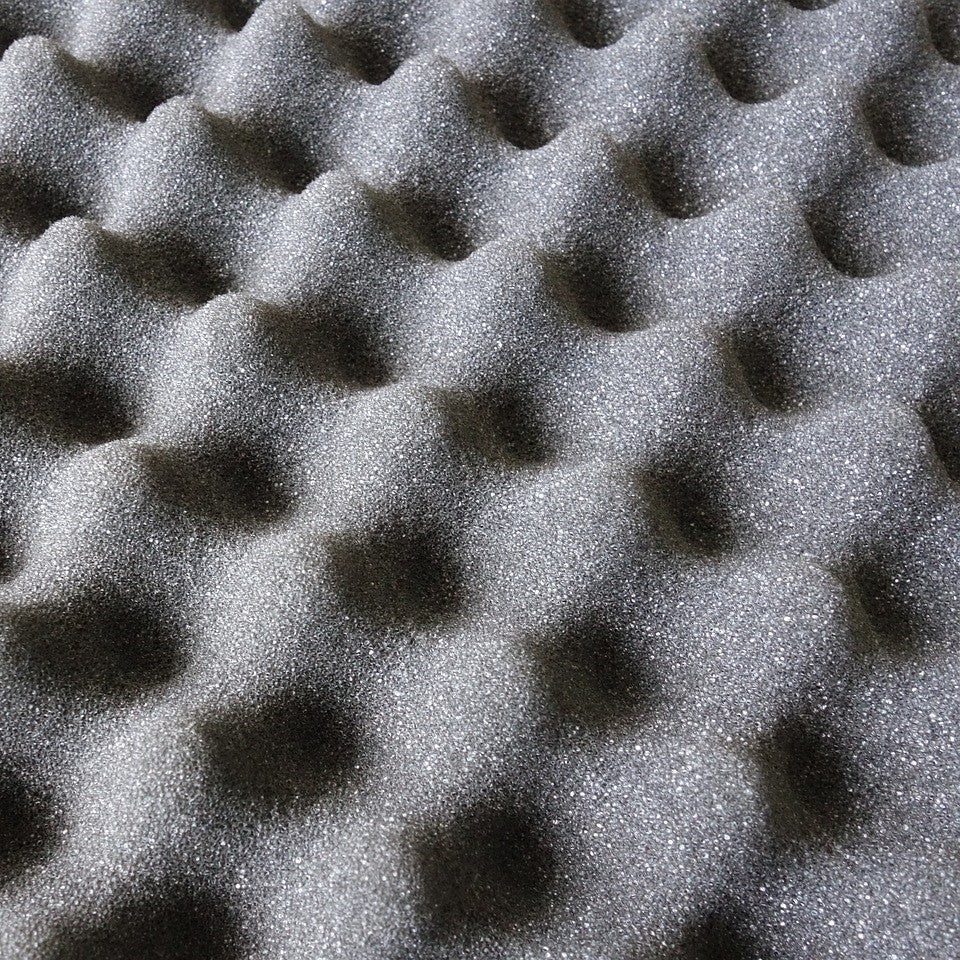
This collection supports comparison of materials and process routes for low-density, cellular or foam-like outcomes, including both heat-activated foaming strategies and directly printable elastic systems.
Navigate by: true cellular foam generation, direct elastic foam-like printing, cushioning behavior, lightweight structures or process simplicity.
This collection is structured for applications requiring cushioning, energy absorption, lightweight behavior or soft foam-like response.
It supports both true cellular foams produced through chemical blowing-agent activation and directly printable elastic structures that reproduce foam-like softness without expansion.
Quick selection by workflow priority
Choose your foam manufacturing route
Use the routes below to access the most relevant material and process strategy in this collection.
Key features & benefits
Foam-like and lightweight structure-oriented materials
These materials are designed for applications where low density, compressibility, cushioning response or cellular structure formation are required depending on the selected route.
- Foam-like and lightweight structure-oriented materials
- Designed for low-density or cellular outcomes depending on grade and route
- Functional cushioning and energy-absorption positioning
- Printable foam concepts for rapid iteration
- Support for both heat-activated foaming and direct elastic printing
- Compatible with research, prototyping and lightweight functional part development
Typical applications
These resins are relevant for workflows where lightweight structure, compressibility, impact damping or soft functional response are the key design objectives.
- Cushioning prototypes
- Lightweight cores
- Impact and energy-absorption structures
- Buoyancy and damping concepts
- Lightweight functional models
Products in this collection
Products in this collection are shown below.
This collection currently includes compatible flexible resin systems, chemical blowing-agent routes and directly printable soft materials suitable for foam and foam-like structures.
Foam manufacturing principles
3D printed foams and foam-like structures with photopolymer resins
Two technological approaches exist for producing foam or foam-like structures in vat photopolymerization (SLA, DLP and LCD) 3D printing:
- Chemically foamed materials using a blowing agent and thermal expansion (two-step manufacturing)
- Directly printable elastic materials that reproduce foam-like softness without expansion (one-step manufacturing)
The 3Dresyns portfolio supports both strategies depending on the application requirements.
Photopolymer resins do not expand by themselves
Standard photopolymer resins do not expand after printing.
Expansion only occurs when a chemical blowing agent is incorporated into the resin before printing and subsequently activated by heat.
3Dresyns provides the biocompatible blowing agent 3D-ADD CBA1 Bio, which can be added by the user to compatible flexible resin systems to produce expanded cellular structures after printing.
Heat-activated foaming (two-step manufacturing)
In this approach a chemical blowing agent is mixed into the resin before printing. After the part is printed, a thermal treatment activates gas generation inside the polymer network, creating an expanded cellular structure.
- Step 1 – Mix the blowing agent into the resin
- Step 2 – Print the part
- Step 3 – Heat the printed part to activate expansion
This approach enables the creation of expanded sponges and cellular foams.
Direct printing of foam-like elastic structures (one-step manufacturing)
In many applications it is possible to obtain foam-like softness without any expansion process by using very flexible elastic photopolymers.
In this case the softness comes from the material elasticity and the designed geometry rather than from gas expansion.
- Direct dimensional control
- No thermal expansion step
- Simplified workflow
- Immediate usability after printing
Scientific factors controlling foam expansion
Foam formation depends on thermochemical and rheological interactions
When a blowing agent such as 3D-ADD CBA1 Bio is used, foam formation results from a combination of thermochemical and rheological phenomena.
The final foam structure depends on multiple variables including:
- Blowing agent concentration
- Thermal decomposition kinetics of the blowing agent
- Polymer viscosity and crosslink density
- Bubble nucleation mechanisms
- Gas diffusion and internal pressure build-up
- Part geometry and wall thickness
- Heating rate and thermal profile
- Oven temperature uniformity and airflow
Because foam formation is controlled by these interacting parameters, the final expansion ratio and cell morphology must be validated by the user under their own processing conditions.
3Dresyns supplies compatible resin systems and blowing agents, but the final foaming behaviour is determined by the user’s formulation and thermal processing conditions.
3D-ADD CBA1 Bio chemical blowing agent
3D-ADD CBA1 Bio is a biocompatible chemical blowing agent paste designed to be mixed with compatible flexible photopolymer resins before printing.
After printing, thermal treatment activates gas generation within the polymer matrix to create expanded cellular structures.
- Expanded sponges
- Cellular foams
- Compressible structures
Directly printable foam-like resins
3Dresyns flexible materials covering Shore hardness from A10 to D70 allow the production of soft elastic structures without any expansion step.
These materials can be printed directly on SLA, DLP and LCD printers, including many low-cost LCD systems.
Choosing the right approach
| Requirement | Recommended approach |
|---|---|
| True cellular foam | Blowing agent + thermal expansion |
| Precise dimensional accuracy | Direct elastic printing |
| Simplest manufacturing workflow | Direct elastic printing |
| Maximum softness with low density | Foamed structures |
Mobile: scroll horizontally if needed. The first column remains visible while scrolling.
Explore 3Dresyns materials for foam and foam-like structures
Materials are shown below in increasing order of Shore hardness
The following materials are suitable for producing flexible structures or foamed architectures depending on the selected process.
Materials are shown below in increasing order of Shore hardness from A10 to D70.
Engineering note
These materials are intended for foam and foam-like structure development. Final suitability depends on formulation, blowing-agent loading where applicable, geometry, thermal treatment, printer settings and the required balance between density, softness and dimensional control.
Interpretation principle
These products should be understood as a structured platform for producing either true cellular foams or directly printable foam-like elastic parts. Final validation must always consider the complete manufacturing route, especially when heat-activated expansion is used.
Sort by
Filters
From prototyping to industrial production, performance depends on materials, calibration and process control.