
3Dresyns binders for Lithography-based Metal Manufacturing LMM
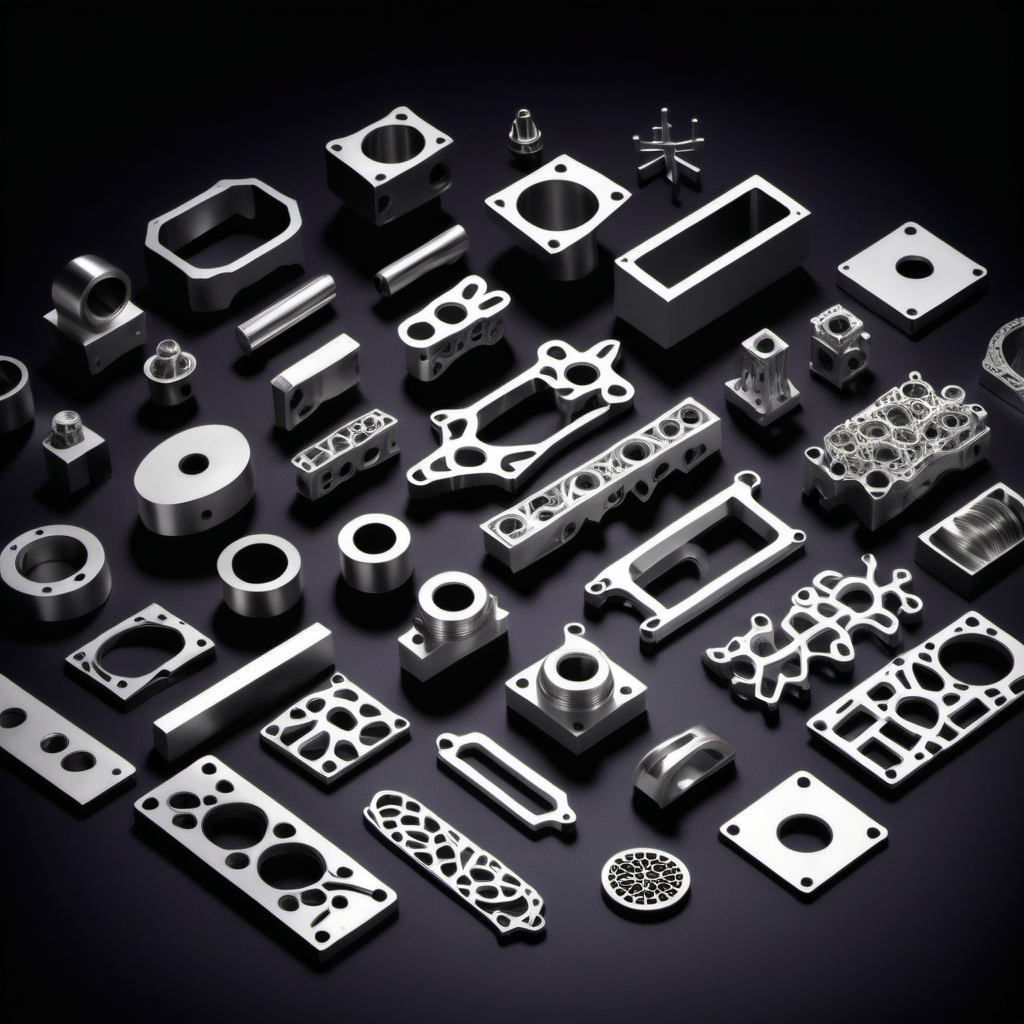
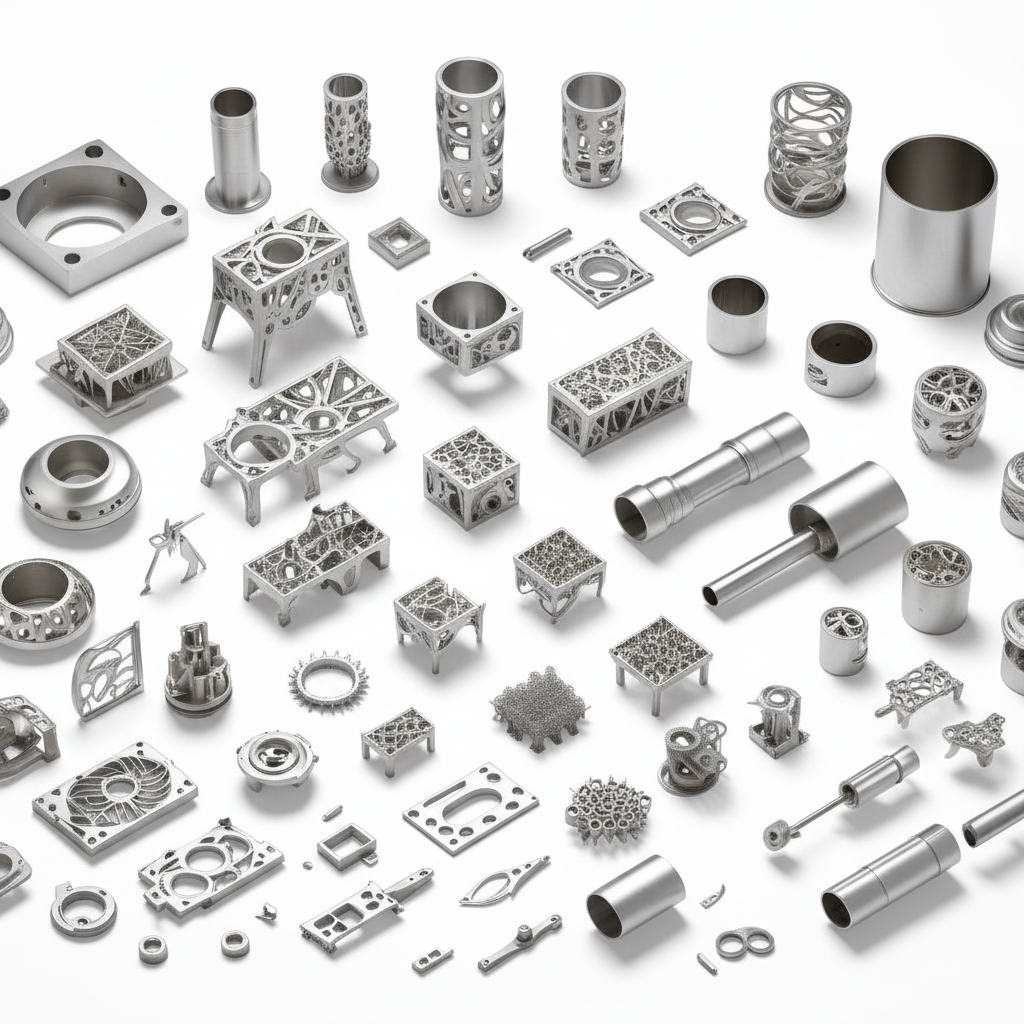
Materials for LMM workflows, designed for downstream debinding, sintering and casting compatibility depending on process, supporting metal and ceramic manufacturing, high-solid processing routes, jewelry investment casting and other indirect fabrication strategies.
This collection groups the 3Dresyns® reactive solid binder and castable solid photopolymer families for LMM workflows, covering water-debindable and solvent-debindable routes for metals and ceramics, as well as castable material routes for jewelry and investment casting. The portfolio spans Ceramic & Metal Manufacturing, Jewelry & Investment Casting, Debinding, Sintering, High-Temperature Processing and LMM.
Key features & benefits
- Material systems for Lithography-based Metal Manufacturing workflows
- Reactive solid binders for metal and ceramic processing
- Water-debindable and solvent-debindable downstream routes
- Designed for debinding and subsequent sintering compatibility, depending on process
- Support for high-solid metal and ceramic processing routes
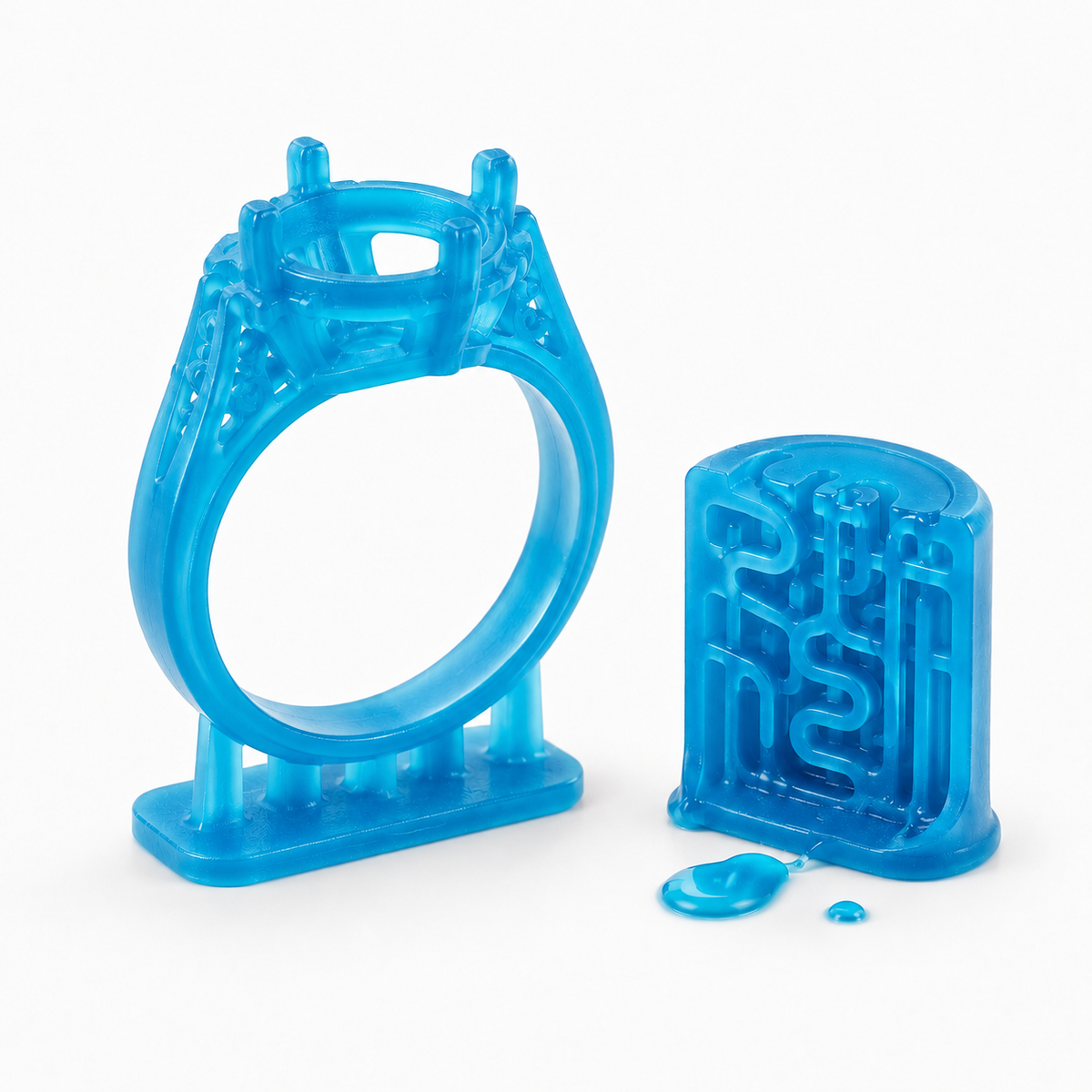
- Castable solid photopolymers for jewelry and investment casting
- Heat-meltable and non-heat-meltable-after-printing castable routes
- Integration into indirect manufacturing workflows
- Made-to-order material configuration for printer-specific and application-specific requirements
Typical applications
- Lithography-based manufacturing of metal components
- Lithography-based manufacturing of ceramic components
- Metal green-part shaping
- Ceramic green-part shaping
- High-solid metal processing routes
- High-solid ceramic processing routes
- Water-debindable metal manufacturing workflows
- Water-debindable ceramic manufacturing workflows
- Solvent-debindable metal manufacturing workflows
- Solvent-debindable ceramic manufacturing workflows
- Debinding process development
- Sintering process development
- Metal debinding and sintering workflows
- Ceramic debinding and sintering workflows
- Indirect fabrication of metal components
- Indirect fabrication of ceramic components
- Metal and ceramic R&D parts
- High-temperature downstream manufacturing workflows
- Castable pattern manufacturing
- Jewelry pattern manufacturing
- Jewelry investment casting
- Investment-casting workflows
- Heat-meltable castable patterns
- Non-heat-meltable-after-printing castable patterns
- Printed patterns for indirect casting processes
- Development of integrated printing, debinding and sintering workflows
- Development of integrated printing and casting workflows
LMM process & material compatibility
Metal LMM workflows
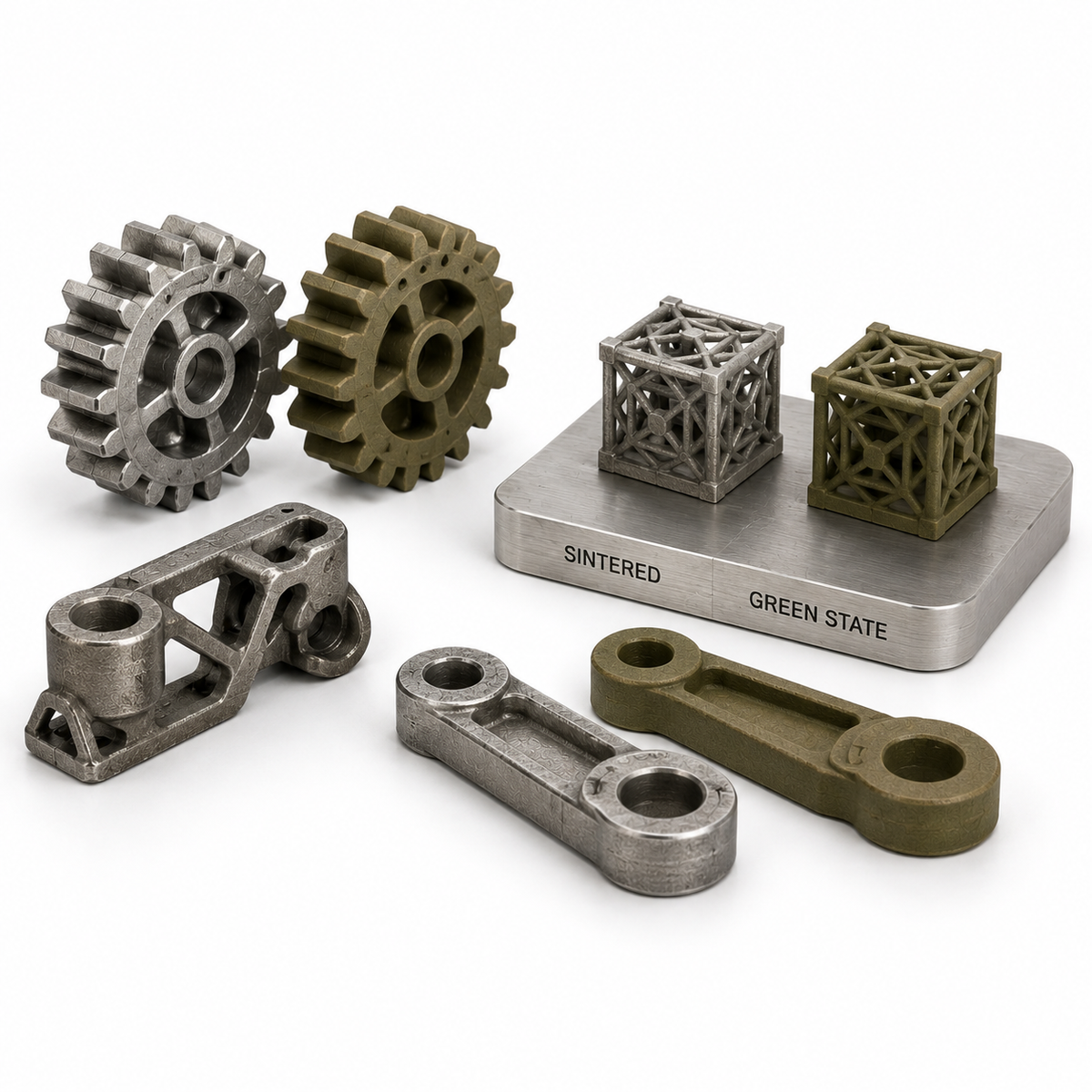
The 3Dresyns LMM binder platform supports indirect manufacturing routes in which metal-loaded green parts are shaped lithographically and subsequently processed through the appropriate debinding and sintering workflow.
Ceramic LMM workflows
The LMM process architecture also extends to ceramic systems. Reactive solid binders can support ceramic green-part manufacturing followed by the corresponding debinding and sintering route.
Water-debindable routes
Water-debindable reactive solid binders provide a downstream route for metal and ceramic green parts intended for subsequent sintering.
Solvent-debindable routes
Solvent-debindable reactive solid binders provide an alternative downstream strategy for metal and ceramic systems where solvent debinding is the selected process route prior to sintering.
Castable patterns for jewelry & investment casting
The Perfect Cast family extends the LMM portfolio into indirect casting workflows through castable solid photopolymers for jewelry and investment-casting applications, including heat-meltable and non-heat-meltable-after-printing routes.
Compatibility depends on the complete process
Material selection should be considered together with the target metal or ceramic system, green-part handling, debinding strategy, furnace processing, shrinkage management and, for castable routes, the intended casting workflow.
LMM printer compatibility
Made-to-order materials for LMM printer platforms
3Dresyns LMM materials are manufactured made to order. Material and processing characteristics can therefore be selected or adapted according to the customer's LMM printer configuration, target material system and intended downstream manufacturing route.
Incus LMM platforms
3Dresyns LMM materials can be evaluated for compatible Incus lithography-based manufacturing platforms. Final implementation depends on the specific printer configuration, material-handling conditions, exposure system, target metal or ceramic feedstock and the intended debinding and sintering route.
Admatec platforms
3Dresyns LMM materials can also be evaluated for compatible Admatec lithography-based ceramic and metal manufacturing platforms. Printer-specific implementation should consider material rheology, processing temperature, exposure conditions, solids loading and the selected downstream debinding and sintering process.
Other compatible LMM and lithography-based platforms
The made-to-order approach also allows evaluation for other compatible LMM and lithography-based metal or ceramic manufacturing systems where the printer architecture is suitable for processing the selected highly filled, paste-like or solid photocurable material.
Printer adaptation for metals and ceramics
Printer-specific material adaptation is not restricted to metal processing. Depending on the selected 3Dresyns LMM formulation and downstream route, the platform can support metal and ceramic green-part manufacturing followed by water or solvent debinding and sintering.
Printer adaptation for castable applications
The LMM portfolio also includes castable solid photopolymers for jewelry and investment-casting applications. These materials can be evaluated for compatible LMM platforms capable of processing the corresponding castable solid or paste-like photocurable system.
Printer-specific evaluation
Compatibility should be evaluated for each printer and application. Provide the printer manufacturer and model, operating temperature, exposure wavelength, material-handling configuration, target metal or ceramic system and intended debinding, sintering or casting route so the appropriate made-to-order LMM material configuration can be assessed.
Why choose this collection
Designed around downstream manufacturing
This portfolio is structured around LMM and related indirect manufacturing routes in which the printed material forms an intermediate green part or castable pattern rather than necessarily serving as the final-use photopolymer component.
Metal and ceramic processing within one platform
The reactive solid binder families support both metal and ceramic green-part workflows, allowing material selection to be aligned with the intended debinding and sintering strategy.
Water and solvent debinding routes
The portfolio provides water-debindable and solvent-debindable reactive solid binder options, enabling different downstream process architectures depending on the target manufacturing system.
Castable routes for jewelry and investment casting
The Perfect Cast family expands the LMM portfolio beyond debind-and-sinter workflows into castable pattern manufacturing for jewelry and investment-casting applications.
Made-to-order printer adaptation
Because 3Dresyns LMM materials are manufactured made to order, the material configuration can be evaluated according to the customer's printer, target feedstock and intended downstream manufacturing route.
Process route drives material selection
The key selection parameter is not only the target material, but also the intended downstream route: water debinding, solvent debinding, sintering or casting.
Products in this collection
Technical overview
| 3Dresyn LMM* | Material function | Debinding / downstream route | Target workflow | Metal / ceramic relevance | Casting relevance | Special function |
|---|---|---|---|---|---|---|
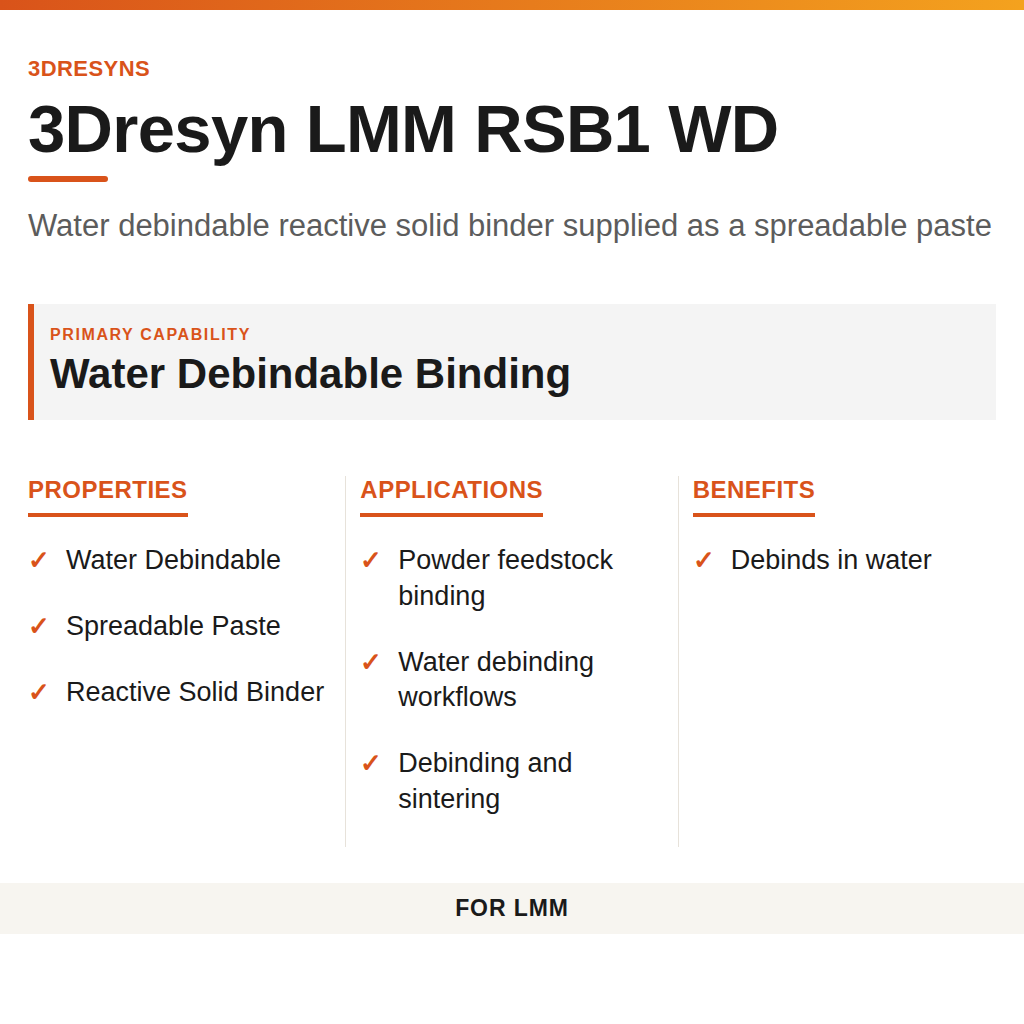
| RSB1 WD | Water-debindable reactive solid binder for metals and ceramics | Water debinding + sintering | Green-part shaping for LMM | High | Low | Water-debindable reactive binder |
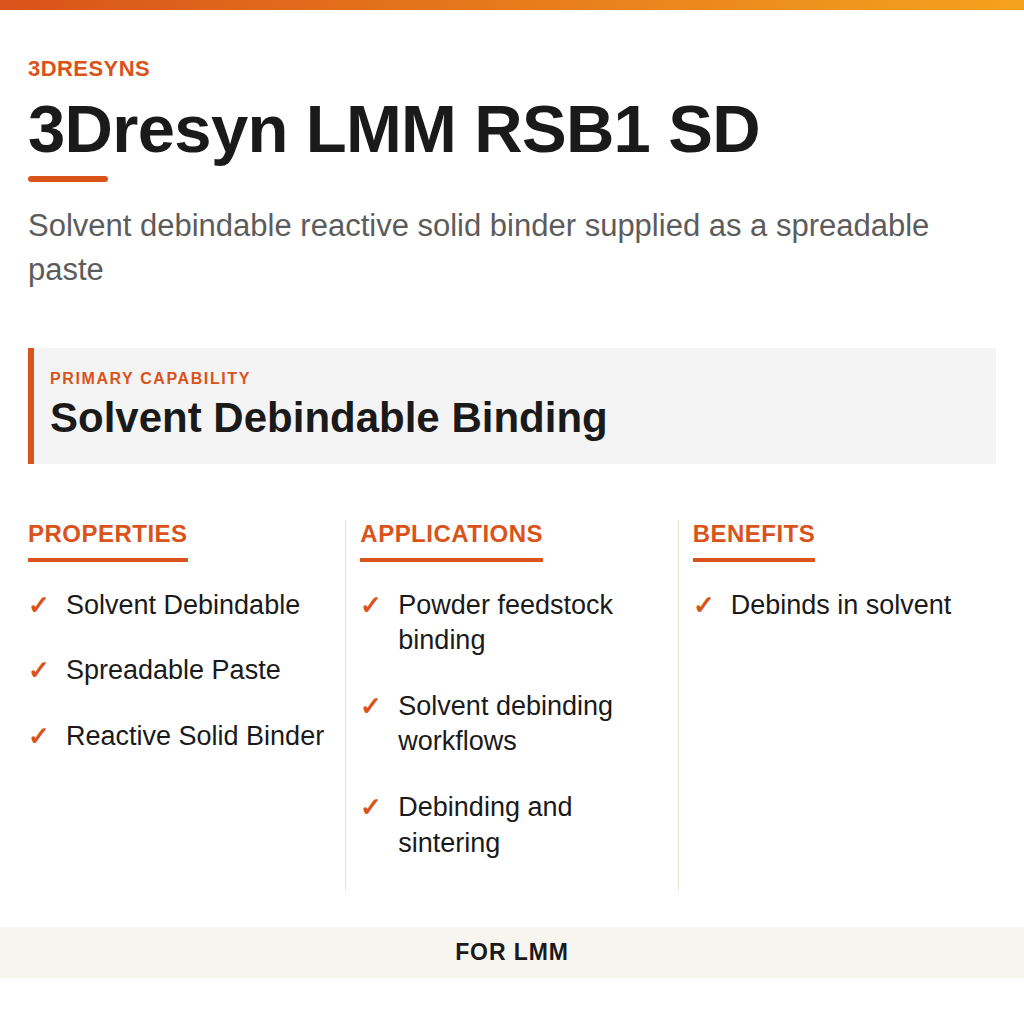
| RSB1 SD | Solvent-debindable reactive solid binder for metals and ceramics | Solvent debinding + sintering | Green-part shaping for LMM | High | Low | Solvent-debindable reactive binder |
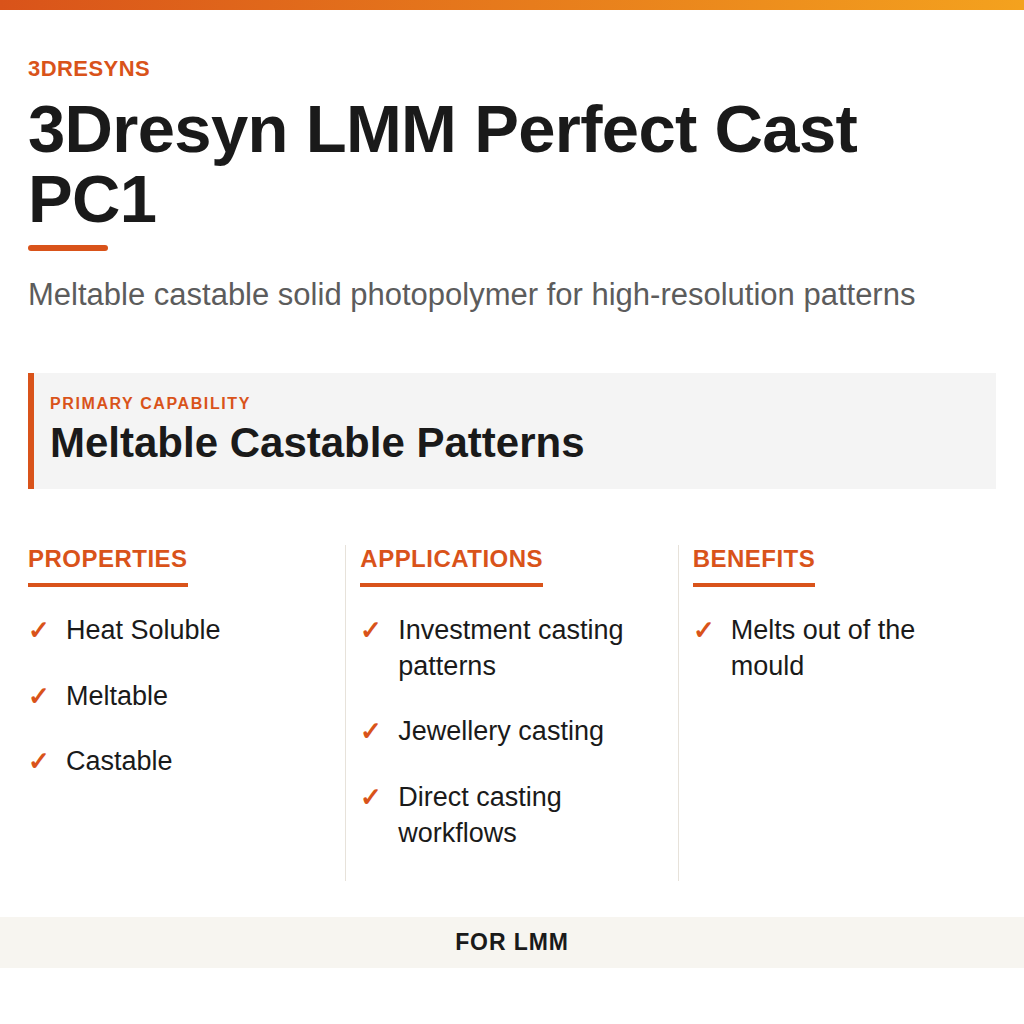
| Perfect Cast PC1 | Castable solid photopolymer for heat-meltable jewelry castings | Casting-focused downstream route | Jewelry and investment casting | Low | High | Heat-meltable castable route |
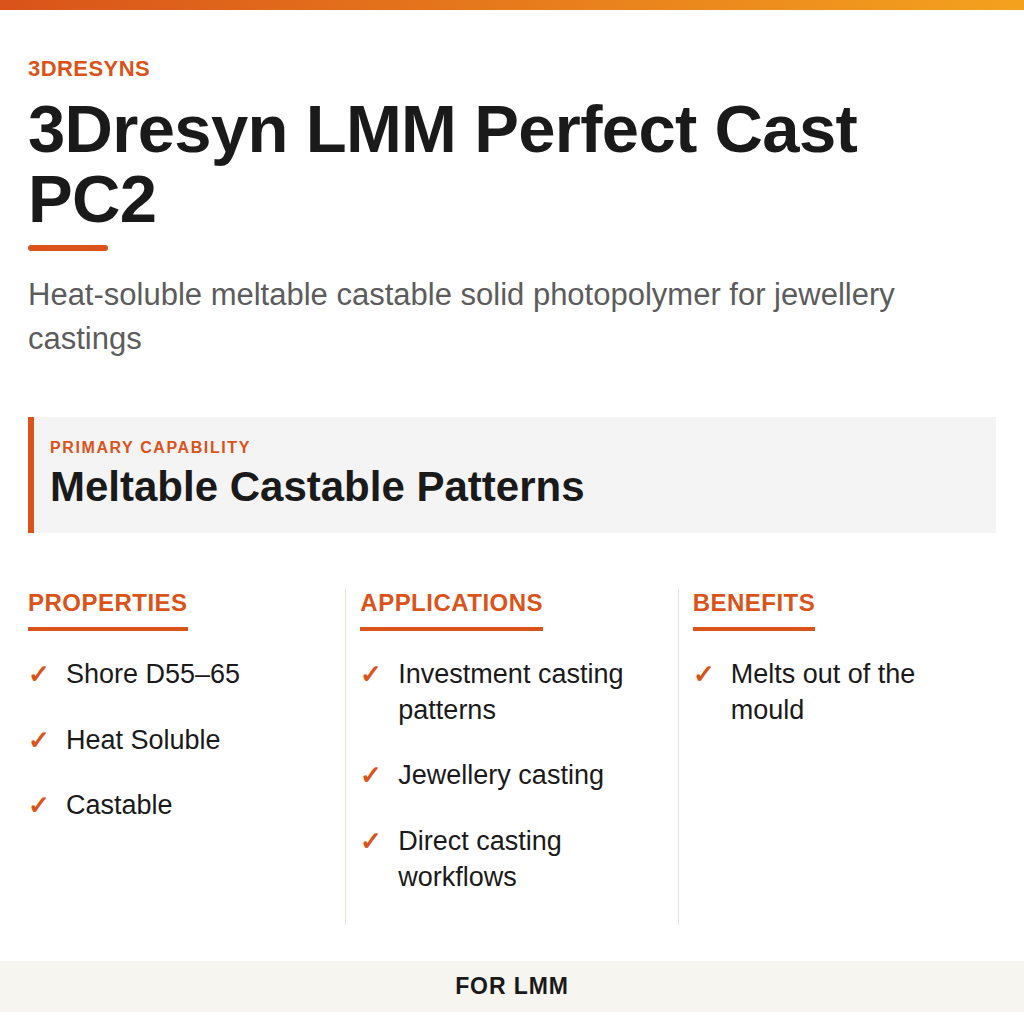
| Perfect Cast PC2 | Castable solid photopolymer for heat-meltable jewelry castings | Casting-focused downstream route | Jewelry and investment casting | Low | High | Alternative heat-meltable castable route |
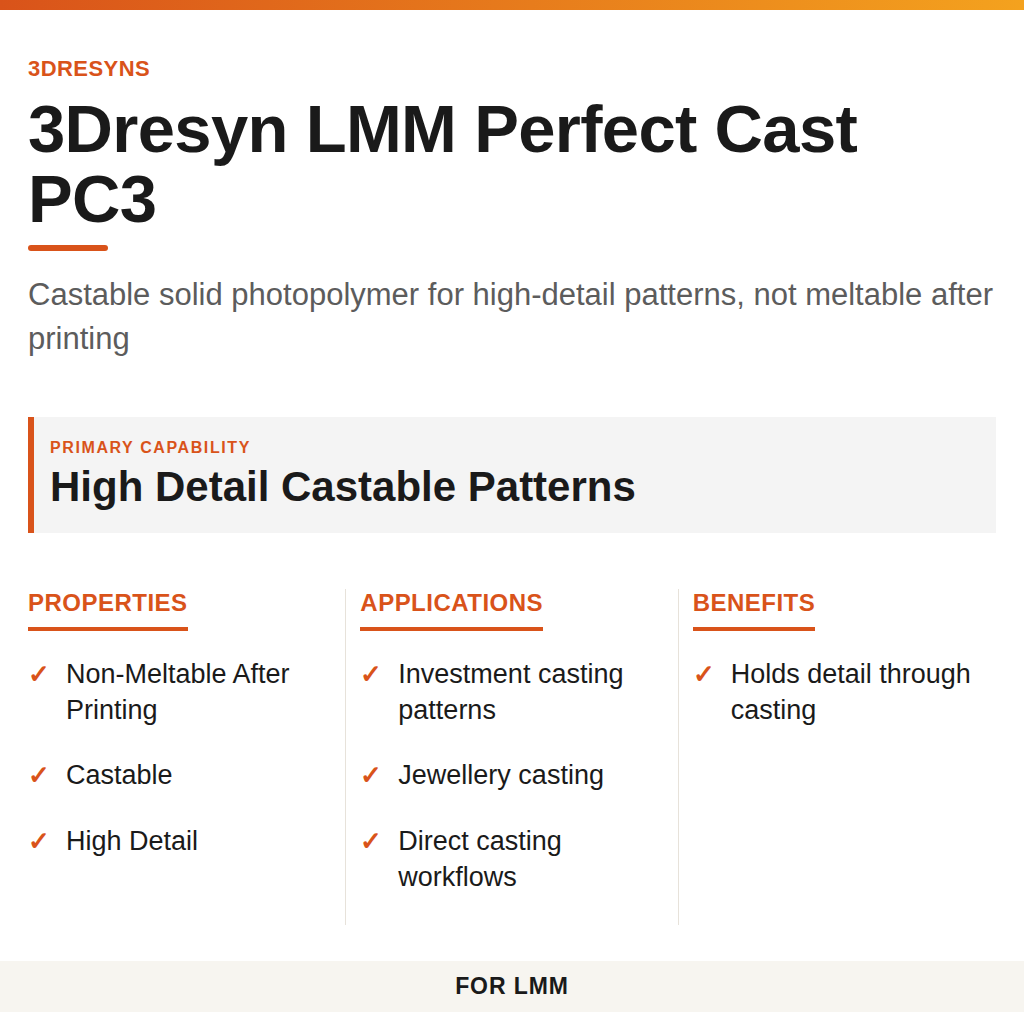
| Perfect Cast PC3 | Castable solid photopolymer for non-heat-meltable jewelry castings after printing | Casting-focused downstream route | Jewelry and investment casting | Low | High | Non-heat-meltable-after-printing castable route |
Mobile: scroll horizontally to view all columns. The first column remains visible while scrolling.
Portfolio overview
Reactive solid binders for metal and ceramic sintering workflows
RSB1 WD and RSB1 SD define the main binder routes for LMM green parts intended for later debinding and sintering of metals and ceramics.
Castable routes for jewelry and investment casting
Perfect Cast PC1, PC2 and PC3 extend the collection into jewelry and investment-casting workflows through castable solid photopolymer patterns.
Printer-specific made-to-order materials
3Dresyns LMM materials can be manufactured according to the intended printer architecture and application. Incus, Admatec and other compatible LMM or lithography-based metal and ceramic platforms can be evaluated on a printer-specific basis.
Different downstream routes within one LMM portfolio
The collection combines debind-and-sinter routes for metal and ceramic green parts with castable routes for jewelry and investment casting. Selection therefore begins with the printer architecture, target material and intended downstream manufacturing process.
Workflow note
LMM material selection should be matched to the complete downstream process, including printer configuration, target material system, green-part handling, debinding route, furnace strategy, shrinkage management and, where applicable, the intended casting process.
Final process performance depends on the combined workflow rather than on the binder or castable material alone. Printing, debinding, thermal processing, sintering or casting conditions and the target system should be validated together.
Technical and commercial support
Selection and technical help
Need an LMM material for your Incus, Admatec or other compatible lithography-based manufacturing platform?
3Dresyns LMM materials are manufactured made to order and can be evaluated according to the printer configuration, target metal, ceramic or castable system and intended downstream processing route.
Send us your printer manufacturer and model, processing temperature, exposure wavelength, material-handling configuration, target material and intended debinding, sintering or casting route through technical support.
Related ceramic and metal manufacturing routes
Connect LMM materials with adjacent powder and sintering workflows
Lithography-based Metal Manufacturing material selection should be evaluated together with the intended debinding, powder-shaping, sintering or casting route. Adjacent 3Dresyns families cover direct printing, mold-injection feedstocks and cold-fusion powder-binder workflows.
Sort by

From prototyping to industrial production, performance depends on materials, calibration and process control