Nano & micron raw materials for manufacturing 2D & 3D exotic materials
Do you want to manufacture 2D & 3D materials based on nano and micronized “exotic” materials? including nanopowders, nanoparticles, nanofibers, nanofillers, micron / micronized powders, microfibers and related engineered raw materials with specific shapes and sizes to meet your specifications?
This page combines custom raw-material selection, additive manufacturing routes, molding strategies, exotic filler integration and direct links to related 3Dresyns technologies for 2D and 3D materials development.
Key features & benefits
- broad variety of exotic nano and micron materials
- broad range of achievable properties
- optimum dispersion and deagglomeration for minimum light scattering
- optimum suspension stability even at low viscosity
- optimum flow even with high volume concentrations
- solvent-free dispersion processing without undesired solvent traces
- strong potential for improved mechanical and biocompatibility-related performance depending on system
- excellent resolution in suitable additive manufacturing workflows
Discover the different manufacturing processes for Additive Manufacturing AM
3Dresyns portfolio of nano and micron materials for nanotechnology, microtechnology and higher-scale Additive Manufacturing
The 3Dresyns portfolio covers a broad range of nano and micron sized “exotic” materials for functionalising our custom designed resins and related systems to meet overall engineering specifications.
Additive Manufacturing AM of exotic materials can be used for
- Direct Additive Manufacturing AM by direct 3D printing of objects or parts with your chosen SLA, DLP & LCD 3D resins or SLS Powder Binders filled and functionalized with your chosen nano or micron materials, or
- Indirect Additive Manufacturing by injection molding in 3D printed sacrificial molds for intertwined parts with the mold, or in 3D printed durable molds for non-intertwined parts with the molds.
- sintered objects or parts composed of 100% of your chosen nano or micron products via ceramic, metal & polymer powder feedstock slurries, or
- not sintered objects or parts composed of your chosen injection or casting resin filled with your chosen nano and micron products
Cost-effective injection equipment of nano & micron products at higher-scale Additive Manufacturing AM
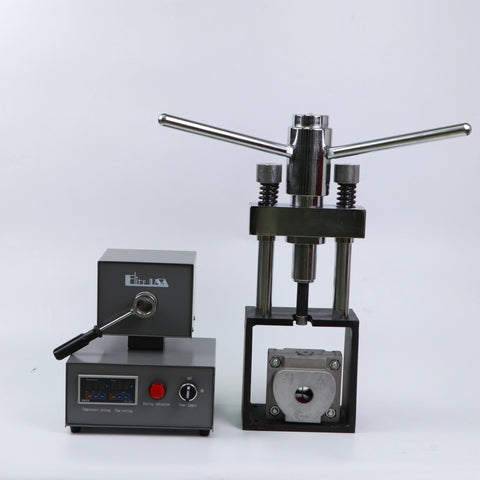
3Dresyns nano and micron materials can be supplied as solid feedstocks at room temperature in metal cartridges of 25 mm external diameter for direct injection in 3D printed durable or sacrificial molds in low-cost manual injection machines such as this type of cost-effective manual injection equipment.

Full raw portfolio data
List of our extensive portfolio of “exotic” nano and micron materials, which can be used as functional additives or fillers in our 3D resins, or as pure materials after debinding and sintering, shown in alphabetical order:
- Al-Si Aluminum Silicon
- Al 6061
- Al 7075
- Al-Zr Aluminum Zirconium
- AZ31 Magnesium
- AZ91 Magnesium
- Bi-Sn
- Bi-Sn-In
- Co-Cr Cobalt Chromium
- Cu-Ni Copper Nickel
- Cu-Sn Copper Tin
- Cu-Zn Copper Zinc
- Ga-In-Sn Galinstan
- Ga-In
- Fe-Ni Iron Nickel
- In-Bi-Sn
- Ni-Ti Nickel Titanium
- Ni-Cr Nickel Chromium
- SS316 Stainless Steel type 316
Aluminum-Silicon (Al-Si)
Grey aluminum-silicon alloys are used in wear-resistant mechanical devices, lightweight materials and catalyst supports.
Antimony Tin Oxide (ATO)
Used in electronics and optics, including display panels, antistatic systems, infrared absorbance, transparent conductivity and sunlight-shielding applications.
Barium Titanate (BaTiO3 or BTO)
White cubic barium titanate has unique optical and electric properties and is used in data storage, ceramics, lasers and micro-capacitors.
- Data storage: high-density optical data storage
- Dynamic holography: mirrors and lasers
- Ceramics: ferroelectric ceramics, semiconductive ceramics and ceramic capacitors
- Computing: optical computing, on-chip programming, pattern recognition and optical image processing
- Electronics: piezoelectric devices, micro-capacitors, pyroelectric sensors, varistors, dielectric amplifiers and electro-optic devices
Discover our 3Dresyn HP1 BTO70 with high relative permittivity containing 70% by weight of Barium Titanate BTO.
Biphasic Calcium Phosphate (BCP)
Boron (B)
Black or brown boron is used in high-speed cutting applications due to its thermal and abrasive properties.
- Ignition: charcoal briquettes, fuels and torches
- Corrosion inhibition: anti-freeze, brake fluids and hydraulic systems
- Photoelectric applications: photography, tanning, electrolytic condensation and fuel cells
Bismuth (Bi)
Dark grey or black bismuth is used as low-toxicity lubricant additive, nuclear heat-transfer medium, medical imaging agent and alloying element.
Calcium Copper Titanate (CaCu3Ti4O12)
Carbon Aluminum Nitride (AlNC)
High thermal conductivity, hardness and electrical conductivity. Used in electronic devices, optical devices, polymer and metal matrix composites, high thermally conductive ceramics, crucibles, heat sinks and conductive fillers for polymers.

Carbon Nanotubes (CNTs)
Carbon nanotubes exhibit very high electrical, thermal, optical and mechanical properties and are used in electronic devices, conductive composites, hydrogen storage, supercapacitors, biosensors, batteries and solar cells.
- Carbon Nanotube Fibers
- Composite Wires of Carbon Nanotubes
- Carbon Nanotube Nanoribbon
- Carbon Nanotube Sponges
CNT Dispersions
- Used in energy storage, lithium-ion batteries, supercapacitors, biosensors, medical devices and flame-retardant formulations.
Double-Walled CNTs
- Used in photovoltaics, gas sensors, dielectrics, field-emission displays and composites.
Single-Walled CNTs
- Used in nanosensors, field-emission displays, nanocomposites and logic elements.
Graphitized Multi-Walled CNTs
Short Length Multi-Walled CNTs
Multi-Walled CNTs (MWCNTs)
Carbon Titanium Nitride (TiNC)
TiNC is an abrasion-resistant ceramic micronized coating with high hardness, toughness and very low coefficient of friction, used in industrial tooling and protective wear-resistant systems.
Cesium Tungsten Oxide (Cs2W04)
Nanoparticles with visible transparency and NIR shielding behavior, useful in LED and NIR shielding devices.
Cobalt Iron Oxide (CoFe2O4)
Cobalt Oxide (CoO, Co2O3, Co3O4)
Ferucarbotran (FCT)
Superparamagnetic iron oxide nanoparticles used as MRI contrast agents.
Fullerene (Cn)
Fullerene is used in biomedical, pharmaceutical, solar, catalyst, membrane, coating, semiconductor and magnetic applications.
- Fullerene-C60
- Fullerene-C70
- Polyhydroxylated Fullerene (Fullerenols)
Germanium (Ge)
Used in energy, medicine, electronics and imaging applications.
Gold (Au)
Used in aesthetics, imaging, photothermal therapy and conductive electronic applications.
Graphene (C)
Graphene offers electrical conductivity, high surface area, transparency and adsorption behavior, with uses in batteries, transparent electronics, biosensors, bioimaging, tissue engineering and drug delivery.
- CVD Graphene
- Functionalized Graphene
- Graphene Nanoplatelets (GNP)
- Graphene Oxide (GO)
- Reduced Graphene Oxide (rGO)
Discover our graphene products.

Iron (Fe)
Used in electronics, medicine, imaging, environmental management and data storage.
- Probing and magnetic tools
- Recording media
- Ferrofluids and magnetic pastes
- Medical imaging and delivery systems
- Environmental degradation of contaminants
- Catalysts
- Electromagnetic-wave absorption
Iron Oxide (FexOy) (Fe2O3, Fe3O4)
Lanthanum Nickelate (La3Ni2O7)
Manganese Ferrite Black Oxide ((Fe,Mn)3O4)
Used in non-bleeding, non-migratory polymers and coatings.
Manganese Iron Oxide (MnFe2O4)
Used as a catalyst to reduce VOC emissions.
Magnetic materials
Molybdenum Disulfide (MoS2)
Grey nano MoS2 is used in solid lubricants, catalysts and composites.
Molybdenum Trioxide (MoO3(H2O)x)
- Cellulose Nanocrystals (CNCs)
- Cellulose Nanofiber
- Cellulose Suspension
Neodymium magnet (NdFeB, NIB, or Neo)
Nickel Cobalt Iron Oxide (NixCo1-xFe2O4)
Used in catalysis, recording media and microbatteries.
Nickel Iron Oxide (NiFe2O4)
Used as adsorbent, membrane additive and electrocatalyst.
Platinum Oxide (PtO2) Adam´s catalyst
Poly(3,4-ethylenedioxythiophene):polystyrene sulfonate (PEDOT:PSS)
Polytetrafluoroethylene (PTFE)
Quantum Dots
Fluorescent semiconductor nanoparticles used in biosensors, photodetectors, solar cells, LEDs, bioimaging and photocatalysis.
- Cadmium Selenide Quantum Dots (CdSe/ZnS)
- Carbon Quantum Dots (CQD)
- Graphene Quantum Dots (GQD)
- Indium Phosphide Quantum Dots (InP/ZnS QD)
- Lead Sulfide Quantum Dots (PbS QD)
- Perovskite Quantum Dots (PVK QD)
- Zinc Selenide Quantum Dots (ZnSe/ZnS QD)
- Cerium (Ce)
- Dysprosium (Dy)
- Erbium (Er)
- Europium (Eu)
- Gadolinium (Gd)
- Holmium (Ho)
- Lanthanum (La)
- Neodymium (Nd)
- Praseodymium (Pr)
- Samarium (Sm)
- Scandium (Sc)
- Terbium (Tb)
- Thulium (Tm)
- Ytterbium (Yb)
- Yttrium (Y)
Rare Earth Compounds
- Lanthanum Hexaboride (LaB6)
- Lanthanum Trifluoride (LaF3)
- Yttrium Aluminate (Y3Al5O12)
Rare Earth Oxides
- Cerium Oxide (CeO2)
- Dysprosium Oxide (Dy2O3)
- Erbium Oxide (Er2O3)
- Europium Oxide (Eu2O3)
- Gadolinium Oxide (Gd2O3)
- Holmium Oxide (Ho2O3)
- Lanthanum Oxide (La2O3)
- Lutetium Oxide (Lu2O3)
- Neodymium Oxide (Nd2O3)
- Praseodymium Oxide (Pr6O11)
- Samarium Oxide (Sm2O3)
- Scandium Oxide (Sc2O3)
- Terbium Oxide (Tb4O7)
- Thulium Oxide (Tm2O3)
- Yttrium Oxide (Y2O3)
Scandium (Sc)
Silicon (Si)
Used in optical, semiconductive, solar and lithium-ion battery applications.

Silicon Carbide (SiC)
High chemical and temperature resistant semiconductor material used in brake pads, clutch facings, ceramic plates, grinding and related endurance applications.
Silicon Dioxide or silica (SiO2)
Amorphous silica or fumed silica is used as filler in plastics, insulation and glass-related routes.
Discover our Silica related products and glass related products.
Silicon Nitride (Si3N4)
Used in higher-stress and higher-temperature cutting tools, turbine blades, rotors and dies.
Silver (Ag)
Used in antimicrobial, conductive, chemical, optical and pharmacological applications.
- Anti-microbial applications
- Conductive applications
- Chemical applications
- Optical applications
- Pharmacological applications
Discover our Silver products.
Silver (Ag) nanowires
Potential use in solar cells and flexible displays.
Discover our Silver nano wires.
Silver-carrying halloysite nanotubes (Ag-HNT)
Strontium Iron Oxide
Magnetic material used as additive in flares, pyrotechnics and glass-related systems.
Titanium Aluminum Carbide (Ti3AlC2)
Used as high-temperature resistance material, coatings, MXene precursor, conductive self-lubricating ceramics, batteries and catalysts.
Titanium Carbide (TiC)
Used in grinding devices, grinding pastes and grinding wheels.
Titanium Dioxide (TiO2)
Used as UV-filter in cosmetics, inks, coatings, plastics and packaging.
Discover our TiO2 Rutile products.
Titanium Nitride (TiN)
Non-toxic and chemically inert with high thermal conductivity and infrared absorption.
Titanium Oxynitride (TiOxNy)
Used for nano photonic applications.
Tungsten Carbide Cobalt (WC/Co)
Very high hardness and wear resistance; used in tooling and surgical instruments.
Tungsten Disulfide (WS2)
Used in greases, oils and lubricants for high-performance friction materials.

Yttrium Aluminate (Y3Al5O12)
Used in optical applications, lasers, phosphors, refractory coatings and photocatalytic systems.
Zinc Cobalt Iron Oxide (Zn0.5Co0.5Fe2O4)
Thermally stable magnetic material used in ceramic, glass, optical and MRI-related systems.
Zinc Iron Oxide (ZnFe2O4)
Used in gas sensors, medicine, electrochromic materials, coatings and catalyst systems.
Zinc Manganese Iron Oxide (Zn0.5Mn0.5Fe2O4)
Used in antibacterial and antifungal systems, nanotechnology of nanofibers and nanowires, electronics, plastics, alloys and catalysts.
Zinc Oxide (ZnO)
Used in rubbers, plastics, ceramics, glass, cement, lubricants, paints, adhesives, sealants, pigments, foods, batteries and fire-retardant systems.
Zirconium Carbide (ZrC)
Used in cemented carbides and cutting tools with improved heat transfer and wear resistance.
Zirconium Dioxide (ZrO2)
Used in technical ceramics, pigments, abrasive materials, jewel materials, batteries and capacitors.
Discover our Zirconia products.
Engineering note
This version keeps the original links and the long-form raw portfolio structure, while improving readability, hierarchy and conversion flow in line with the master collection format.