
Solvent-Soluble Sacrificial 3D Printing Resins
Solvent-soluble sacrificial photopolymer systems for indirect additive manufacturing workflows requiring controlled dissolution, stable printing and reliable removal of complex geometries.
3Dresyns® SS materials are designed for sacrificial molds, cores and enclosed structures where solvent-based removal enables geometries not accessible by mechanical extraction.
Navigate by: hard route, flexible route and solvent-removal logic.
This collection includes solvent-soluble sacrificial systems developed for controlled dissolution in non-polar solvents and clean removal after printing, as part of the broader 3Dresyns sacrificial mold-making resin platform.
These materials enable complex internal channels, undercuts and enclosed features while maintaining stability during molding and casting workflows.
Key features & benefits
Choose your solvent-soluble family
Use the routes below to navigate the collection by structural behavior and solvent-release logic.
- Controlled solvent dissolution removal route.
- Stable printing and handling during molding and casting.
- Suitable for complex cavities, undercuts and enclosed features.
- Supports indirect manufacturing workflows.
- Ultra low viscosity systems supporting high resolution printing.
Typical applications
Typical use scenarios across the collection
- Sacrificial molds and mandrels: removable internal or external sacrificial structures.
- Complex internal channels: solvent-removable hidden geometries and access-limited features.
- Undercuts and enclosed cavities: sacrificial printed forms that cannot be removed mechanically.
- Indirect manufacturing for casting and molding: especially where controlled solvent release is preferred.
- Solvent-based release strategies: workflows designed around predictable dissolution rather than thermal or manual breakaway removal.
Why choose this collection
Solvent-removal vs other sacrificial routes
Select the most suitable route according to whether the sacrificial feature needs more rigidity or more flexibility before dissolution.
- Need controlled dissolution → choose solvent-soluble systems
- Need complex enclosed geometry → solvent-removal route is preferred
- Need stable sacrificial cores with stronger support → choose the hard route
- Need more compliant sacrificial geometry → choose the flexible route
Products in this collection
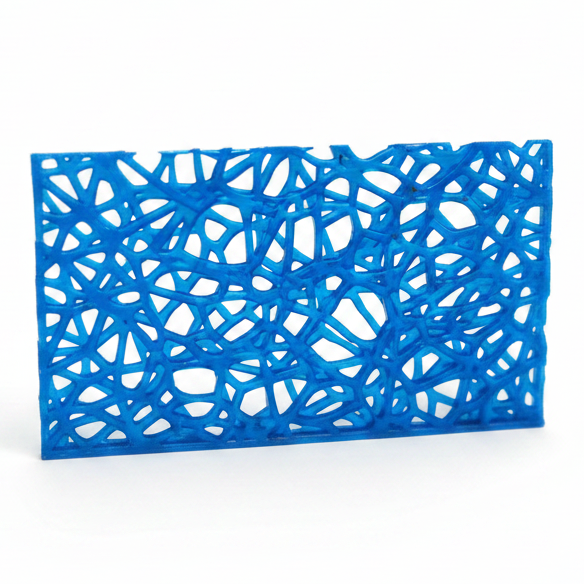
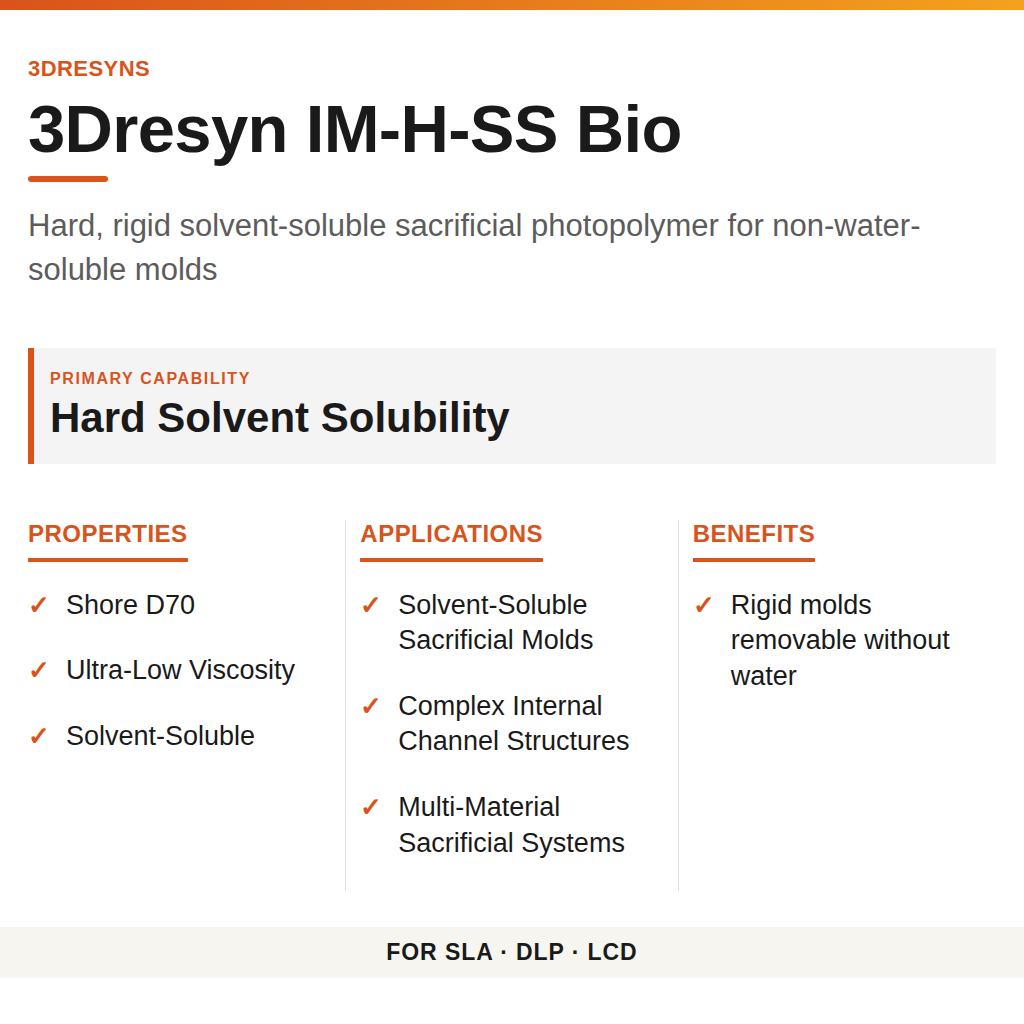
Rigid solvent-soluble sacrificial resin
For workflows requiring stronger sacrificial support and more rigid geometry holding before controlled solvent release.
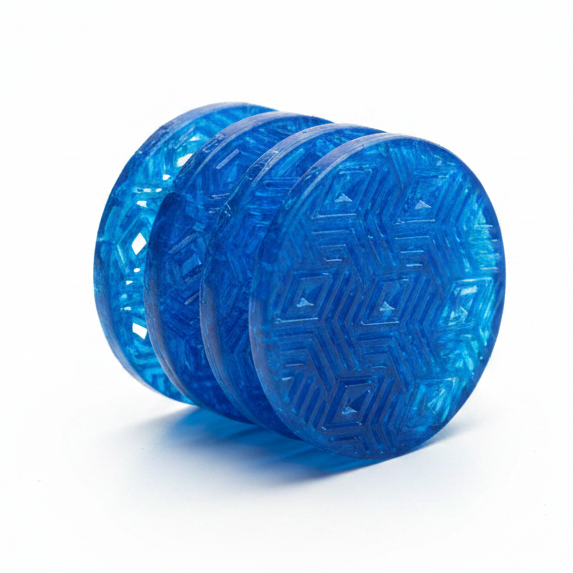
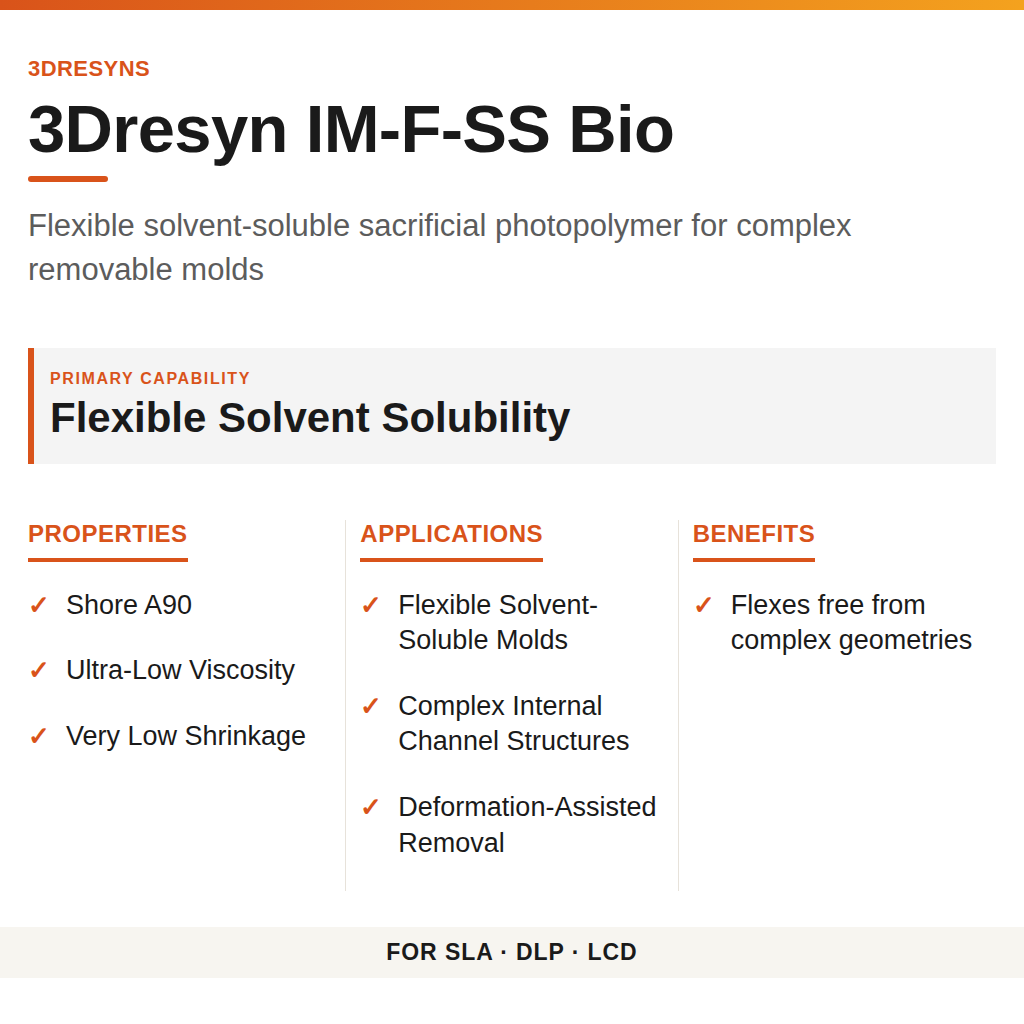
Flexible solvent-soluble sacrificial resin
For workflows requiring more compliant sacrificial structures, especially in complex enclosed geometries.
Technical overview table
Workflow-dependent performance
Dissolution rate, structural integrity, print stability and removal quality depend on the interaction between the selected resin, geometry, cure settings, wall thickness and solvent-access conditions.
Successful implementation therefore requires alignment between material route, sacrificial function, solvent-release target and qualified indirect-manufacturing workflow.
| Material | Type | Removal | Behavior | Use case | Target workflow |
|---|---|---|---|---|---|
| IM-H-SS Bio | Rigid (D70) | Non-polar solvent dissolution | High structural stability before controlled removal; hydrophobic and stable during aqueous processing | Sacrificial molds, rigid cores and enclosed removable structures | Indirect manufacturing, molding and casting workflows |
| IM-F-SS Bio | Flexible (A90) | Non-polar solvent dissolution | More compliant sacrificial behavior with deformation-assisted, solvent-based release | Complex enclosed geometries, channels and undercut-rich structures | Indirect manufacturing and solvent-removable internal geometry workflows |
Mobile: scroll horizontally to view all columns. The first column remains visible while scrolling.
Note: solvent-soluble materials may swell instead of dissolve under certain curing conditions, especially at high relative energy with high power laser and DLP printers. Validate dissolution on the actual geometry and wall thickness.
Portfolio overview
A focused solvent-removal platform
This collection provides a focused solvent-soluble sacrificial platform with rigid and flexible variants to adapt to different sacrificial geometry requirements.
- IM-H-SS Bio covers the rigid solvent-soluble route.
- IM-F-SS Bio covers the flexible solvent-soluble route.
Both grades can be combined for custom rigidity adjustment within the same solvent-removal logic.
Workflow note
Performance is workflow-dependent
Dissolution rate, structural integrity and removal quality depend on solvent type, geometry thickness, exposure settings and process conditions.
In practice, the correct path is to define the sacrificial role first, then validate the chosen route under the intended geometry and solvent-access conditions.
Technical and commercial support
Documentation, technical selection help and workflow support
Use the resources below to move from preselection to dissolution validation and broader technical support.
Final CTA
Select the right solvent-soluble route and validate your dissolution workflow
Use the route-based navigation above to identify the most relevant sacrificial material, compare the available options and move forward with geometry-specific validation.
Alternative sacrificial removal routes
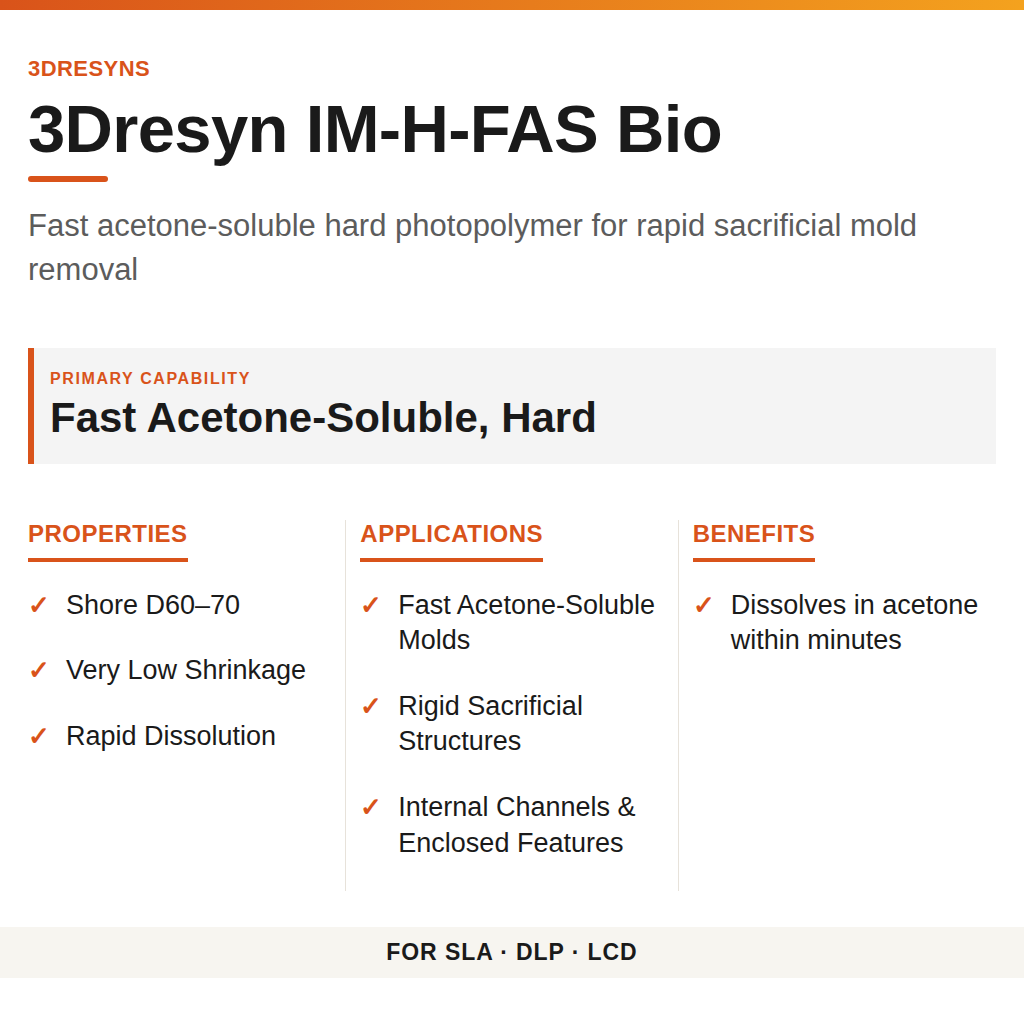
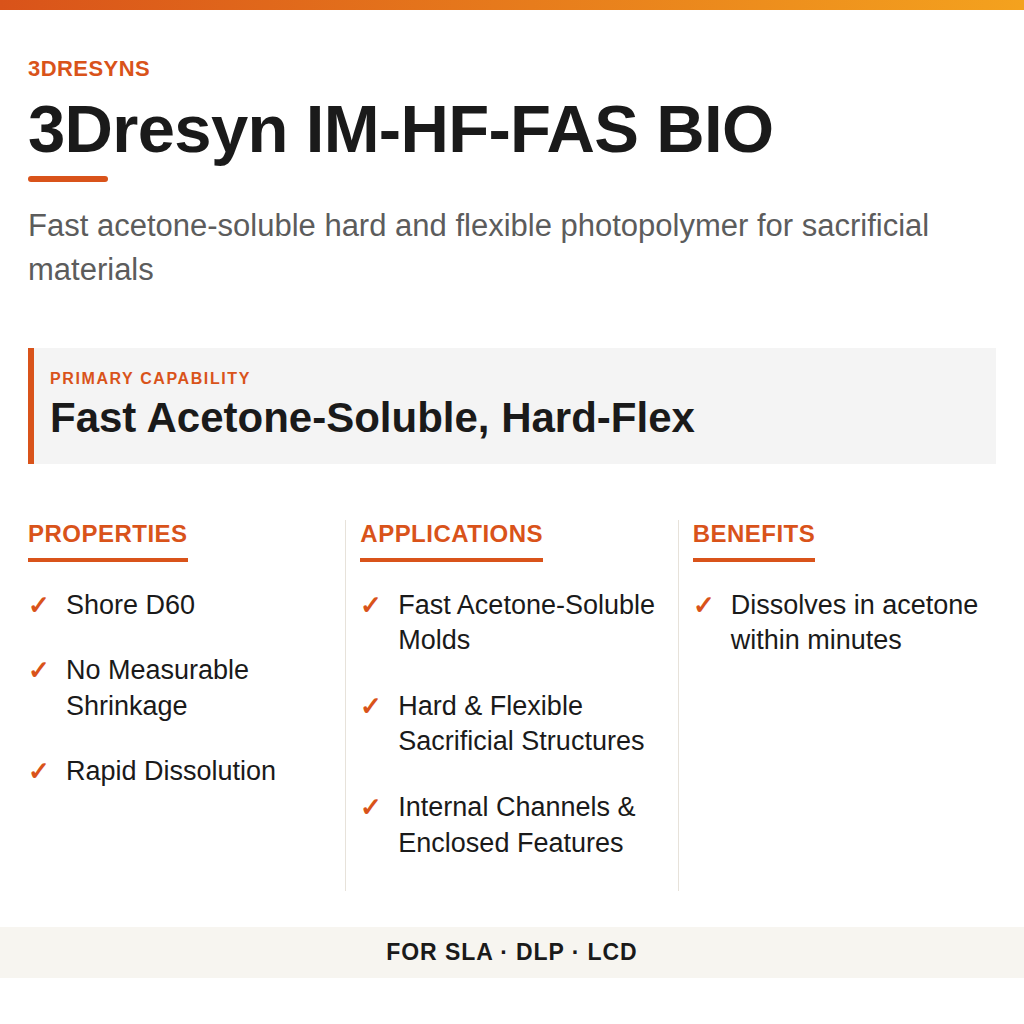
Compare solvent-soluble resin with water- and acetone-soluble alternatives
Solvent-soluble sacrificial resin is one removal strategy within the wider sacrificial-material architecture. Compare it with water-soluble and acetone-soluble routes according to downstream process compatibility and removal access.
Sort by
From prototyping to industrial production, performance depends on materials, calibration and process control