Decorative Applications
3Dresyns® photopolymer systems are widely used for decorative and aesthetic applications where visual appearance, surface quality and design freedom are key requirements.
These applications demonstrate the versatility of photopolymer additive manufacturing beyond purely functional use, enabling the production of visually complex objects with controlled finishes, textures and details.
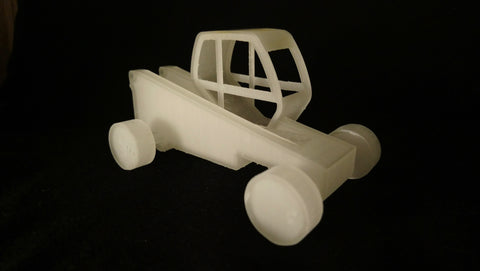
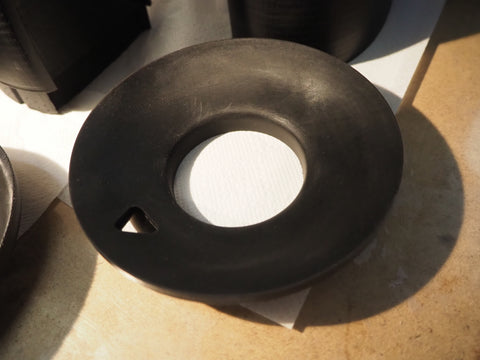
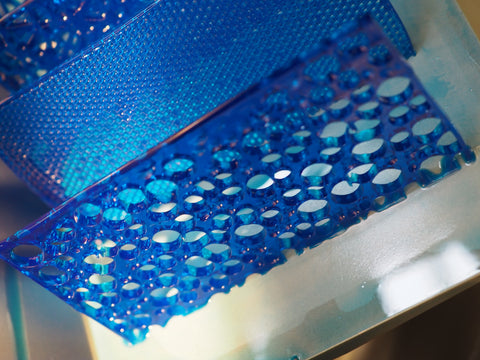
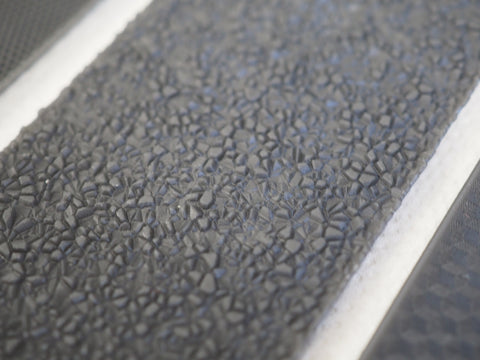
Special thanks to Cotu for kindly sharing many photographs of decorative objects printed with 3Dresyns materials. Every image shown is an authentic photograph of a real printed part. None has been AI-generated, AI-modified or digitally enhanced using Photoshop.
Unlike many illustrative images used in the additive manufacturing industry, the photographs presented on this page depict actual printed parts produced with 3Dresyns materials under real manufacturing conditions.
Scope of decorative use cases
Decorative applications may include artistic objects, design pieces, architectural elements, display models, customized items and ornamental components produced using various 3Dresyns resin systems.
Depending on the selected material system and workflow, decorative parts can achieve a wide range of visual effects, from high-gloss and transparent finishes to matte, textured or color-enhanced surfaces.
Appearance and finish as process-dependent outcomes
The visual appearance and surface quality of decorative 3D printed parts depend on multiple interacting variables. These include resin formulation, color or pigmentation, printer technology, layer thickness, orientation, exposure strategy, post-processing workflow and finishing techniques.
Images shown on this page illustrate results obtained under specific conditions and should be interpreted as representative examples rather than fixed or guaranteed outcomes.
Material systems for decorative applications
Decorative applications may be produced using single-function or multifunctional photopolymer systems within the 3Dresyns portfolio, depending on the desired balance between ease of use, visual quality and additional functional requirements.
Material selection and workflow optimization allow users to prioritize surface finish, transparency, color fidelity or post-processing flexibility according to application needs.
From design freedom to reproducible results
By combining appropriate material systems with qualified printing and post-processing workflows, decorative applications can be produced with consistent and repeatable visual results.
Understanding the interaction between material formulation and processing conditions is essential to achieving the desired aesthetic outcome in a reliable manner.
Governing principle
Decorative results shown on this page represent typical outcomes obtained under specific printing, post-processing and finishing conditions. Visual appearance and surface quality are not intrinsic material constants and may vary depending on workflow variables.
This principle promotes a transparent interpretation of the decorative examples presented here, consistent with a system-based and process-aware approach to additive manufacturing.