
3Dresyn PEDOTEK1 Bio, electrically conductive biocompatible 3D resin based on PEDOT:PSS
Product description
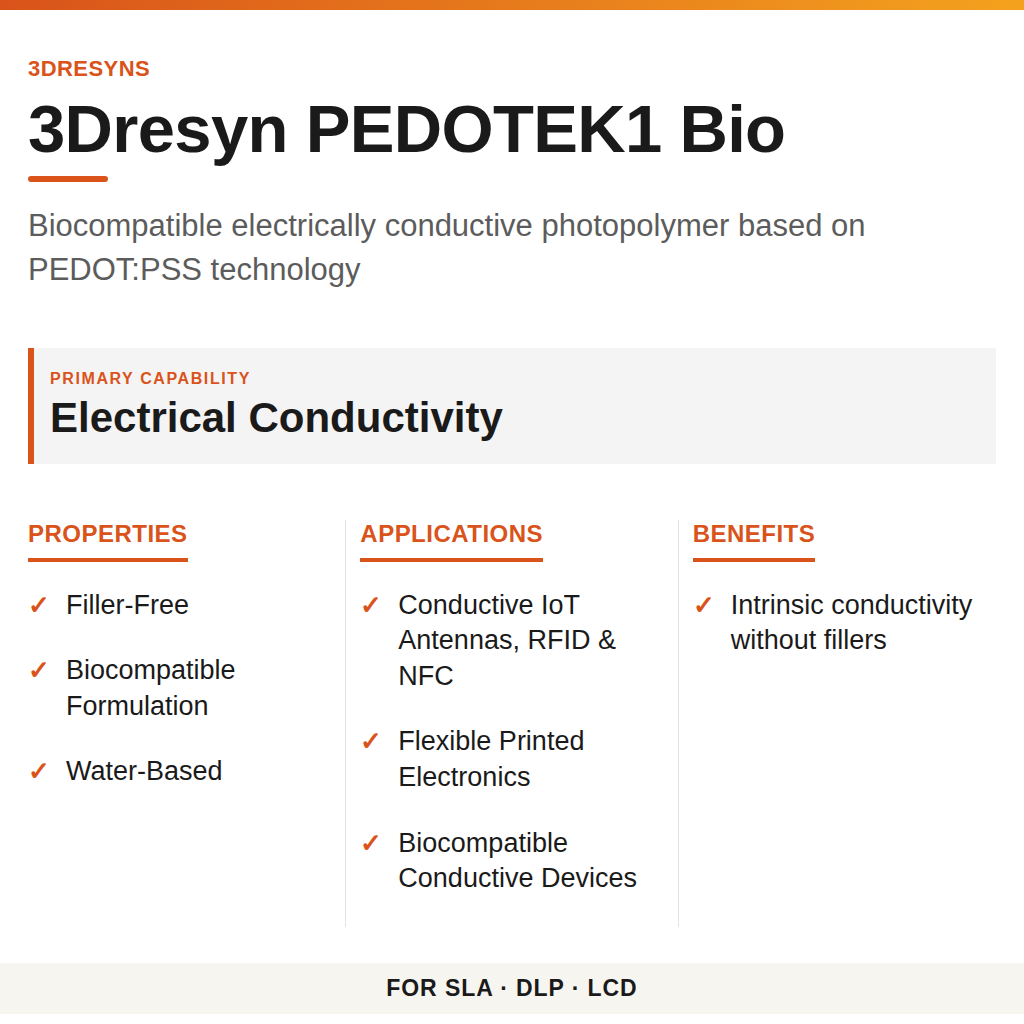
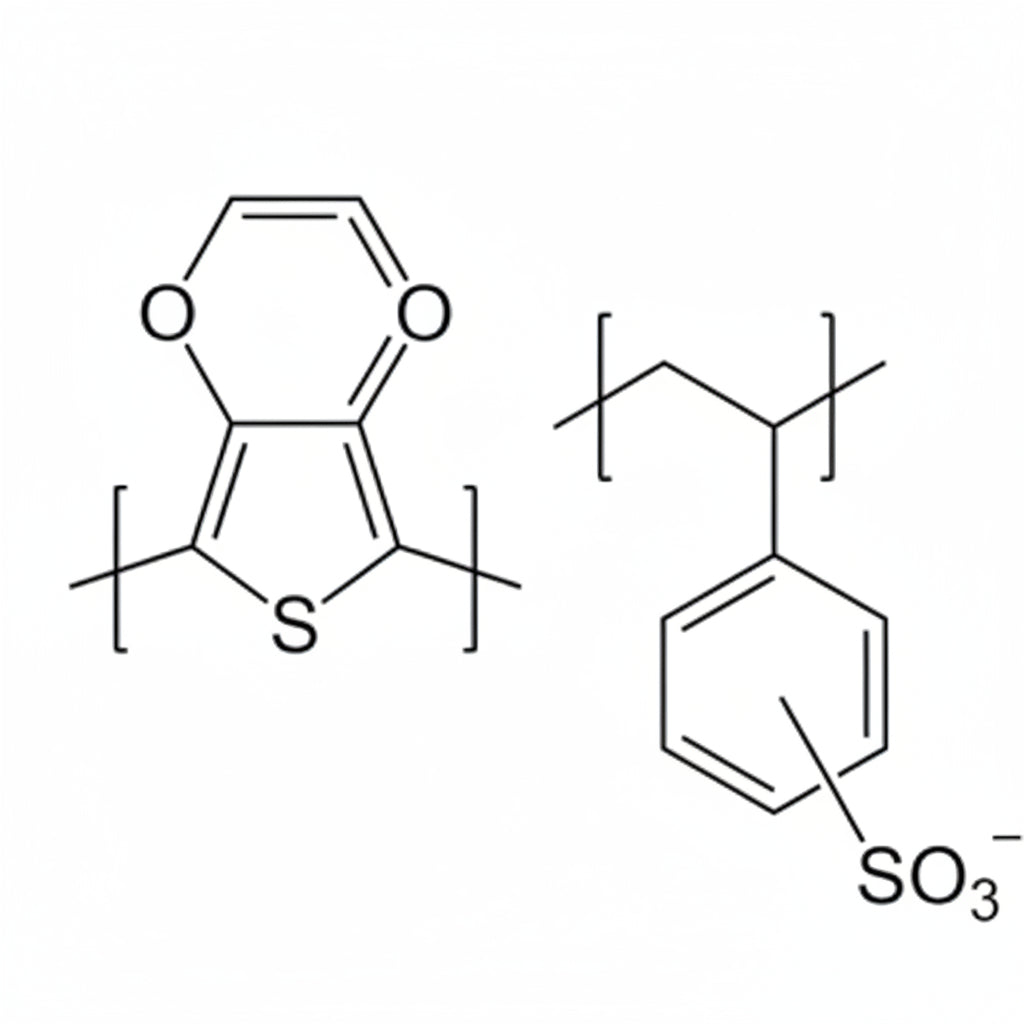
3Dresyn® PEDOTEK1 Bio is a biocompatible electrically conductive photopolymer based on PEDOT:PSS technology, designed for the additive manufacturing of conductive components for advanced electronics applications. It is supplied as a ready-to-print formulation, enabling direct fabrication of conductive structures without the need for additional conductive fillers.
This formulation combines intrinsic conductivity with improved safety and biocompatibility, together with controlled processing behavior for SLA, DLP and LCD 3D printing workflows.
Application framework
Designed for use in vat photopolymerization systems (SLA, DLP and LCD) within research, biomedical and advanced electronics environments requiring conductive and biocompatible materials.
Typical applications
- Conductive structures for IoT antennas (HF, UHF), RFID and NFC
- Flexible printed electronics and interconnects
- OLED and OPV structures
- Functional electronic components and sensors
- Biocompatible conductive devices and research prototypes
Electrical properties
- Sheet resistance: >100 kΩ/square (300 µm films after water evaporation)
- Resistivity: >20 Ω·m (300 µm films after water evaporation)
- Conductivity: <0.5 S/m (300 µm films after water evaporation)
Measured mechanical properties
- Tensile strength: <20 MPa
- Young’s modulus: medium rigidity (application dependent)
- Elongation at break: <20%
- Hardness: medium hardness (approx. Shore D range)
Measured physical properties
- Viscosity: <200 mPa·s at 25 °C
- Composition: conductive PEDOT:PSS system (~40% water content)
- Solubility: non-soluble after printing and curing
- Shrinkage: up to ~40% after full water evaporation
- Appearance: black conductive resin
Functional performance characteristics
- Intrinsic electrical conductivity without additional fillers
- Biocompatible formulation after proper curing and cleaning
- Water-based system with easy cleaning and handling
- Evaporation-driven conductivity development
- Medium mechanical strength with flexible behavior
- Suitable for fabrication of functional conductive geometries
- Moderate suspension stability compared to graphene-based systems
Processing and handling performance
- Compatible with SLA, DLP and LCD 3D printing systems
- Requires open-mode printers and experienced users for optimal results
- Easy water cleaning of printed parts and resin tanks
- Water evaporation (before or after printing) required to achieve final properties
- Up to 40% dimensional shrinkage must be considered in design
- PEDOT:PSS dispersion may require re-mixing to avoid agglomeration
- Fine tuning of exposure parameters recommended using dedicated fine tuning systems
- Specific IFU recommended for each printer and application
Chemical and safety characteristics
- Biocompatible after proper curing and cleansing (final validation required)
- Safer formulation (H411 classification: environmental hazard)
- Organo-tin free formulation
- Water cleanable system
Important processing note
Conductive photopolymers require precise control of printing parameters, material handling and post-processing. Optimal performance is achieved using open-mode systems and experienced users.
Storage and supply note
This product has a shelf life of approximately 6 months when stored below 25 °C. Storage at 4 °C (refrigerated, sealed) can extend shelf life. Products are manufactured to order to maximize performance and stability. Typical delivery time is approximately 2 weeks after ordering.
Testing & processing disclaimer
Electrical, mechanical and dimensional performance depends on printing parameters, water evaporation, geometry and post-processing. All properties must be validated by the user for each specific application.
Disclaimer
This material is supplied as a professional functional material for research, development and manufacturing workflows. It is not marketed as a finished electronic or medical device. Final performance and suitability must be validated by the user.
This technical datasheet should be used together with the relevant processing, calibration, safety and workflow documentation available in the 3Dresyns® Resources section.
Document reference: TDS-PEDOTEK1-BIO-EN | Version: 1.0 | Last updated: March 2026
Choose options