
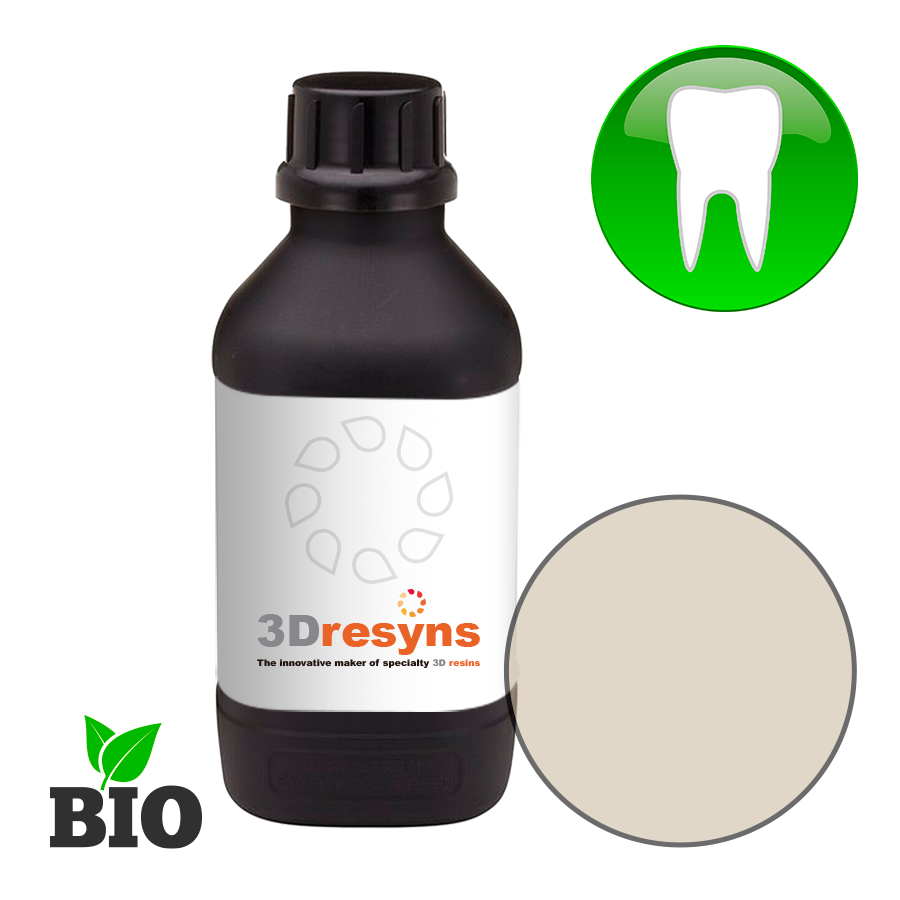
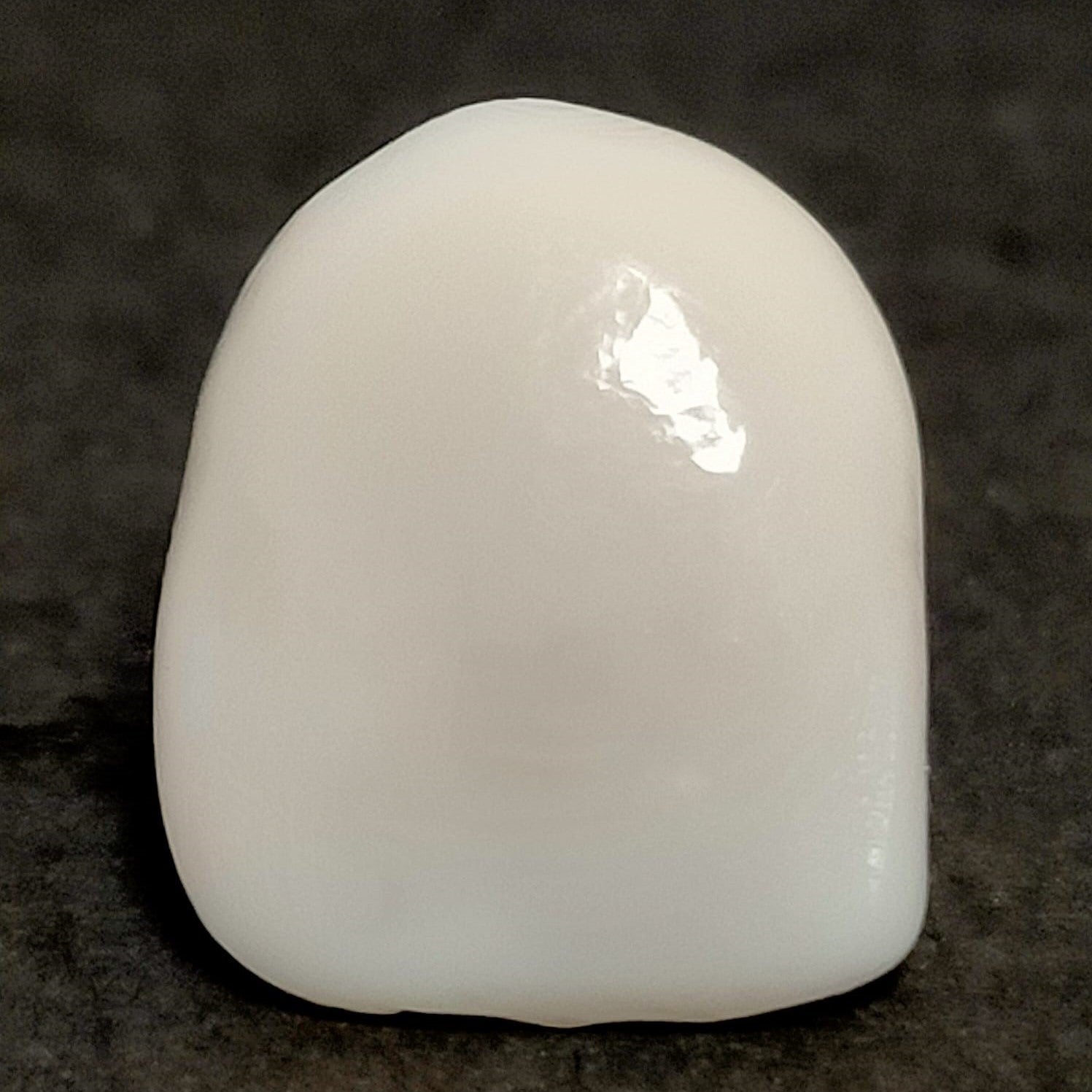
3Dresyn OD C&B Ceramic – Ceramic-Filled High-Strength Dental Photopolymer for Professional Laboratory Workflows
Product description
3Dresyn® OD C&B Ceramic is a ceramic-filled dental photopolymer formulation developed for professional laboratory fabrication workflows of rigid crown-type, bridge-type and veneer-type dental components requiring enhanced mechanical strength, abrasion resistance and dimensional stability.
The formulation contains ≥25% by weight micron and submicron ceramic fillers, contributing to increased stiffness, wear resistance and radiopacity under controlled processing conditions.
Available in opaque tooth-inspired shades (A1, A2, A3, A3.5, A4, B1, B2, B3, B4, C1, C2, C3, C4, D2, D3, D4 and BL1). Shade outcome may vary depending on printing and post-processing parameters.
Application framework
Designed for use in vat photopolymerization systems (SLA, DLP and LCD) within controlled professional laboratory environments. Final suitability, structural validation and regulatory compliance of printed parts must be assessed by the user according to the specific device design, workflow validation and applicable regulatory requirements.
Typical applications
- Rigid crown-type dental components
- Rigid bridge-type dental components
- Veneer-type dental components
Measured mechanical properties
- Tensile strength: >50 MPa (ISO 527-1 / ISO 527-2)
- Flexural strength: >100 MPa (ISO 178 / ISO 20795-1 reference framework)
- Young’s modulus: 2500–3500 MPa (ISO 527-1 / ISO 527-2)
- Elongation at break: <3% (ISO 527-1 / ISO 527-2)
- Shore hardness: D88–90 (ISO 868)
Measured physical properties
- Water sorption (ULWA): ≤ 32 µg/mm³ (reference methodology aligned with ISO 20795-1)
- Water solubility: ≤ 1.6 µg/mm³ (reference methodology aligned with ISO 20795-1)
- Volumetric shrinkage: very low (internal method)
- Resolution capability: up to 20 microns
- Viscosity of HV version: <10000 mPas at 23°C ± 2°C (ISO 3219)
- Viscosity of LV version: <5000 mPas at 23°C ± 2°C (ISO 3219)
Functional performance characteristics
- High rigidity suitable for rigid restorative-type dental components
- Enhanced abrasion resistance due to ceramic filler content
- Radiopaque formulation for imaging visibility under appropriate conditions
- Recommended connector thickness typically 4–7 mm depending on design validation
- Recommended minimum wall thickness typically ≥1.3–1.5 mm depending on geometry and mechanical requirements
- Opaque tooth-inspired shades
Processing and handling performance
- LV and HV viscosity versions available depending on printer configuration
- Printable on most commercial and professional SLA, DLP and LCD 3D printers
- Excellent dimensional stability
- Very low shrinkage
- Increased durability of the resin tank
Chemical and safety characteristics
- Organo-tin free formulation
- Ceramic filler content: ≥25% by weight micron and submicron ceramic fillers
Biocompatibility framework
- Biocompatibility-related evaluations may be conducted according to relevant ISO 10993 methodologies depending on formulation version and validated processing protocol
- Manufacturing aligned with ISO 13485 quality management systems
- Assessment and certification of any final medical device remain the responsibility of the legal manufacturer
Testing & processing disclaimer
Material properties are measured on printed and post-processed specimens and may vary depending on printer type, processing parameters, build orientation, post-curing conditions and workflow validation. Reported values are indicative and provided for reference only.
Disclaimer
This material is supplied as a professional manufacturing material for laboratory workflows. It is not marketed as a finished medical device. The regulatory classification and compliance of any final dental device manufactured using this material remain the sole responsibility of the legal manufacturer in accordance with applicable regulations, including Regulation (EU) 2017/745.
This technical datasheet should be used together with the relevant processing, calibration, safety and workflow documentation available in the 3Dresyns® Resources section.
Document reference: TDS-OD-CB-CERAMIC-EN | Version: 2.0 | Last updated: March 2026
Choose options