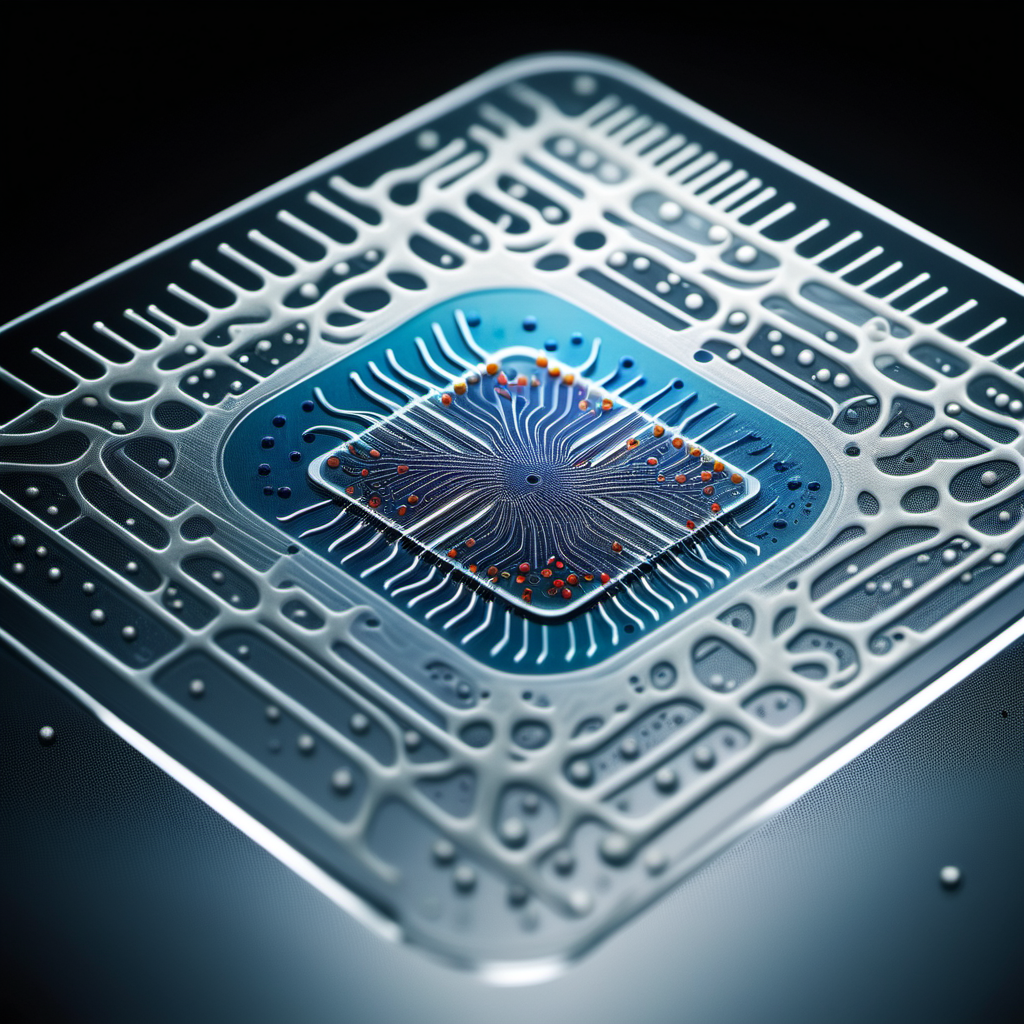
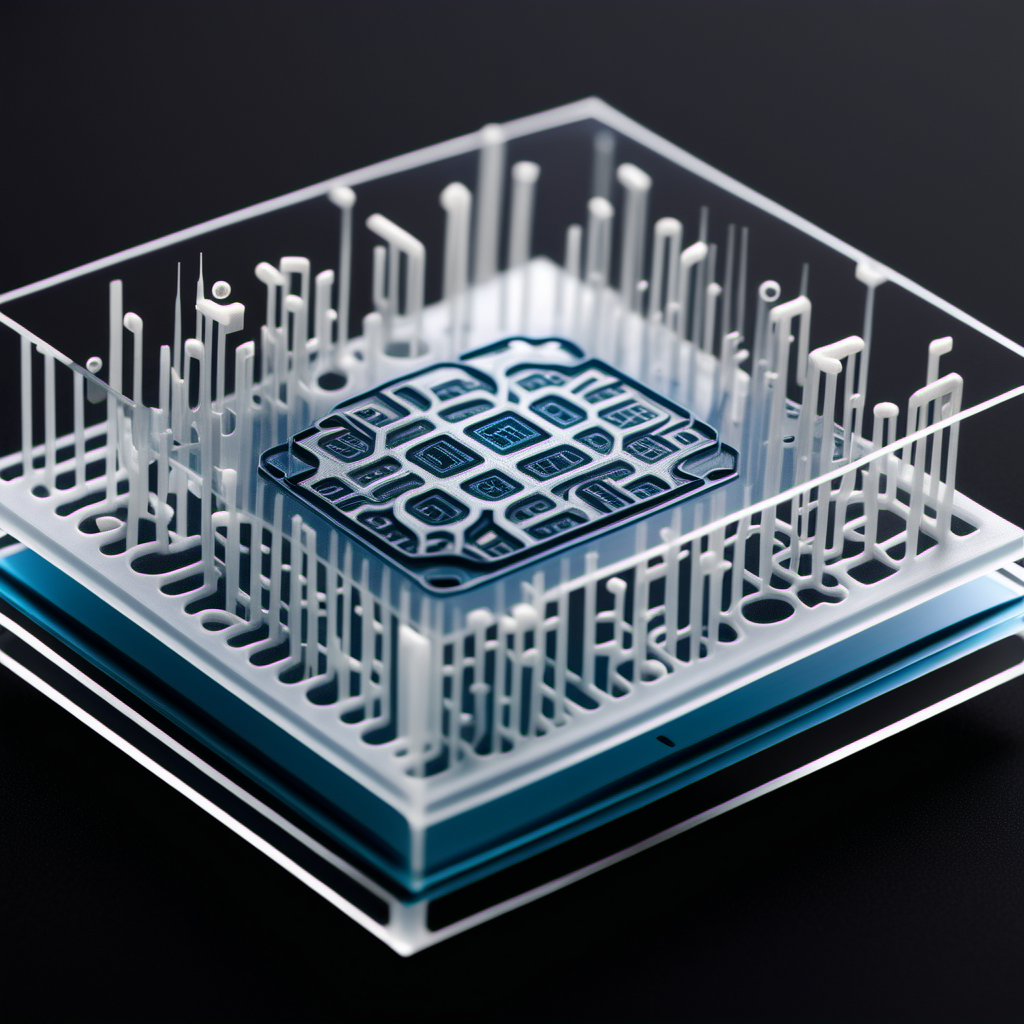
Microfluidic 3D resins organized for microchannel printing, dimensional control and lab-on-chip development in SLA, DLP and LCD/MSLA workflows.
This collection supports comparison of materials designed for small internal features, flow-path accuracy and stable processing in microfluidic research and device prototyping.
Navigate by: channel resolution, viscosity, rigidity level or microfluidic workflow priority.
Select the grade according to channel size and workflow priority and validate the final resin choice for the intended printer, exposure settings, cleaning method and fluidic geometry.
Microchannel-oriented material platform
This collection is structured for microfluidic applications where internal feature fidelity, flow geometry stability and small-channel printability are central to the design.
It includes clarity-oriented and viscosity-optimized routes for chips, manifolds, mixers and lab-on-chip systems requiring controlled resolution and repeatable fabrication.
Quick selection by workflow priority
Material navigation
Choose your microfluidic route
Use the routes below to access the most relevant material family in this collection.
Typical routes
Key features & benefits
Material profile
Microchannel-friendly photopolymers for fluidic devices
These materials are designed for fabrication of microfluidic parts where small internal features, dimensional accuracy and process stability are required.
Main advantages
- Microchannel-friendly printing positioning
- Resolution for small internal features
- Dimensional accuracy for flow geometries
- Clarity-oriented options where needed
- Process-stable printing for lab-on-chip development
- Viscosity options tuned for different microchannel demands
Typical uses
Typical applications
These resins are relevant for microfluidic and flow-device workflows where channel integrity, dimensional control and internal geometry quality determine functional performance.
Application examples
- Microfluidic chips
- Microchannels and manifolds
- Lab-on-chip prototypes
- Mixers and flow test devices
- Fluidic research tooling
Collection overview
Products in this collection
Products in this collection are shown below.
This collection currently includes high-temperature, rigid, tough and flexible clear microfluidic materials with low- to ultra-low-viscosity variants for increasingly fine channel architectures.
Selection logic
Decision guide
How to choose the right microfluidic resin
Select the most suitable grade according to channel size, viscosity requirement, thermal resistance and mechanical behavior of the final device.
Decision guide
-
Need maximum thermal resistance → choose MF HDT LV1 Clear or MF HDT-ULV1 Clear
-
Need ultra-thin microchannels and very high relative resolution → choose MF UR-ULV1 Clear, MF R-ULV1 Clear, T-ULV1 Clear or F-ULV1 Clear depending on rigidity target
-
Need rigid clear microfluidic chips → choose MF RLV1 Clear, MF RLV2 Clear or MF R-ULV1 Clear
-
Need tougher or more flexible channel-bearing parts → choose T-ULV1 Clear or F-ULV1 Clear
Workflow principle
Fluidic performance depends on internal geometry control
Even with microfluidic-optimized materials, final results depend on printer calibration, exposure tuning, resin viscosity, cleaning strategy and post-processing control, especially for thin channels and enclosed geometries.
These materials are best interpreted as precision fluidic fabrication tools where channel resolution, clarity and dimensional reproducibility must be evaluated together with the target device function.
Microfluidic resin comparison table
Use the table below to compare the currently visible products in this collection by resolution, viscosity and key thermomechanical properties.
Mobile: scroll horizontally to view all columns. The first column remains visible while scrolling.
*Note: resolution depends on the fine tuning of the chosen 3D resin in the chosen printer and printing settings.
**Viscosity values are indicative and should be interpreted within the context of the selected printer, temperature and process conditions.
These materials are intended for microfluidic and fluidic-research workflows. Final suitability depends on channel design, cleaning accessibility, printer tuning, curing strategy and the specific fluidic function required.
These products should be understood as microfluidic fabrication materials optimized for internal-feature control rather than as general-purpose clear resins. Final validation must always consider the target channel geometry, device architecture and process window.