
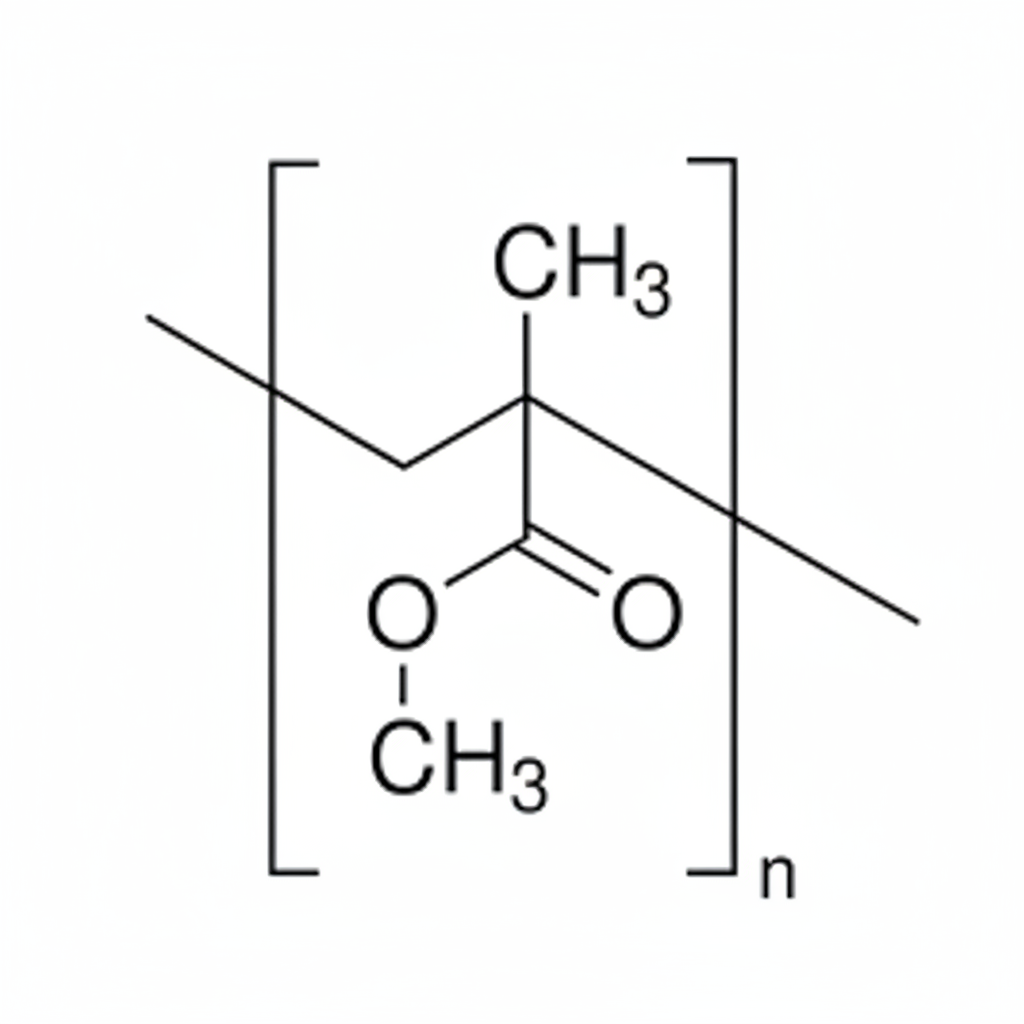
3D-POWDER SLS PMMA 20-50, narrow particle size PMMA powder
Product description
3D-POWDER SLS PMMA 20-50 is a specifically designed narrow particle size distribution spherical crosslinked PolyMethylMethacrylate (PMMA) powder for use as a sacrificial pore former and rigid spacer in Cold Fusion SLS workflows.
This translucent thermoset spherical powder is not a stand-alone sintering material: as a crosslinked PMMA it does not melt or coalesce under the laser, so it is not used by itself to build parts. Instead, it is added to the powder blend as a pore-forming agent that holds its spherical shape until it is cleanly removed during thermal debinding, leaving a controlled network of smooth, spherical pores in the green part before final sintering.
Application framework
Designed as a sacrificial pore former and rigid spherical spacer for binder-assisted Selective Laser Sintering of ceramic, metal, polymer and exotic powders (Cold Metal Fusion CMF, Cold Ceramic Fusion CCF, Cold Polymer Fusion CPF and Cold Exotic Powders Fusion CEPF). It is used together with a soluble powder binder and a fusible co-binder, and is removed by clean thermal degradation below the sintering window of the chosen functional powder.
Typical applications
- Sacrificial pore former for controlled, spherical, interconnected porosity in CMF, CCF, CPF and CEPF green parts
- Rigid spherical spacer to reduce inter-particle friction, improve blend flow and distribute stress uniformly in the green part
- Pore-channel former for faster, cleaner thermal debinding of thicker green parts
- Porous ceramic, porous metal, filtration and scaffold-type structures where defined pore size and pore shape matter
Measured physical properties
- Polymer type: crosslinked (thermoset) spherical PMMA — does not melt or coalesce under the laser
- Density: 1.2 g/cm³ (ISO 1183)
- Water absorption after 24 hours: <0.5% (ISO 62)
- Vicat softening temperature: >250ºC (ISO 306/B50)
- Heat Deflection Temperature HDT at 1.8 MPa: >250ºC (ISO 75)
- Coefficient of Friction COF-static: <0.5 (ISO 8295)
- Clean thermal degradation below the sintering window, leaving the spherical pore it occupied (no melting stage, no flow)
- Resolution of the resulting pores: defined by the particle size below, typically up to ~50 microns
Typical mechanical properties of the bulk polymer*
- Tensile strength: 70 MPa (ISO 527-2)
- Tensile modulus: 2800 MPa (ISO 527-2)
- Elongation at break: <3% (ISO 527-2)
- Izod impact strength, notched: 22 J/m (ASTM D256 & ISO 180)
- Flexural strength: 96 MPa (ISO 178)
- High impact strength, shatter, weather and scratch resistance
*Bulk-polymer reference values for the solid material; in Cold Fusion use the powder acts as a sacrificial spherical filler and is fully removed before sintering, so these values describe the raw polymer, not the final sintered part.
Functional performance characteristics
- Spherical crosslinked PMMA that retains its shape under the laser instead of melting, so each particle leaves a clean, smooth, near-spherical pore after burnout
- Smooth spherical pores reduce stress-concentration points compared with the sharp pores left by irregular pore formers, lowering the risk of cracking in the sintered part
- Acts as a rigid spherical filler that reduces friction between functional powder particles, improves blend flow and helps the green part bear stress uniformly
- Clean thermal degradation below the sintering window, leaving the pore network open for debinding and sintering without imperfections
- Narrow particle size distribution for uniform, reproducible pore size
- Compatible with both water-debindable and solvent-debindable binder routes, as it is removed thermally rather than by the debinding medium
Processing and handling performance
- Typical narrow particle size distribution in microns, not to be considered a specification:
- D100: 80 (100% of particles have less than 80 microns)
- D90: 50 (90% of particles have less than 50 microns)
- D50: 35 (50% of particles have less than 35 microns)
- D10: 20 (10% of particles have less than 20 microns)
- D1: 10 (1% of particles have less than 10 microns)
- Recommended use: add to the binder + co-binder + functional powder blend as the pore-forming fraction
- Recommended starting addition: 5-10% by weight, increased when higher or more open porosity is required, decreased or omitted when maximum sintered density is the goal
- Mix dry at room temperature in a powder mixer to ensure uniform distribution of the pore former through the blend
- Because it is crosslinked, it does not need to melt: do not increase laser energy trying to fuse it; cohesion of the green part is provided by the binder and the fusible co-binder, not by this powder
- Recommended plastic or polymer powder SLS printers: SLS printer compatibility, any open mode plastic / polymer powder SLS printer can be used
- Recommended printing process: use the standard printing parameters of the chosen co-binder and follow the 3Dresyns IFU for SLS printing
- Thermal debinding: removed cleanly during the standard Cold Fusion thermal debinding ramp, before the sintering hold of the functional powder
- For more information read About Cold Metal Fusion CMF, Cold Ceramic Fusion CCF, and Cold Exotic Powders Fusion CEPF
- Additional related resource: Powder Binders for SLS Cold Metal, Ceramic, Polymer & Exotic Materials Fusion
Chemical and safety characteristics
- Crosslinked (thermoset) PolyMethylMethacrylate (PMMA)
- Sacrificial pore former, fully removed by thermal degradation before sintering
Testing & processing disclaimer
The reported properties may vary depending on part design and manufacturing practices. The pore-former addition can be increased or decreased depending on the target porosity, the chosen functional powder and the printing, debinding and sintering settings. Final porosity, debinding and sintering behaviour depend on the complete powder system, part geometry and full processing workflow, and must be validated by the user. It is the manufacturer's responsibility to adjust the printing parameters and validate the suitability of the printed parts for the intended use. 3Dresyns makes no guarantee of properties, expressed or implied, regarding the accuracy of these results to be obtained from the use thereof. Standards: density (ISO 1183), water absorption after 24 hours (ISO 62), tensile strength / tensile modulus / elongation at break (ISO 527-2), Izod impact strength notched (ASTM D256 & ISO 180), flexural strength (ISO 178), Vicat softening temperature (ISO 306/B50), Coefficient of Friction COF-static (ISO 8295), Heat Deflection Temperature HDT (ISO 75).
Disclaimer
This material is supplied as a professional manufacturing material and is not marketed as a finished medical device. Final part performance and suitability must be validated by the user according to the intended application.
This technical datasheet should be used together with the relevant processing, calibration, safety and workflow documentation available in the 3Dresyns® Resources section.
Document reference: TDS-3D-POWDER-SLS-PMMA-20-50-EN | Version: 2.0 | Last updated: May 2026
Choose options