
Electrically Conductive 3D Printing Resins
Conductive 3D resins organized for electrically conductive structures, soluble and non-soluble conductive systems, and advanced electronics-oriented functional materials in SLA, DLP and LCD/MSLA printing.
This collection is centered on conductive resin families based on EK systems, carbon nanotubes, graphene nanoplatelets, PEDOT:PSS and silver, together with an electro-thermo-responsive hydrogel route for advanced functional electronics-related research.
Navigate by: non-soluble conductive systems, soluble and swellable conductive systems, conductive filler family, biocompatible conductive route or responsive electro-active material route.
This collection is not built around generic electronics housings or insulating parts. It is specifically organized around conductive and electrically responsive resin systems.
The visible portfolio includes non-soluble EK systems, soluble and swellable EK systems, carbon-nanotube-based conductive routes, graphene-based conductive routes, PEDOT:PSS conductive systems, silver-based conductive systems and an electro-thermo-responsive hydrogel route.
Quick selection by electronics material route
Choose your electronics material family
Use the routes below to access the most relevant conductive, responsive or dielectric system in this collection.
Key features & benefits
Conductive materials differentiated by matrix behavior and conductive phase
These products are not interchangeable. The collection combines different conductive mechanisms and matrix behaviors, including non-soluble matrices, soluble and swellable matrices, polymeric conductive systems, metallic conductive systems and electrically responsive hydrogel systems.
- Availability of both non-soluble and soluble/swellable conductive resin routes
- Multiple conductive phase strategies: SWCNT, MWCNT, graphene nanoplatelets, PEDOT:PSS and silver
- Biocompatible conductive options in selected families
- Support for electronics-oriented R&D, conductive prototypes and advanced functional studies
- Capability to select conductivity strategy according to matrix behavior and intended use
- Electro-responsive route available through electro-thermo-responsive hydrogel technology
Typical applications
These resins are relevant for conductive and electro-active workflows where material selection depends on both electrical function and physical behavior of the printed network.
- Electrically conductive printed parts
- Conductive functional prototypes
- Bio-related conductive structures where applicable
- Water-soluble or swellable conductive constructs
- Electronics R&D demonstrators
- Electro-active and responsive material studies
Products in this collection
Products in this collection are shown below.
This collection currently includes 3Dresyn NSEK1 Bio, 3Dresyn NSEK1, 3Dresyn SEK1, CNT-based conductive EK systems, graphene-based conductive EK systems, PEDOT:PSS-based conductive systems, silver-based conductive systems, 4Dresyn ETR35 Bio and high-permittivity dielectric HP1 resins for electronics.
Included products and technical roles
Base EK matrices: NSEK1 and SEK1
The collection includes 3Dresyn NSEK1 Bio, 3Dresyn NSEK1 and 3Dresyn SEK1 as core matrix families. Their naming already defines an important technical distinction: NSEK1 = non soluble, while SEK1 = soluble & swellable.
- NSEK1 routes define non-soluble matrix behavior
- SEK1 routes define soluble and swellable matrix behavior
- These EK families are non-conductive photopolymer binders used to formulate conductive resins; they are the matrix base for several conductive variants in the collection, not conductive grades on their own
- Bio versions indicate availability of biocompatible-oriented routes in selected products
- Selecting the right matrix before choosing the conductive filler strategy
- Deciding between stable non-soluble behavior and soluble/swellable behavior
- Building conductive systems on a defined application-specific base matrix
Single-wall and multi-wall carbon nanotube conductive systems
The collection includes GrapNSEK1-SWCNT Bio, GrapSEK1-SWCNT, GrapNSEK1-MWCNT Bio and GrapSEK1-MWCNT Bio. These products combine the EK matrix logic with carbon-nanotube conductivity routes.
- SWCNT routes provide a single-wall carbon nanotube conductive approach
- MWCNT routes provide a multi-wall carbon nanotube conductive approach
- Both non-soluble and soluble/swellable matrix variants are available
- Selected CNT routes are also available in biocompatible-oriented versions
- Conductive structures based on carbon nanotube networks
- R&D comparing SWCNT and MWCNT conductive behavior
- Selecting conductivity route together with matrix solubility behavior
Graphene nanoplatelet conductive systems
The collection includes GrapNSEK1-GNP Bio and GrapSEK1-GNP, which introduce graphene nanoplatelets as the conductive phase.
- Graphene nanoplatelets provide a distinct conductive filler strategy compared with CNT systems
- Available on both non-soluble and soluble/swellable EK matrix routes
- Selected graphene routes are also available in biocompatible-oriented form
- Comparing graphene-based conductivity against CNT-based systems
- Conductive printed parts where matrix behavior must still be selected as non-soluble or soluble/swellable
- Advanced conductive material benchmarking
PEDOT:PSS conductive systems
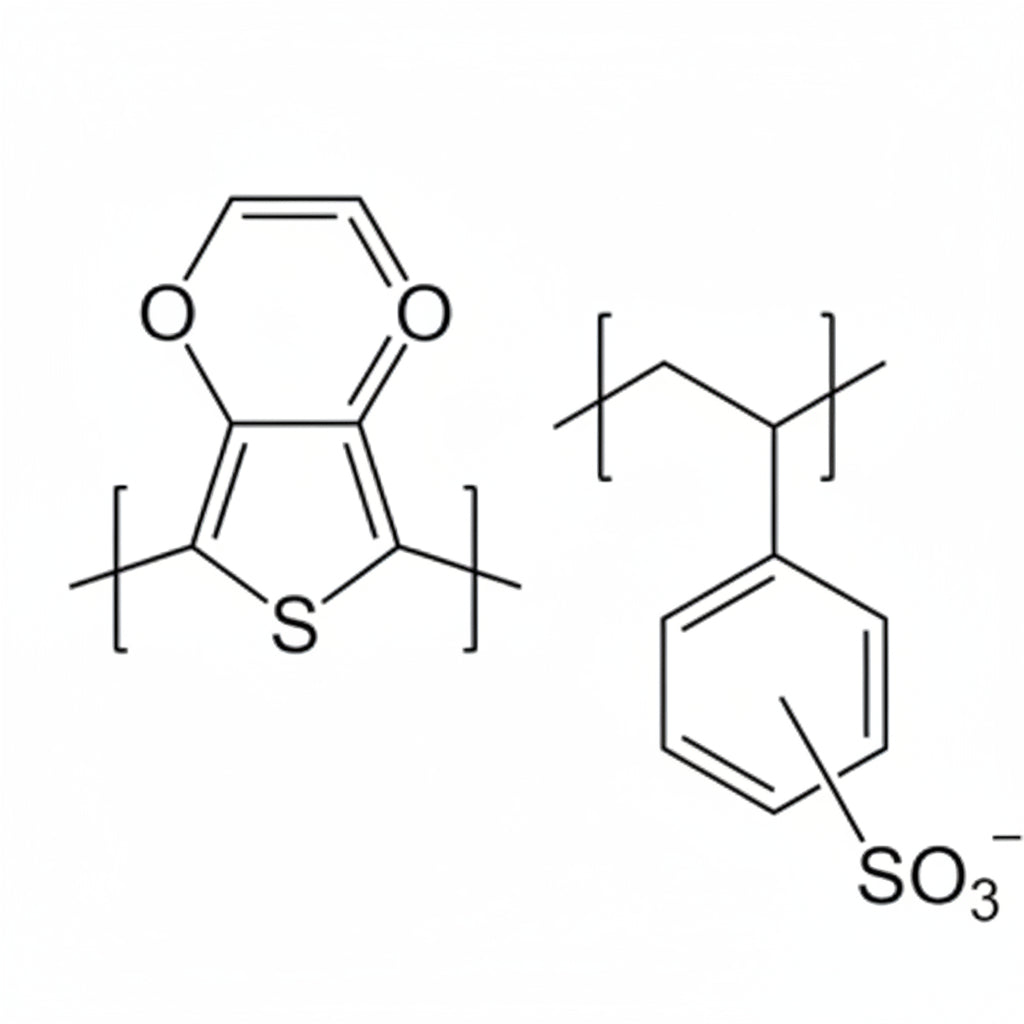
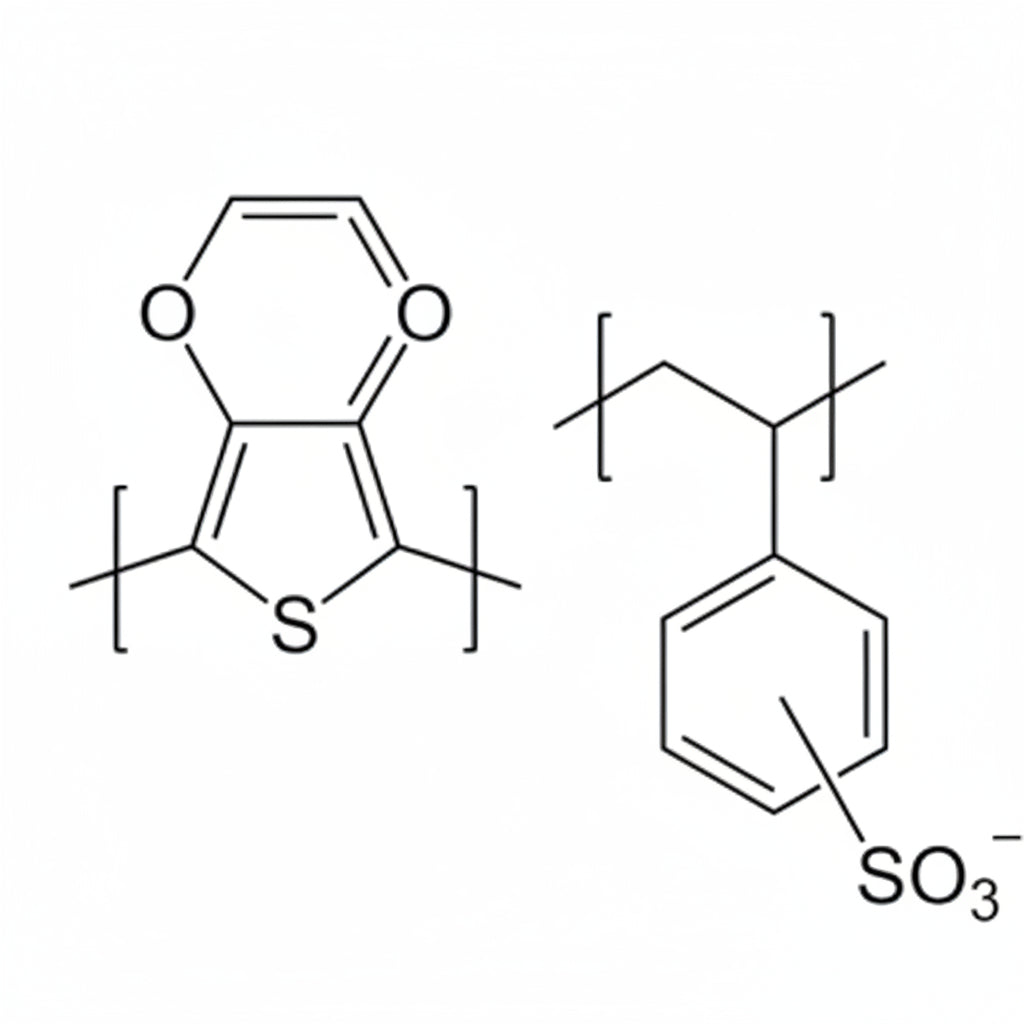
The collection includes 3Dresyn PEDOTEK1 and 3Dresyn PEDOTEK1 Bio, both explicitly positioned as electrically conductive 3D resins based on PEDOT:PSS.
- Conductive mechanism based on PEDOT:PSS rather than CNT, graphene or silver particles
- Availability of both standard and biocompatible-oriented variants
- Polymeric conductive route within the electronics portfolio
- PEDOT:PSS-based conductive applications
- Comparative R&D against carbon-based and silver-based conductive systems
- Conductive structures where PEDOT:PSS chemistry is specifically relevant
Silver-based conductive systems
The collection includes 3Dresyn AgNSEK1 and 3Dresyn AgSEK1, both explicitly positioned as electrically conductive silver-based 3D resins.
- Conductive phase based on silver rather than carbon fillers or PEDOT:PSS
- Available in both non-soluble and soluble & swellable matrix versions
- Metallic conductive route inside the portfolio
- Silver-based conductive applications
- Comparing metallic conductivity routes against carbon or conductive-polymer routes
- Choosing between non-soluble and soluble/swellable silver-based systems
Electro-thermo-responsive hydrogel route
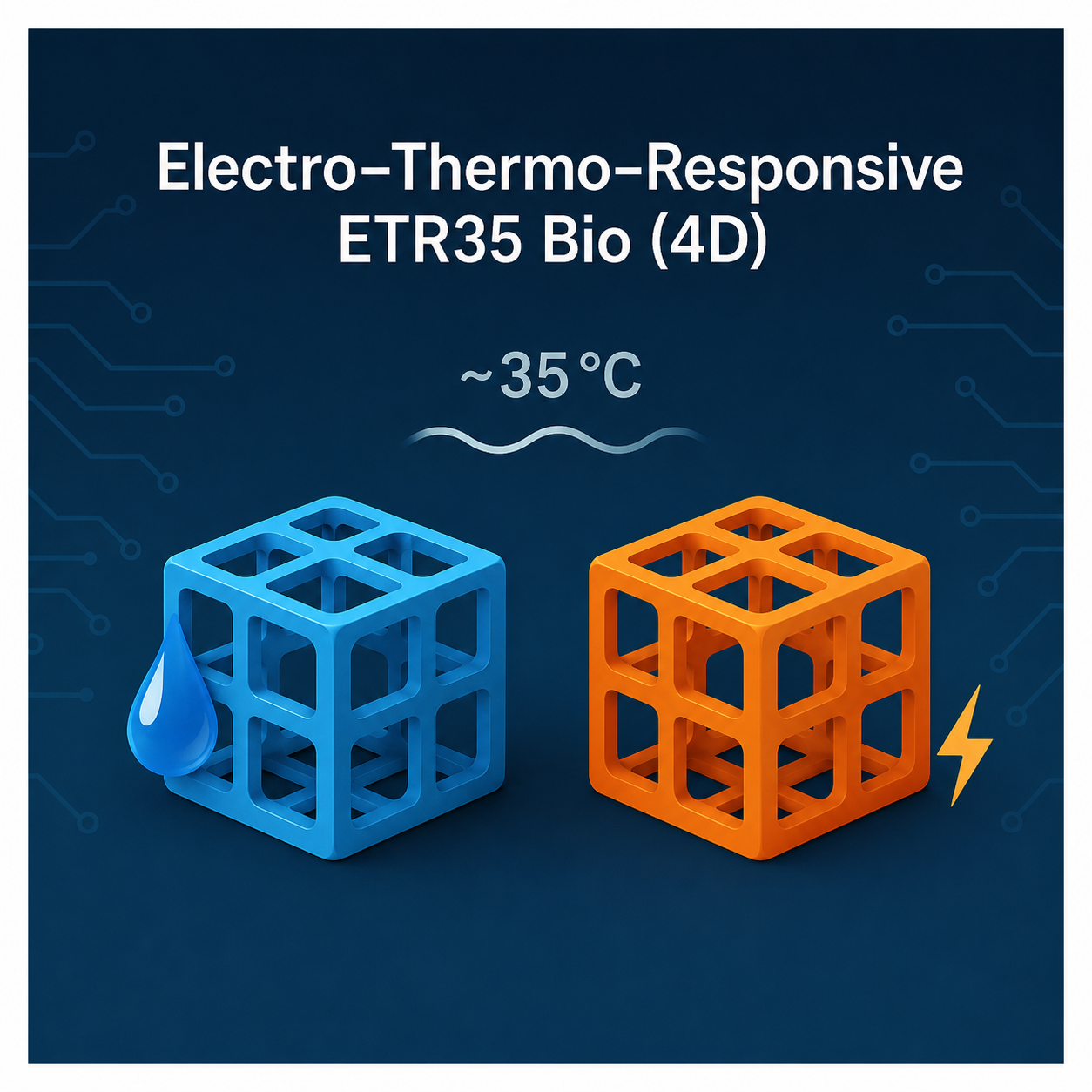
The collection also includes 4Dresyn ETR35 Bio, described as an Electro-Thermo-Responsive hydrogel printable by SLA, DLP and LCD printing.
- Electrically and thermally responsive route rather than a conventional static conductive resin route
- Hydrogel-based system with advanced functional behavior
- Relevant for electro-active and responsive-material research
- Electro-responsive R&D
- 4D and smart-material demonstrators
- Advanced hydrogel-based electronics-related studies
Selection logic
How to choose the right conductive resin
Select the system first by matrix behavior and then by conductive phase or responsive function.
- Need a non-soluble conductive route- prioritize NSEK-based families
- Need a soluble and swellable conductive route- prioritize SEK-based families
- Need carbon-nanotube conductivity- choose SWCNT or MWCNT routes
- Need graphene-based conductivity- choose GNP routes
- Need PEDOT:PSS chemistry- choose PEDOTEK1 routes
- Need silver-based conductivity- choose AgNSEK1 or AgSEK1
- Need electro-responsive hydrogel behavior- choose 4Dresyn ETR35 Bio
Conductivity is only one part of the selection problem
In this collection, product choice is not only about whether a resin is conductive. It also depends on whether the printed structure must remain non-soluble, become soluble or swellable, rely on carbon fillers, conductive polymers, metallic conductive phases or electro-responsive hydrogel behavior.
For that reason, the correct selection logic is: matrix behavior first, conductive mechanism second, application behavior third.
Engineering note
Final performance depends on resin chemistry, conductive phase, curing conditions, geometry, swelling behavior where applicable and the exact electrical or responsive function required in the end-use part.
Interpretation principle
These products should be understood as a structured family of conductive and electro-active material systems rather than as generic electronics resins. Final validation must always be performed on the printed part under the intended functional conditions.
Conductive route comparison: all 14 grades at a glance
Compare every grade by conductive route, conductivity profile, matrix behaviour, biocompatible availability and best-fit applications. Select matrix behaviour first (non-soluble vs soluble/swellable), then conductive phase, then validate conductivity and intended electrical function on the printed part.
| Family | Product | Route | Conductivity profile | Solubility / response | Bio | Best-fit applications |
|---|---|---|---|---|---|---|
| Base EK matrices | 3Dresyn NSEK1 Bio | Non-conductive photopolymer binder | Non-conductive matrix to formulate conductive resins | Non-soluble | Yes | Binder base for printed-electronics formulation: antennas, RFID/NFC, OLED, OPV, flexible PCBs |
| Base EK matrices | 3Dresyn NSEK1 | Non-conductive photopolymer binder | Non-conductive matrix to formulate conductive resins | Non-soluble | - | Binder base for custom conductive resin formulation |
| Base EK matrices | 3Dresyn SEK1 | Non-conductive photopolymer binder | Non-conductive matrix to formulate conductive resins | Water-soluble & swellable | - | Water-soluble binder base for tunable printed-electronics formulation |
| Carbon nanotubes (CNT) | 3Dresyn GrapNSEK1-SWCNT Bio | SWCNT conductive resin | Sheet resistance 0.4-4 MOhm/sq | Non-soluble | Yes | Conductive tracks, sensors, embedded electronics |
| Carbon nanotubes (CNT) | 3Dresyn GrapSEK1-SWCNT | SWCNT conductive resin | Sheet resistance 0.4-4 MOhm/sq | Water-soluble (sacrificial) | - | Temporary conductive pathways, sacrificial conductive structures, embedded electronics support |
| Carbon nanotubes (CNT) | 3Dresyn GrapNSEK1-MWCNT Bio | MWCNT conductive resin (high conductivity) | Sheet resistance 0.004-4 kOhm/sq | Non-soluble | Yes | High-conductivity tracks and sensors |
| Carbon nanotubes (CNT) | 3Dresyn GrapSEK1-MWCNT Bio | MWCNT conductive resin (high conductivity) | Sheet resistance 0.004-4 kOhm/sq | Water-soluble | Yes | Functional or sacrificial high-conductivity parts and sensors |
| Graphene (GNP) | 3Dresyn GrapNSEK1-GNP Bio | Graphene conductive resin | Sheet resistance >=150 kOhm/sq | Non-soluble | Yes | IoT antennas, RFID/NFC, OLED, flexible printed electronics |
| Graphene (GNP) | 3Dresyn GrapSEK1-GNP | Graphene conductive resin | Sheet resistance >=150 kOhm/sq | Water-soluble (sacrificial) | - | Removable conductive structures for electroforming, embedded electronics |
| PEDOT:PSS | 3Dresyn PEDOTEK1 | Intrinsic conductive polymer (no fillers) | Sheet resistance >4.5 kOhm/sq | Non-soluble | - | Antennas, RFID/NFC, sensors, OLED, flexible printed electronics |
| PEDOT:PSS | 3Dresyn PEDOTEK1 Bio | Intrinsic conductive polymer (no fillers) | Sheet resistance >100 kOhm/sq | Non-soluble | Yes | Antennas, RFID/NFC, flexible printed electronics |
| Silver-based | 3Dresyn AgNSEK1 | Silver conductive resin (highest conductivity) | Sheet resistance <0.44 Ohm/sq | Non-soluble | - | Antennas, RFID/NFC, flexible PCBs |
| Silver-based | 3Dresyn AgSEK1 | Silver conductive resin (highest conductivity) | Sheet resistance <0.44 Ohm/sq | Water/alcohol soluble & swellable | - | Antennas, RFID/NFC, flexible PCBs |
| Electro-responsive | 4Dresyn ETR35 Bio | Electro-thermo-responsive 4D hydrogel | Reversible conductivity change (not a fixed value) | Thermoresponsive ~32-35 C; reversible swelling | Yes | Smart biosensors, soft bioelectronics, micro-actuators, electro-responsive R&D |
Mobile: scroll horizontally to view all columns. The first column remains visible while scrolling. EK base matrices are non-conductive photopolymer binders used to formulate conductive resins, not conductive grades on their own. 4Dresyn ETR35 Bio is an electro-thermo-responsive hydrogel for research and development, not a static conductive resin.
High-permittivity dielectric resins for electronics
A separate dielectric route within the Electronics collection. These are high-permittivity (high-k) dielectric photopolymers for charge storage and electromagnetic design, not electrically conductive resins.
| Product | Dielectric route | Dielectric properties | Process | Best-fit applications |
|---|---|---|---|---|
| 3Dresyn HP1 Clear | Transparent high-k dielectric | Relative permittivity 8-12, dielectric loss below 0.5 (10 Hz-1 MHz) | SLA, DLP, LCD | RF and microwave devices, transparent antennas, resonators, RF cavities, filters, capacitive and optoelectronic components |
| 3Dresyn HP1 BTO70 | Barium titanate (BTO) high-permittivity dielectric | Relative permittivity 8-9, low loss to 20 GHz | SLA, DLP, LCD and injectable in molds | RF and microwave devices, antennas, resonators, filters, capacitors, sensors and transducers |
Mobile: scroll horizontally to view all columns. High-permittivity dielectric resins store charge and shape electromagnetic fields; they are not electrically conductive grades. Dielectric performance depends on geometry, frequency and post-processing, and requires application-specific validation.
Sort by
Filters



From prototyping to industrial production, performance depends on materials, calibration and process control