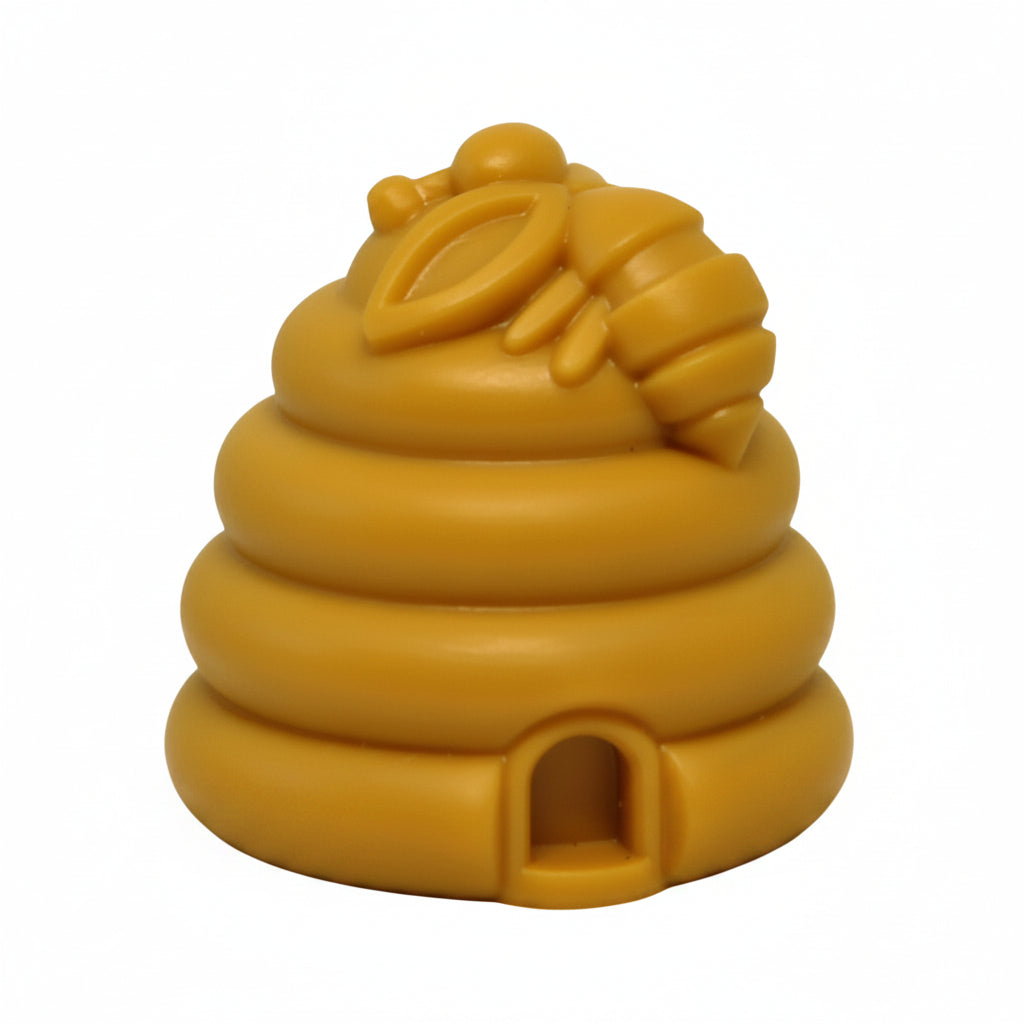
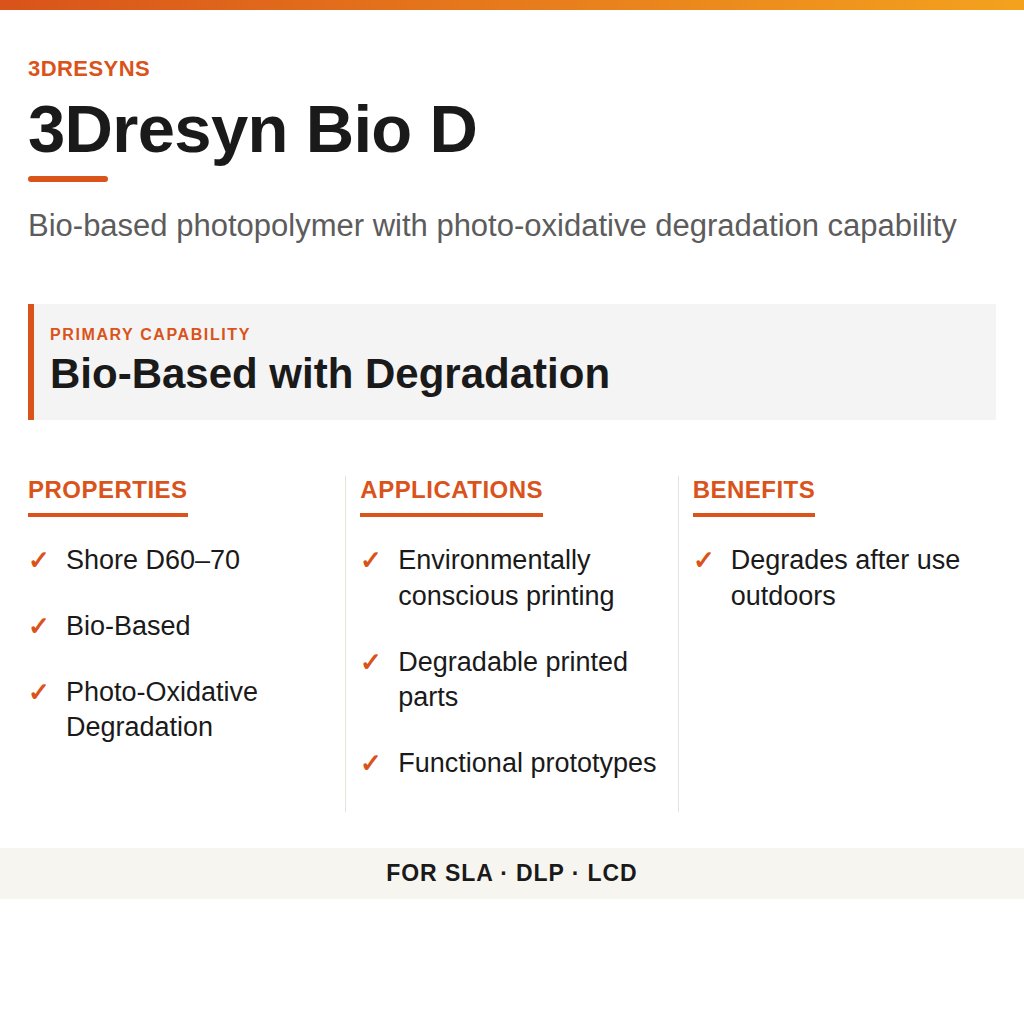
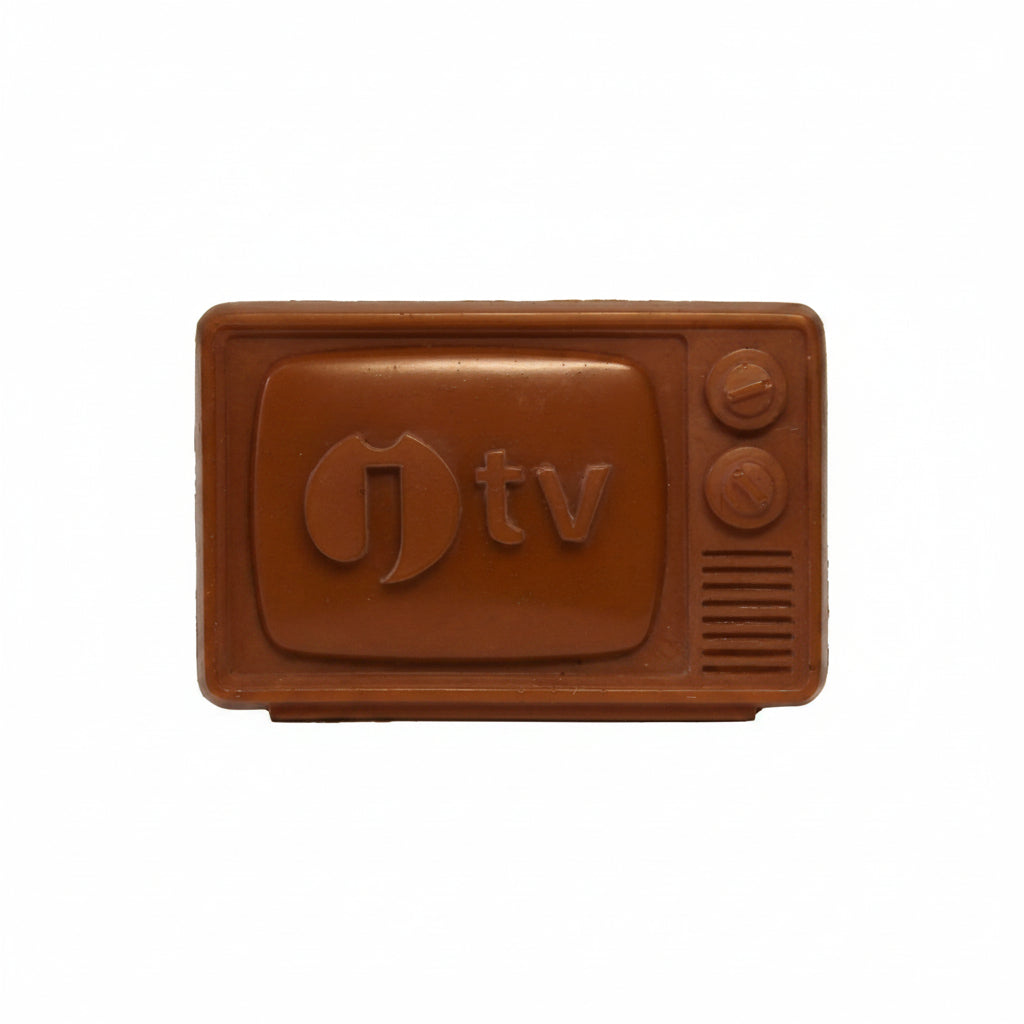
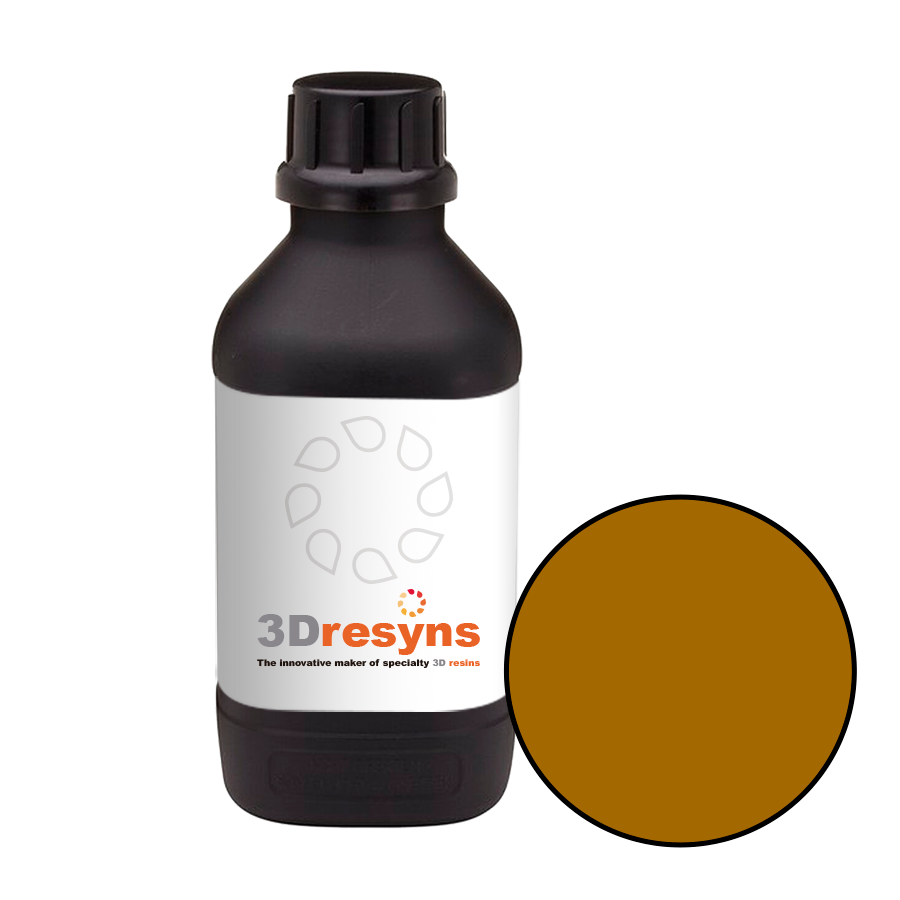


3Dresyn Bio D, bio based soya resin with bio & photo oxidative catalysts with 81% Bio content
Product description
3Dresyn Bio D is a bio-based photopolymer formulation designed for environmentally conscious SLA, DLP and LCD 3D printing workflows. The material incorporates 3Dresyn Bio Soya1 as a primary bio-based component, combined with enzymatic and photo-oxidative catalyst systems to promote accelerated degradation pathways under appropriate conditions.
This formulation includes bio-catalysts and pro-degradant additives engineered to support both biological and photo-oxidative degradation mechanisms, enabling reduced environmental persistence compared to conventional photopolymers.
Application framework
Designed for use in vat photopolymerization systems (SLA, DLP and LCD) within professional, educational and laboratory environments for prototyping, model fabrication and applications where environmental degradation and lifecycle considerations are relevant.
Typical applications
- Eco-conscious prototypes and concept models
- Educational and research applications in sustainable materials
- Parts designed for controlled degradation or reduced environmental persistence
- General-purpose rigid components with moderate mechanical requirements
Measured mechanical properties
- Tensile strength: <50 MPa (ISO 527-1 / ISO 527-2)
- Flexural strength: <50 MPa (ISO 178)
- Young’s modulus: 1000–1600 MPa (ISO 527)
- Elongation at break: <10% (ISO 527)
- Shore hardness: D60–70 (ISO 868)
Measured physical properties
- Bio-based content: ~81% from renewable sources
- Soya content: >30%
- Viscosity: <5000 mPa·s at 25 °C
- Shrinkage: very low (typical)
- Resolution capability: very high (process-dependent)
Degradation and environmental characteristics
- Formulated for enhanced biodegradation through enzymatic catalysis
- Photo-oxidative degradation accelerated by light and heat exposure
- Reduced environmental persistence compared to conventional resins
- Supports development of environmentally responsible additive manufacturing workflows
Functional performance characteristics
- Rigid material with minor flexibility
- Very high resolution and surface detail
- Low shrinkage supporting dimensional stability
- Balanced mechanical performance for general-purpose applications
Processing and handling performance
- Printing technologies: SLA, DLP and LCD
- Wavelength compatibility: 200–410 nm
- Compatible with most commercial and professional systems when properly calibrated
- Standard photopolymer processing workflows apply
Chemical and safety characteristics
- BPA-free formulation
- Transition metal-free formulation
- Organo-tin free formulation
- EN 71-3:2019 compliant (reference framework)
Testing & processing disclaimer
Material properties are measured under controlled laboratory conditions and may vary depending on printer type, wavelength, formulation tuning, layer thickness, build orientation and post-processing conditions. Degradation performance depends on environmental exposure conditions and workflow validation.
Disclaimer
This material is supplied as a professional manufacturing material for prototyping and model fabrication workflows. It is not marketed as a finished medical device. Environmental behaviour and degradation performance of final parts must be evaluated by the user under intended conditions of use and disposal.
This technical datasheet should be used together with the relevant processing, calibration, safety and workflow documentation available in the 3Dresyns® Resources section.
Document reference: TDS-BIO-D-EN | Version: 1.0 | Last updated: March 2026
Choose options