
Biorigid 3Dresyns
Bio-based rigid photopolymers organized for engineering-oriented material selection where stiffness, dimensional stability and renewable-content positioning are required.
This collection supports comparison of rigid bio-based systems for high-resolution additive manufacturing workflows requiring repeatable geometry and consistent surface definition.
Navigate by: rigidity, temperature resistance, workflow requirements and regulatory interpretation.
This collection is structured for rigid functional photopolymer applications requiring stiffness, dimensional precision and controlled workflow performance.
It is particularly relevant for engineering prototypes, housings, fixtures, tooling elements and rigid printed components where repeatability and process control are critical.
Quick selection
Choose your workflow focus
Use the routes below to navigate key aspects of rigid bio-based material selection.
Key features & benefits
Bio-based rigid resin portfolio
These materials are designed for rigid photopolymer applications where high stiffness, dimensional stability and high-resolution printing are required.
- Bio-based rigid resin portfolio
- High stiffness and dimensional stability
- High-resolution printing capability
- Consistent surface definition
- Renewable-content positioning for rigid photopolymer solutions
Typical applications
These materials are intended for rigid engineering-focused workflows where stiffness and repeatable geometry are required.
- Rigid functional prototypes
- Housings
- Fixtures
- Tooling elements
- Engineering components requiring stiffness and repeatable geometry
Products in this collection
Products in this collection are shown below.
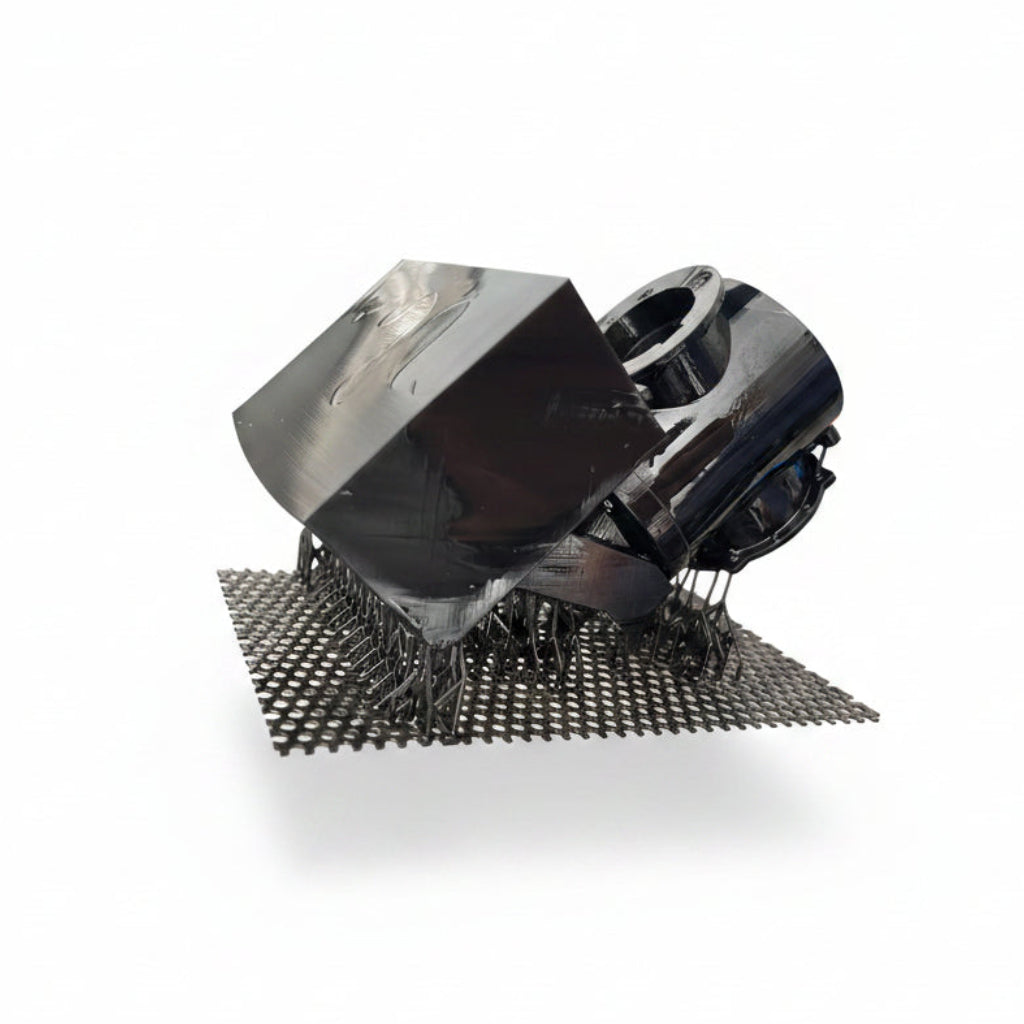
This collection currently groups two ultra-rigid Biorigid grades positioned for engineering and prototyping workflows across SLA, DLP and LCD/MSLA vat photopolymerization systems.
Biocompatibility and workflow framework
How biocompatibility should be interpreted
Biocompatibility-related testing may be performed under controlled laboratory conditions, including ISO 10993 where applicable, depending on the formulation and version.
Reported results represent typical responses obtained under defined configurations and should not be interpreted as intrinsic or unconditional properties of the liquid resin alone.
Workflow-dependent performance
Mechanical behaviour, surface characteristics, dimensional accuracy and biological interaction outcomes depend on multiple interacting variables throughout the full manufacturing workflow.
- Formulation version
- Exposure strategy
- Printer calibration
- Washing procedure
- Post-curing conditions
Successful implementation requires alignment between material selection, equipment capability and strict adherence to qualified Instructions for Use.
Biorigid product comparison table
Use the table below to compare the currently visible Biorigid grades in this collection.
| Product | Shore class | Material family | Mechanical profile | Typical positioning |
|---|---|---|---|---|
| 3Dresyn Biorigid R190D90 | D90 | Biorigid | Ultra rigid, high thermal resistance | Rigid functional parts requiring maximum stiffness and higher heat resistance |
| 3Dresyn Biorigid R140D90 | D90 | Biorigid | Ultra rigid, high thermal resistance | Rigid parts and guides with lower thermal requirement than R190D90 |
Mobile: scroll horizontally to view all columns. The first column remains visible while scrolling.
Regulatory interpretation
Professional manufacturing materials
3Dresyns biocompatible materials are supplied as professional manufacturing materials for additive manufacturing workflows. They are not marketed as finished medical devices unless explicitly stated for a specific product and jurisdiction.
The regulatory classification, validation and compliance of any final medical device manufactured using these materials remain the sole responsibility of the legal manufacturer of that device in accordance with applicable regulations, including Regulation (EU) 2017/745.
Engineering note
Final printed-part performance depends on coordinated control of material, printer, exposure, washing and post-curing variables rather than on nominal material designation alone.
Interpretation principle
These materials should be interpreted as workflow-dependent engineering systems. Final suitability, including any biological or regulatory claim at device level, must always be validated under the intended manufacturing and end-use conditions.
Sort by
Filters
From prototyping to industrial production, performance depends on materials, calibration and process control