
3D resins for printing plates
3D resins for printing plates organized for rigid, semi-rigid, flexible and elastomeric plate fabrication across letterpress, flexography, pad printing and soft-contact transfer workflows.
This collection supports comparison of plate-printing materials according to hardness, contact mechanics, dimensional stability, rebound behavior and printing-process demands.
Navigate by: plate hardness, printing technology, contact behavior or manufacturing workflow priority.
This collection is structured for digital fabrication of functional printing plates ranging from rigid Shore D systems to ultra-soft Shore A elastomeric materials.
It supports letterpress, flexography, pad printing, embossing, soft lithography and other plate-based manufacturing workflows where contact mechanics and dimensional control are critical.
Quick selection by workflow priority
Choose your printing-plate route
Use the routes below to access the most relevant material family in this collection.
Key features & benefits
Plate-printing photopolymers across a full hardness range
These materials are designed for printing-plate fabrication where hardness, rebound, contact pressure, dimensional stability and surface detail determine functional performance.
- Complete material range from rigid Shore D to ultra-soft elastomeric Shore A systems for precise control of contact mechanics
- Plate printing positioning across letterpress, flexography, pad printing and soft-contact transfer systems
- High hardness options for dimensional stability, precision and embossing performance
- Elastomeric grades enabling controlled compression, rebound and substrate conformity
- Very high resolution and defined surface detail for microfeatures, fine text and structured geometries
- Very low shrinkage for dimensional accuracy and repeatability
- High impact resistance and durability under cyclic mechanical loading
- Compatibility with SLA, DLP and LCD systems for digital manufacturing workflows
- Supports rapid prototyping and short-run production of functional printing plates
Typical applications
These resins are relevant for printing-plate workflows where the mechanical response of the plate must be matched to the contact pressure, substrate compliance and transfer mechanism.
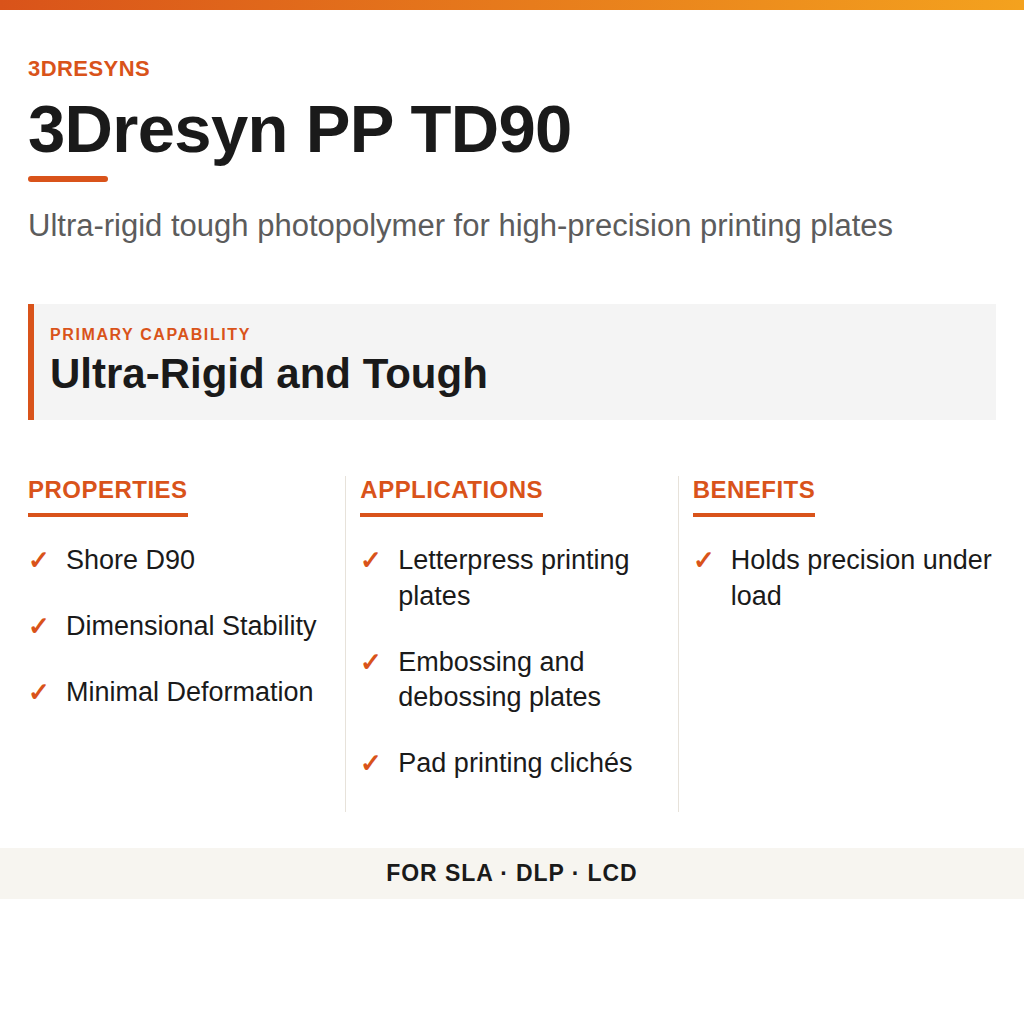
- Rigid plates (Shore D): letterpress plates, embossing and debossing plates, stamping plates and high-precision printing geometries
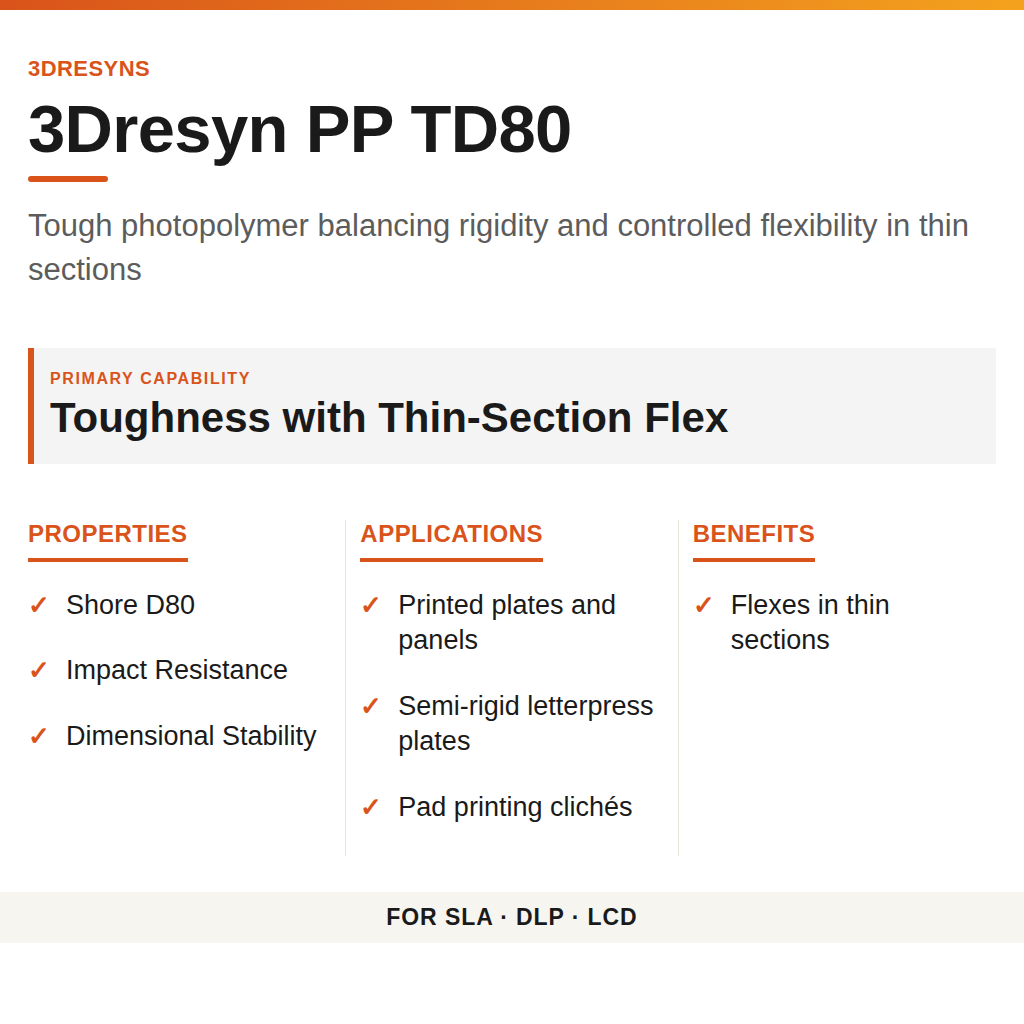
- Semi-rigid plates (D80–D70): pad printing clichés, hybrid printing plates and controlled-contact printing systems
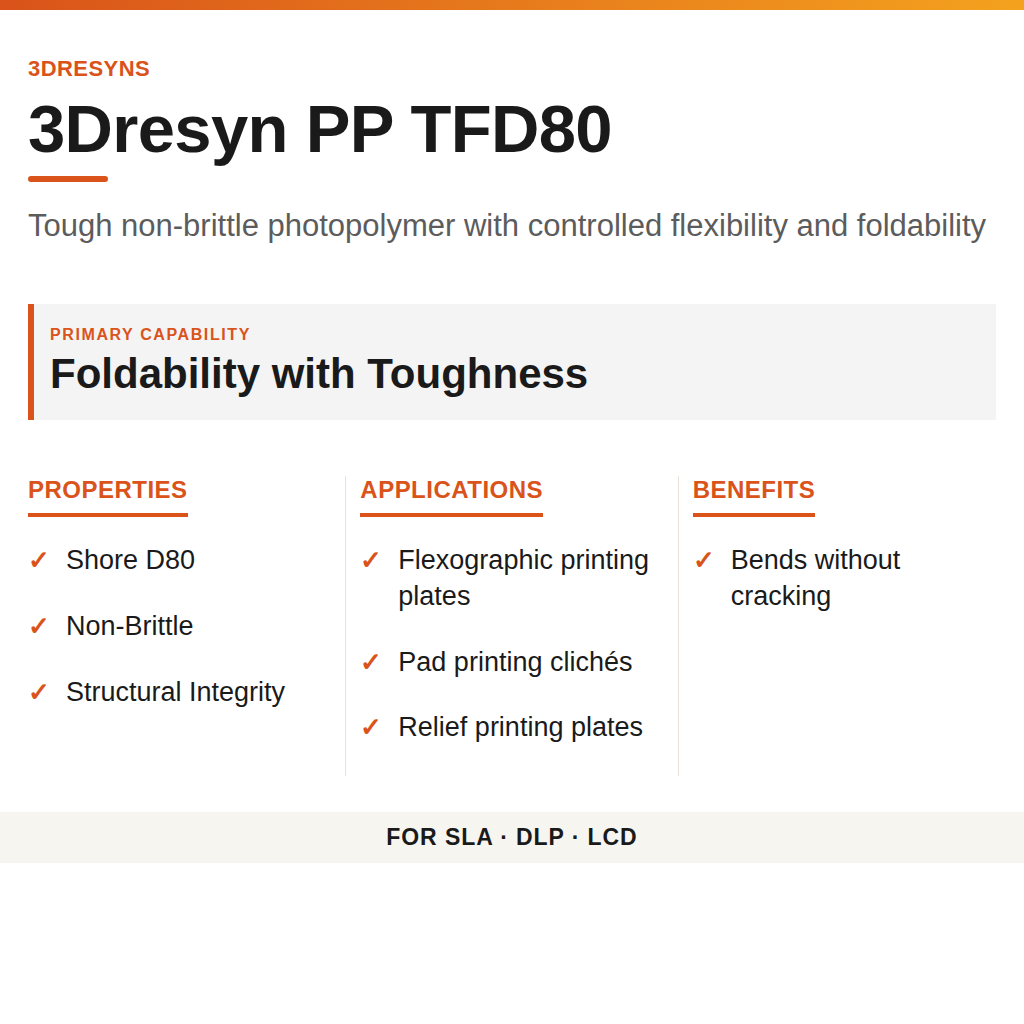
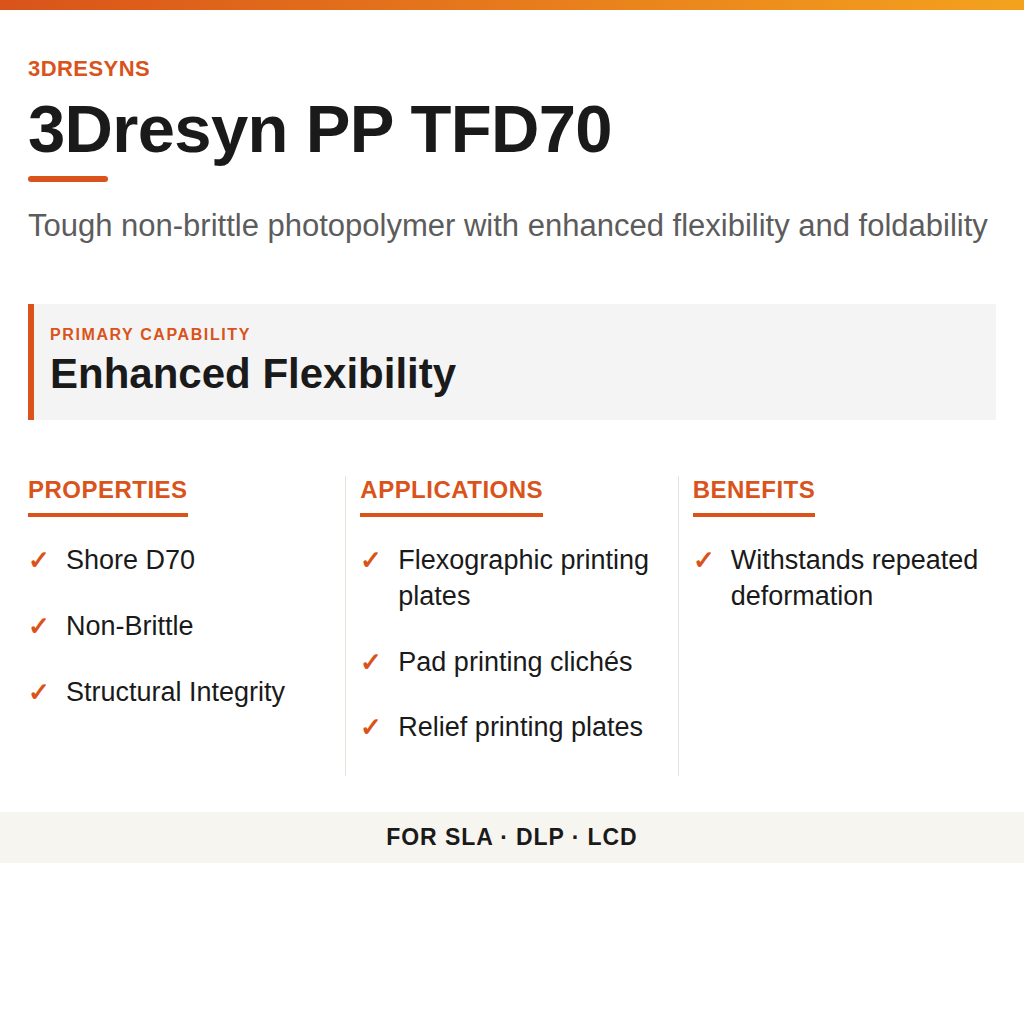
- Flexible plates (D70–D30): flexographic printing plates, packaging printing and medium-pressure contact applications
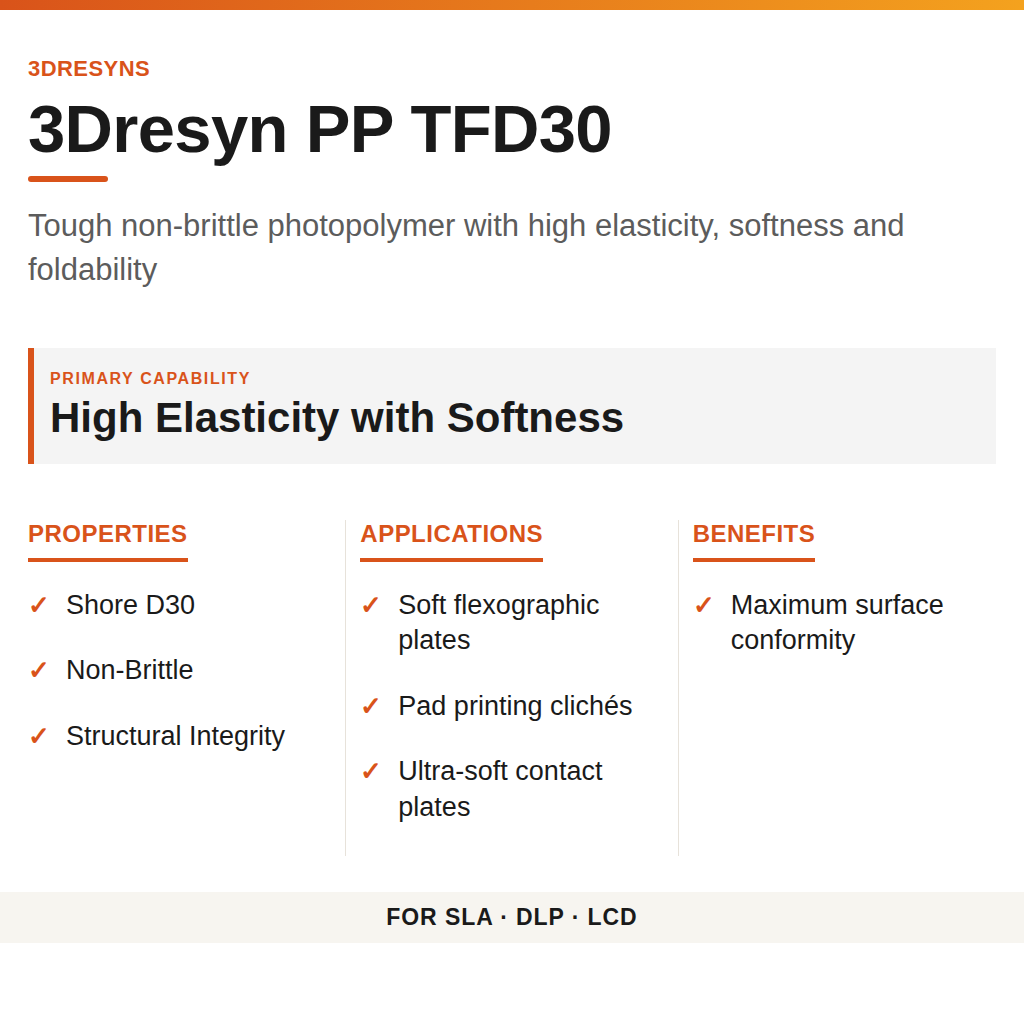
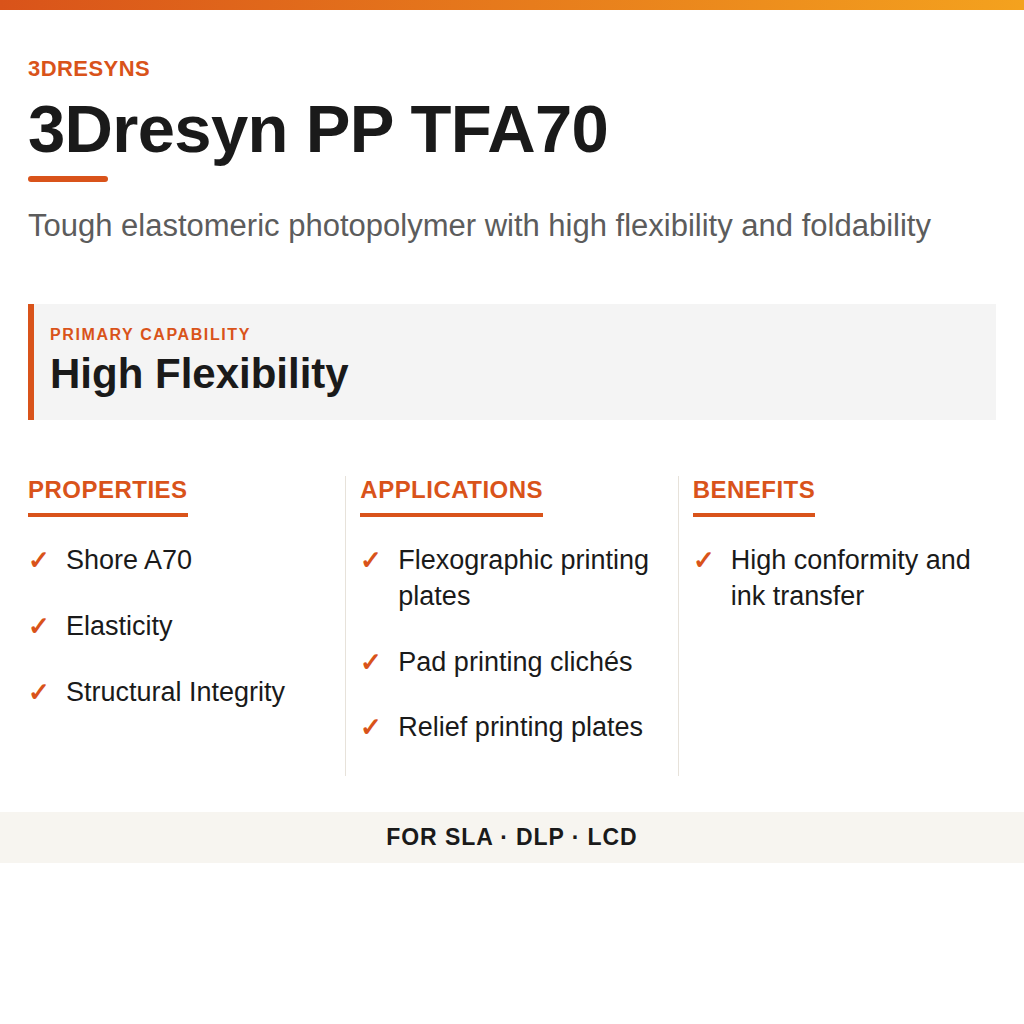
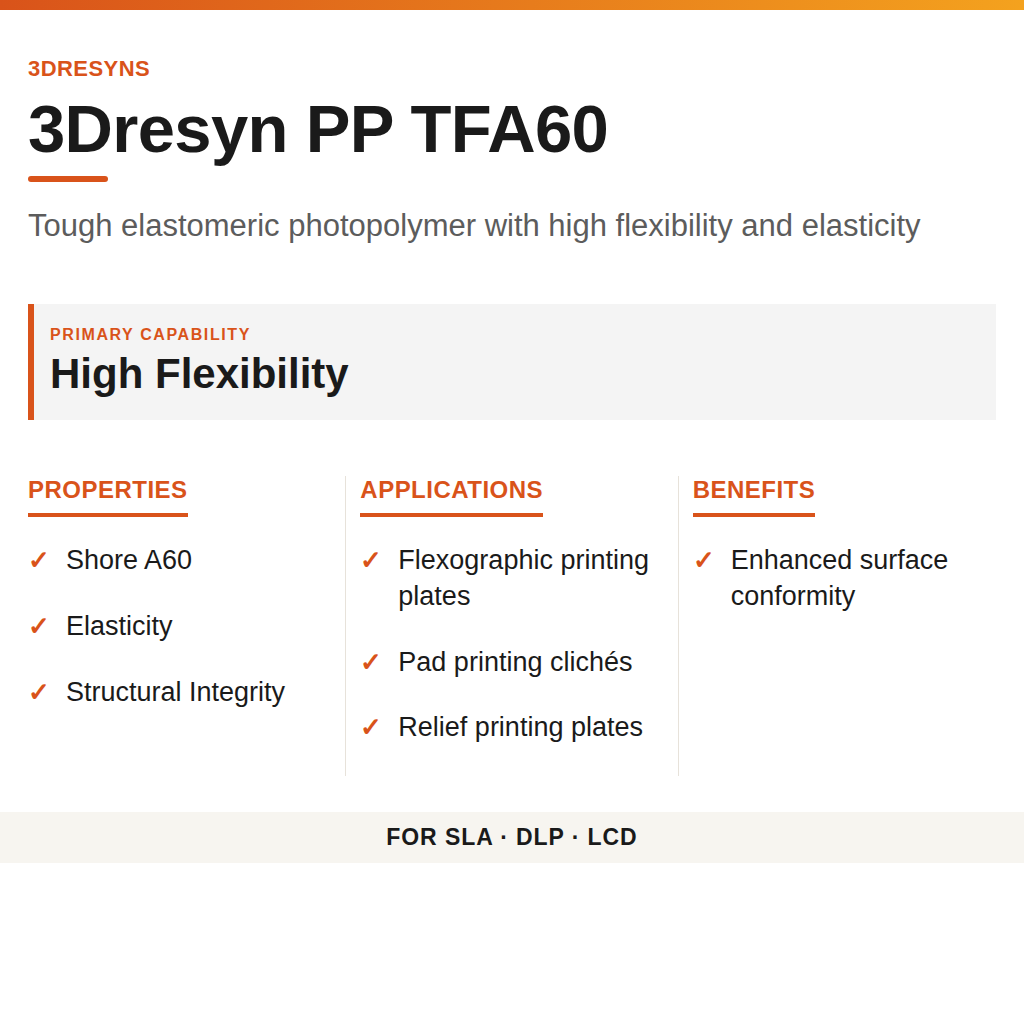
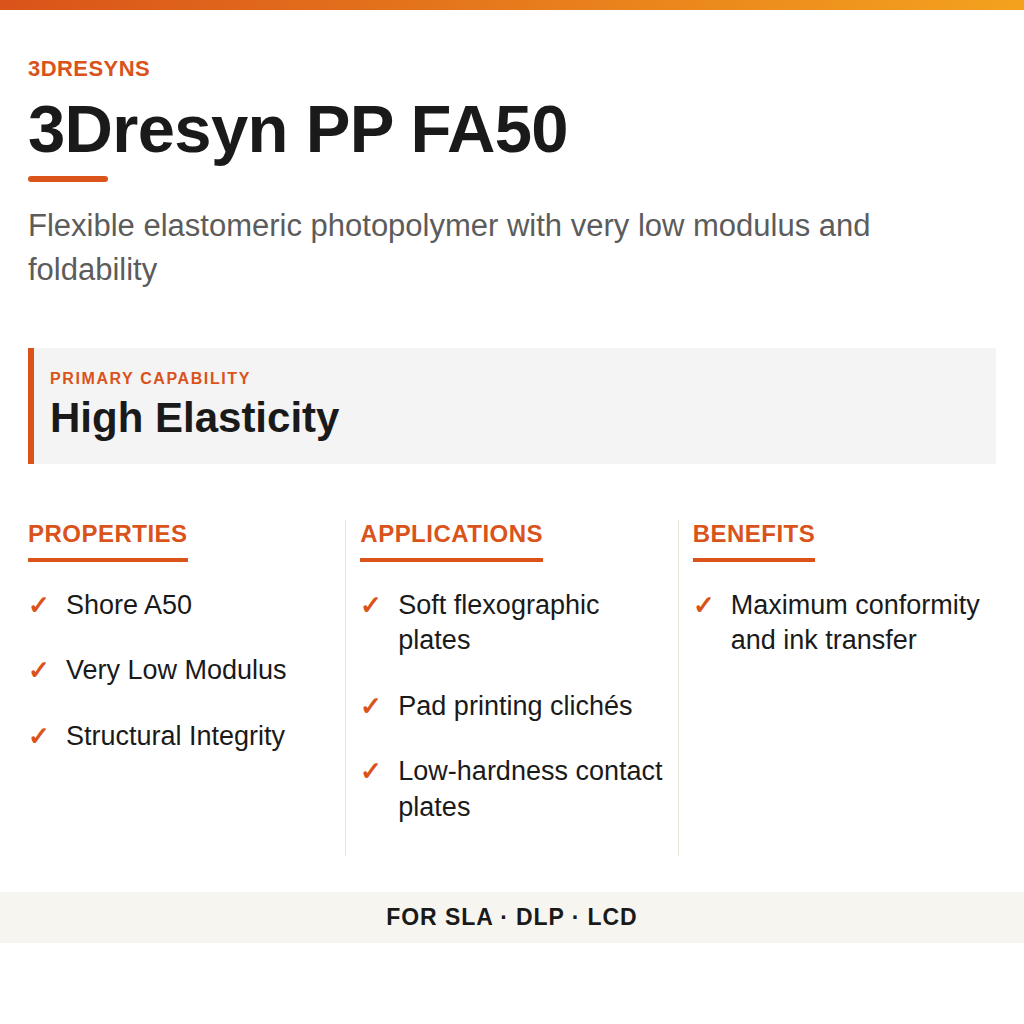
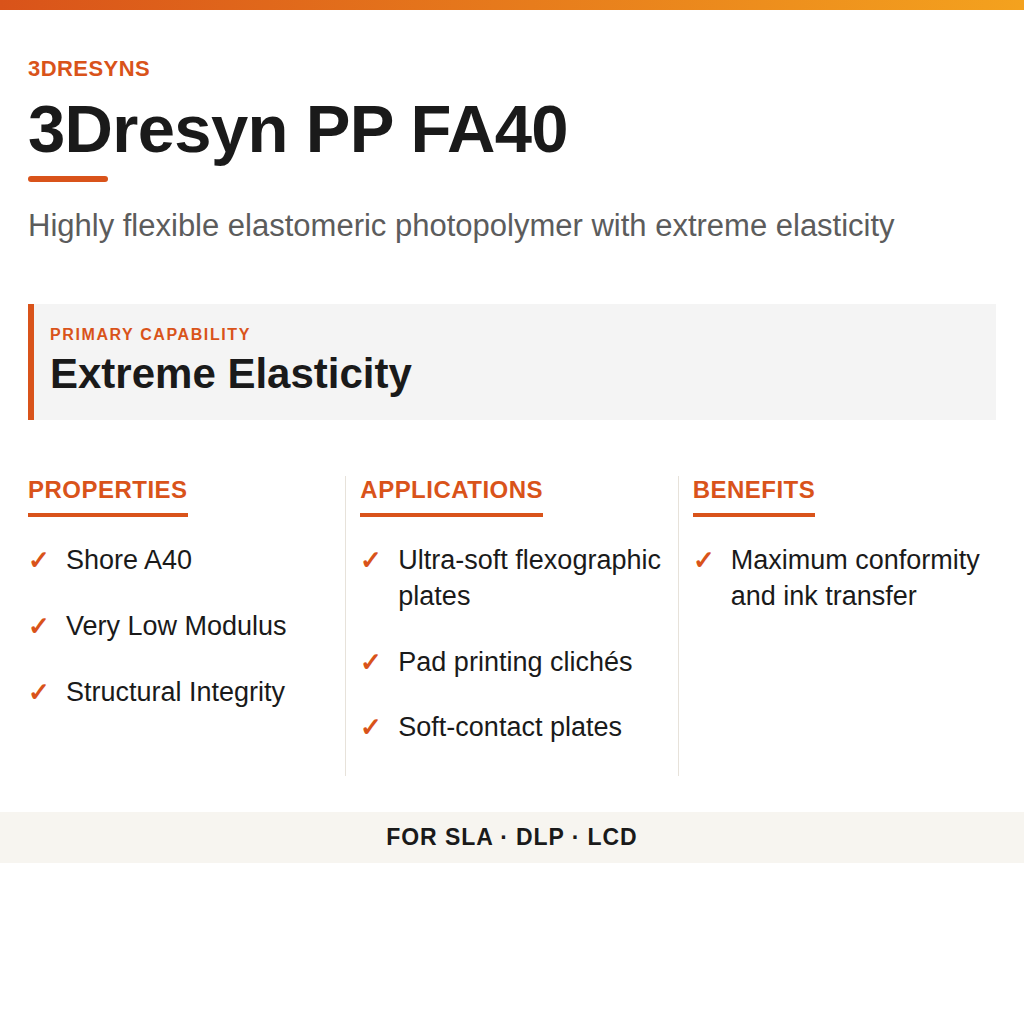
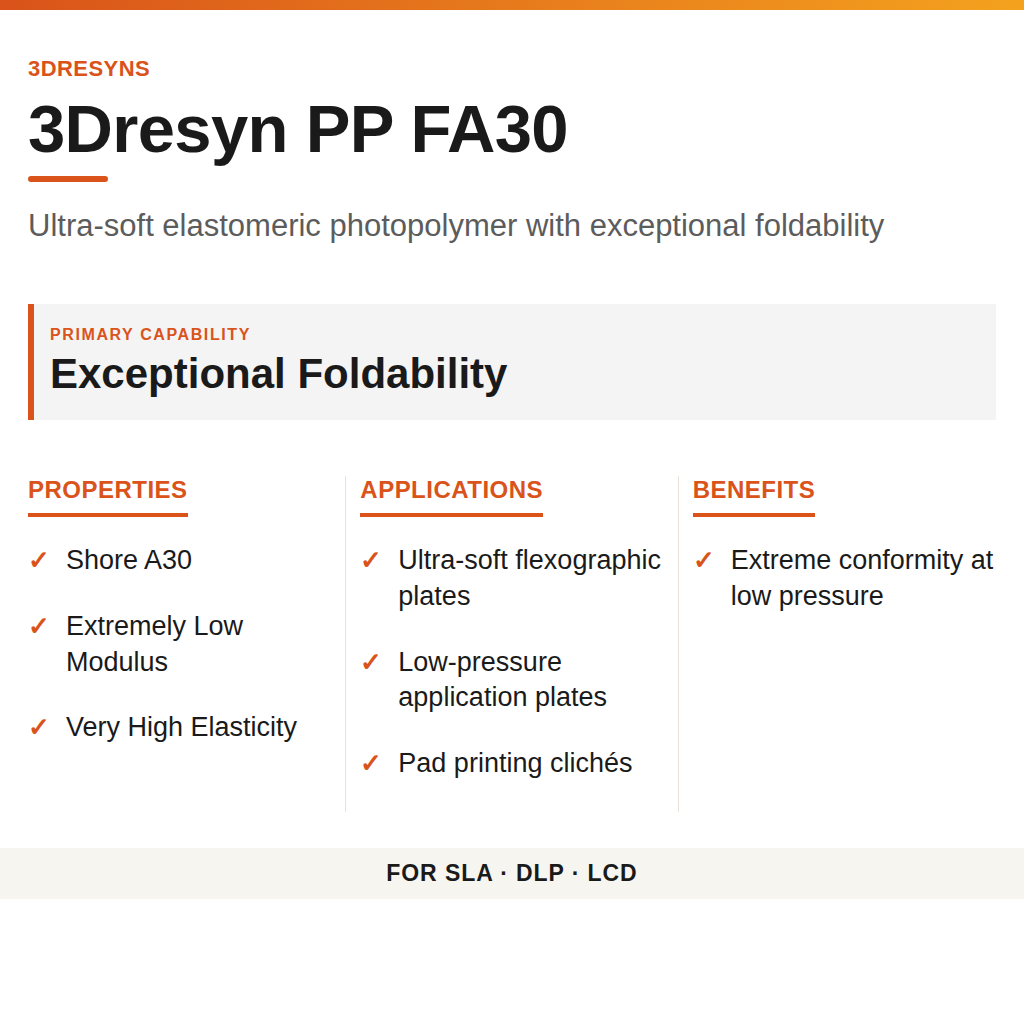
- Elastomeric plates (A70–A30): soft flexography, pad printing and printing on irregular or compressible substrates
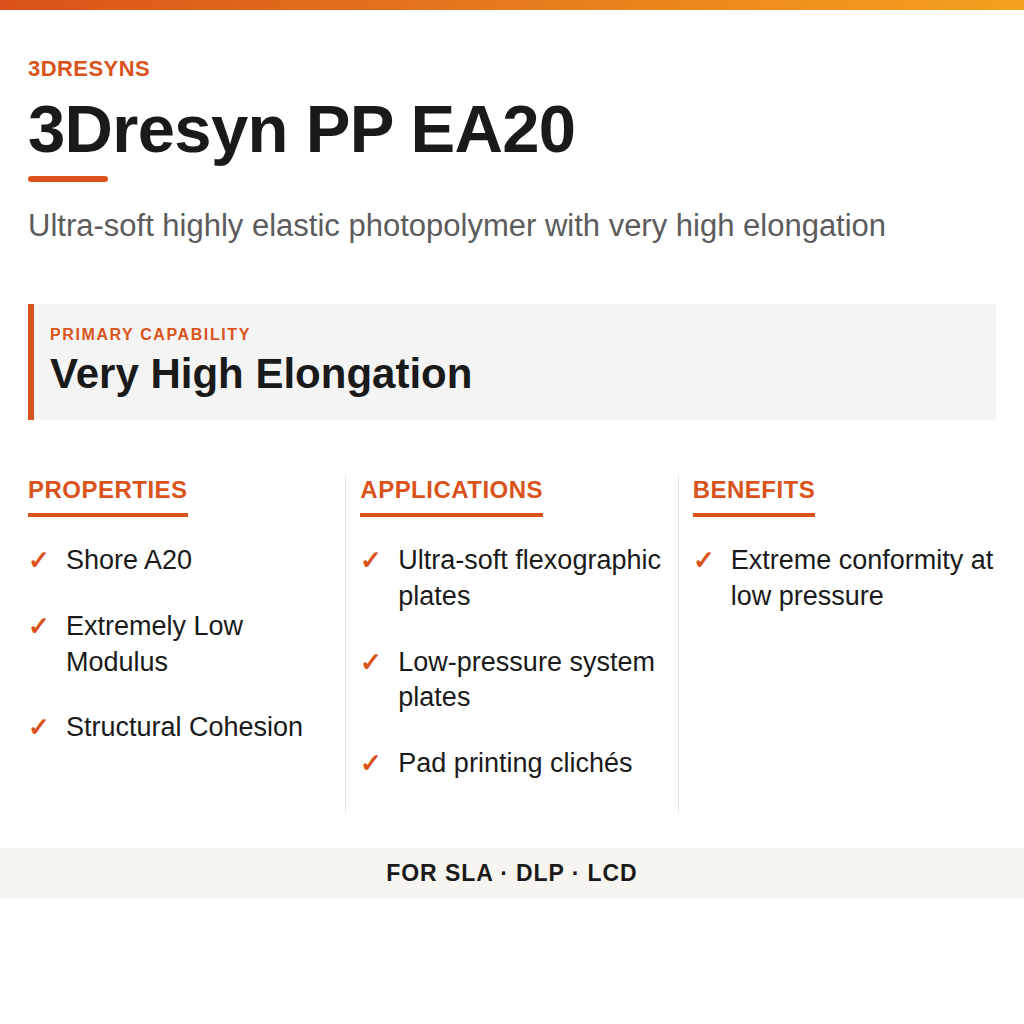
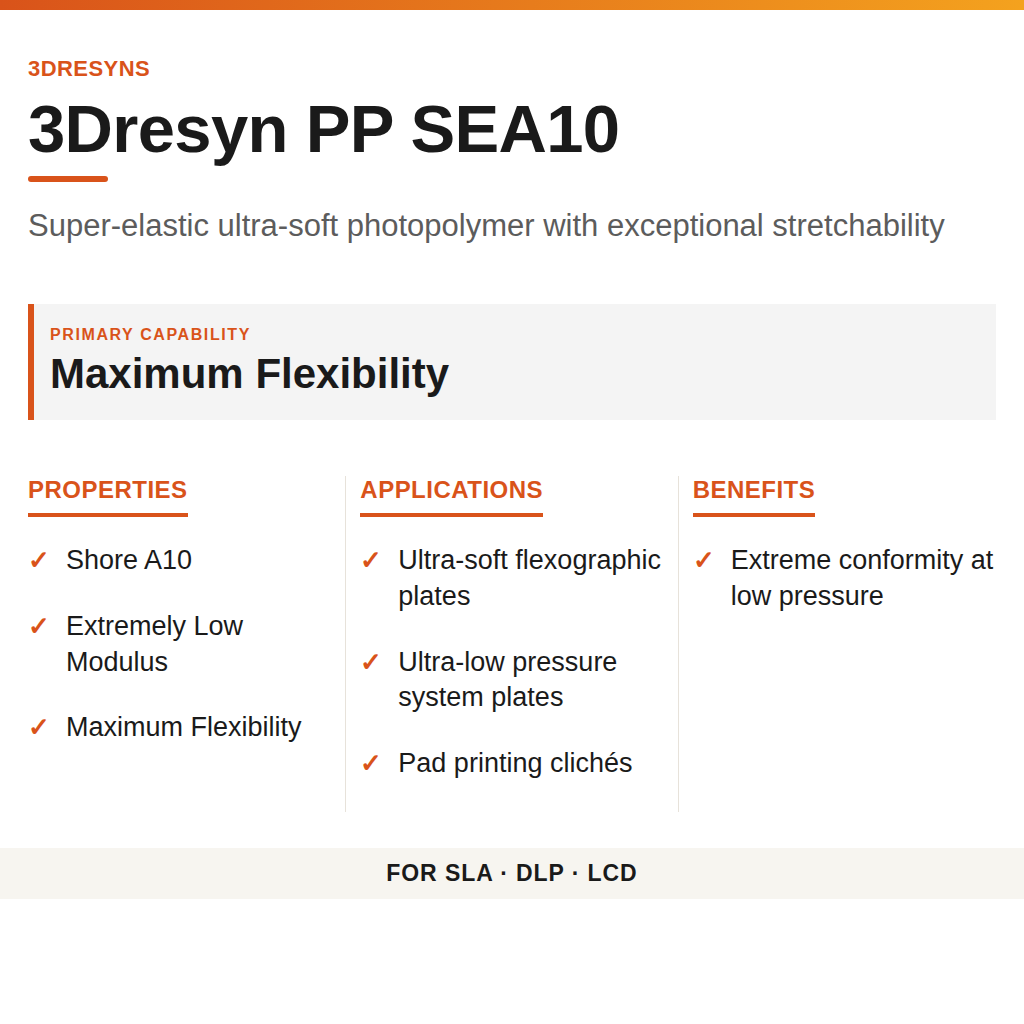
- Ultra-soft systems (A30–A10): soft lithography, microcontact printing, functional surface transfer and printing on fragile or highly deformable materials
- Embossing, marking and surface texturing plates
- Prototyping of plate-based manufacturing processes
- Short-run and customized plate production
Products in this collection
Products in this collection are shown below.
This collection currently includes rigid, semi-rigid, flexible and elastomeric plate-printing routes for multiple printing technologies and contact-mechanics requirements.
Selection logic
How to choose the right printing-plate resin
Select the most suitable grade according to the required contact mechanics, hardness range, substrate conformity, dimensional precision and intended printing process.
- Need maximum dimensional precision and embossing performance → prioritize rigid Shore D plate systems
- Need controlled-contact plate behavior → review semi-rigid D80–D70 routes
- Need flexographic or medium-pressure transfer behavior → choose flexible D70–D30 grades
- Need substrate conformity or soft-contact transfer → choose elastomeric A70–A30 grades
- Need microcontact printing or ultra-soft transfer systems → prioritize very soft A30–A10 routes
Printing-plate performance depends on contact mechanics and process control
Even with plate-oriented materials, final results depend on printer calibration, exposure strategy, relief geometry, surface finish, rebound behavior, ink-transfer conditions and the compliance of the target substrate.
These materials are best interpreted as functional plate-manufacturing tools where hardness, deformation and dimensional stability must be matched to the complete printing workflow.
Engineering note
These materials are intended for functional printing plates, embossing tools and plate-based manufacturing workflows. Final suitability depends on plate geometry, ink-transfer conditions, cyclic loading, substrate interaction and the required balance between precision and compliance.
Interpretation principle
These products should be understood as structured plate-printing material options organized by contact mechanics and functional behavior. Final validation must always consider the target printing technology, substrate properties and the specific transfer or embossing conditions of the process.
Related plate-printing routes
Use these related 3Dresyns collections to connect plate-printing materials with broader engineering resin selection, plate-focused packs and the wider 3Dresyns catalogue.
Sort by
From prototyping to industrial production, performance depends on materials, calibration and process control