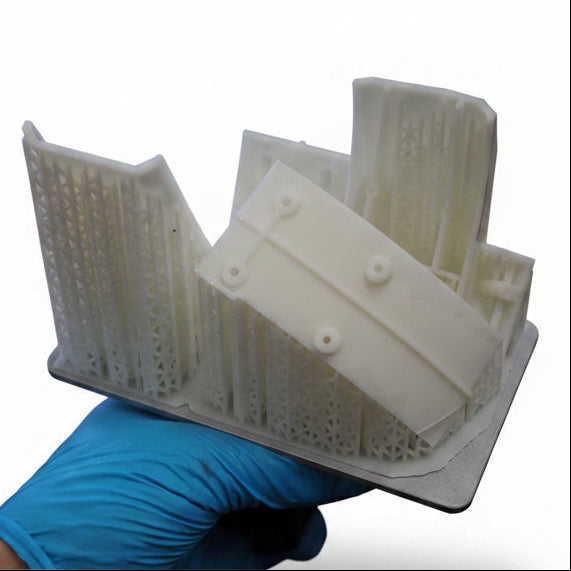
Next-generation 3D resins organized for performance-driven selection across rigid, tough, foldable, flexible and elastic functional photopolymers.
This collection supports comparison of the full NextGen platform according to thermal resistance, hardness, stiffness, elongation and overall mechanical behaviour for engineering and functional workflows.
Navigate by: performance family, target behaviour, thermal resistance or required balance between rigidity, toughness and flexibility.
Select the grade according to workflow priority and validate the final resin choice for the intended printer, exposure settings and application criticality.
Engineering-oriented NextGen material platform
This collection is structured for users comparing high-temperature rigid systems, structural tough grades and flexible or elastic materials within a single engineering framework.
It supports functional prototyping, engineering validation, material benchmarking and performance-driven resin selection workflows based on real mechanical behaviour rather than naming alone.
Choosing the right functional resin matters
Next-generation engineering materials offer a balance between performance, reliability and cost, but correct selection depends on application, mechanical behaviour and process control.
Use our structured decision guide to identify the most suitable material family for your workflow.
Open engineering selection guide →
Quick selection by workflow priority
Material navigation
Choose your NextGen material route
Use the routes below to access the most relevant material family in this collection.
Typical routes
Key features & benefits
Material profile
Next-generation functional photopolymers for engineering selection
These materials are designed for engineering workflows where thermal resistance, stiffness, strength, elongation and overall functional response must be compared in a structured way.
Main advantages
- Structured comparison across rigid, tough, foldable, flexible and elastic performance families
- Engineering-oriented selection by thermal resistance, hardness, stiffness and elongation
- Support for functional prototyping, engineering validation and material benchmarking
- Broad performance platform covering high-temperature rigid systems and highly deformable elastomeric grades
- Useful for performance-driven design validation and comparative R&D workflows
- SLA, DLP and LCD/MSLA compatible depending on grade and process conditions
Typical uses
Typical applications
These resins are relevant for engineering and development workflows where performance selection depends on matching the material family to the required service behaviour.
Application examples
- High-temperature rigid functional parts and thermally demanding prototypes
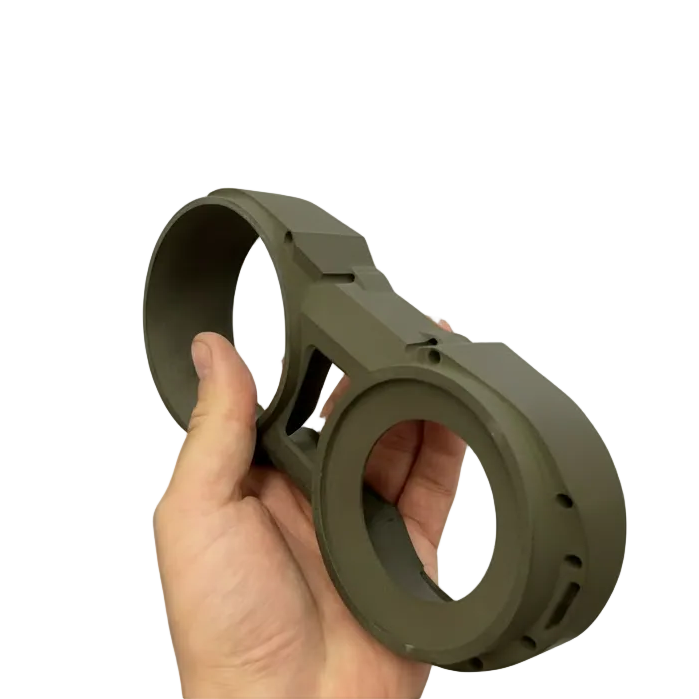
- Structural tough components and engineering validation parts
- Semi-rigid, foldable and controlled-deformation applications
- Flexible functional parts and soft mechanical components
- Elastic and super-elastic applications requiring very high deformation capability
Collection overview
Products in this collection
Products in this collection are shown below.
This collection currently includes high-temperature ultra-rigid grades, structural tough materials, foldable semi-rigid grades, flexible materials and highly elastic systems organized into a unified NextGen performance platform.
Selection logic
Decision guide
How to choose the right NextGen material
Select the most suitable material according to mechanical behaviour and thermal resistance rather than by hardness alone.
Decision guide
-
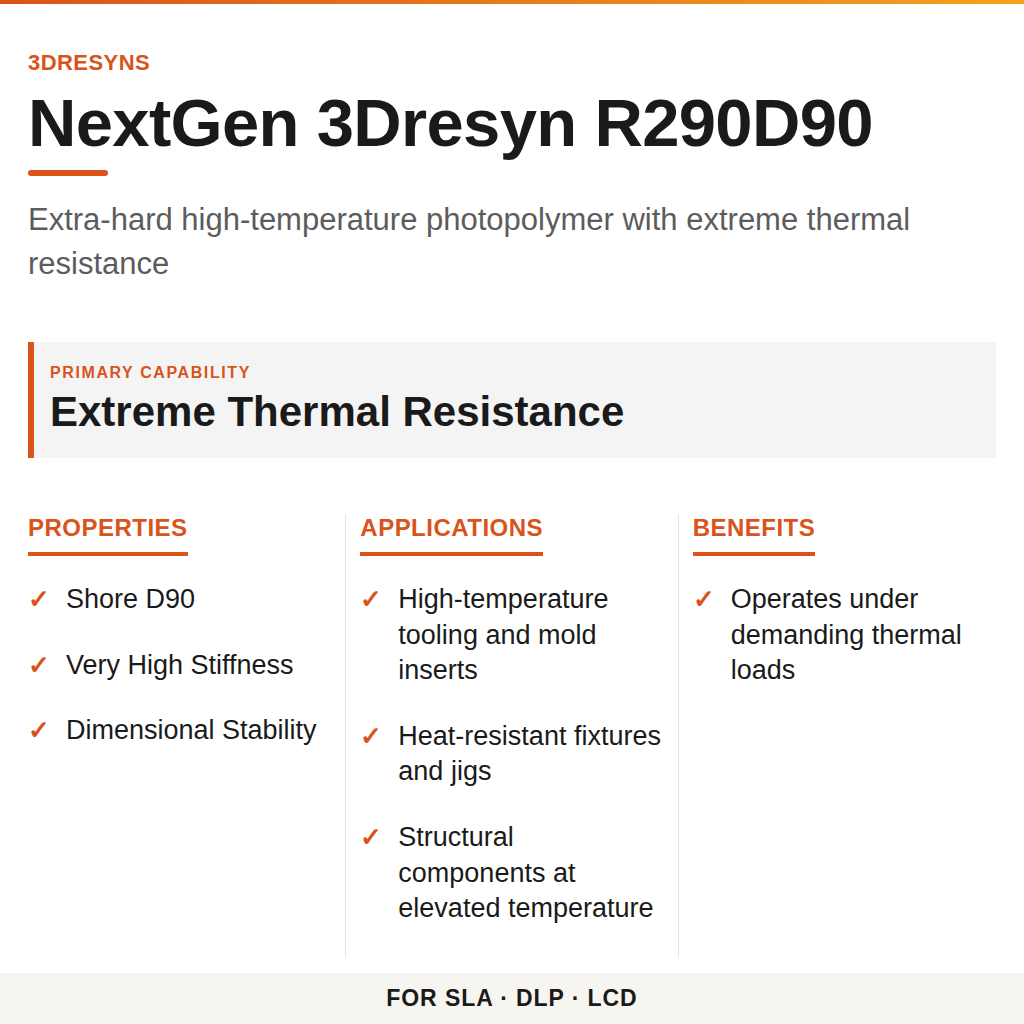
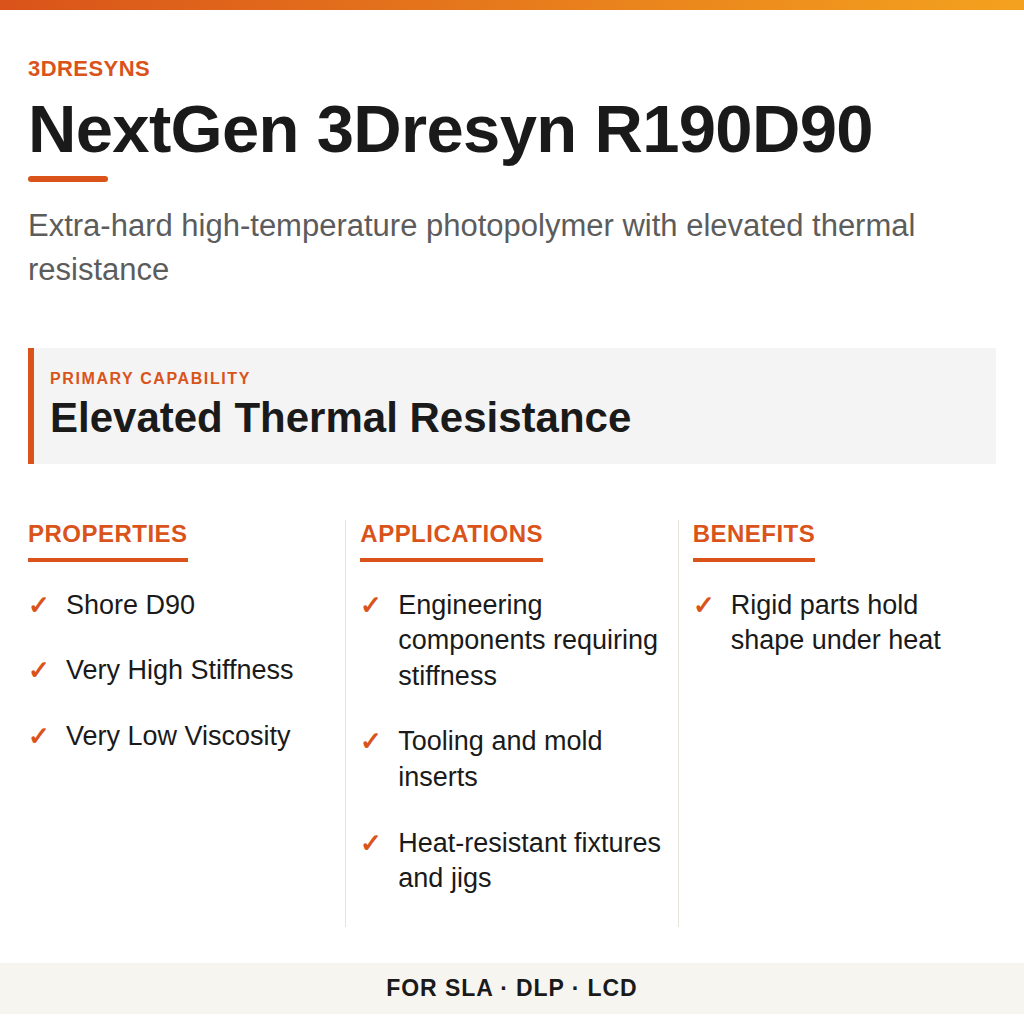
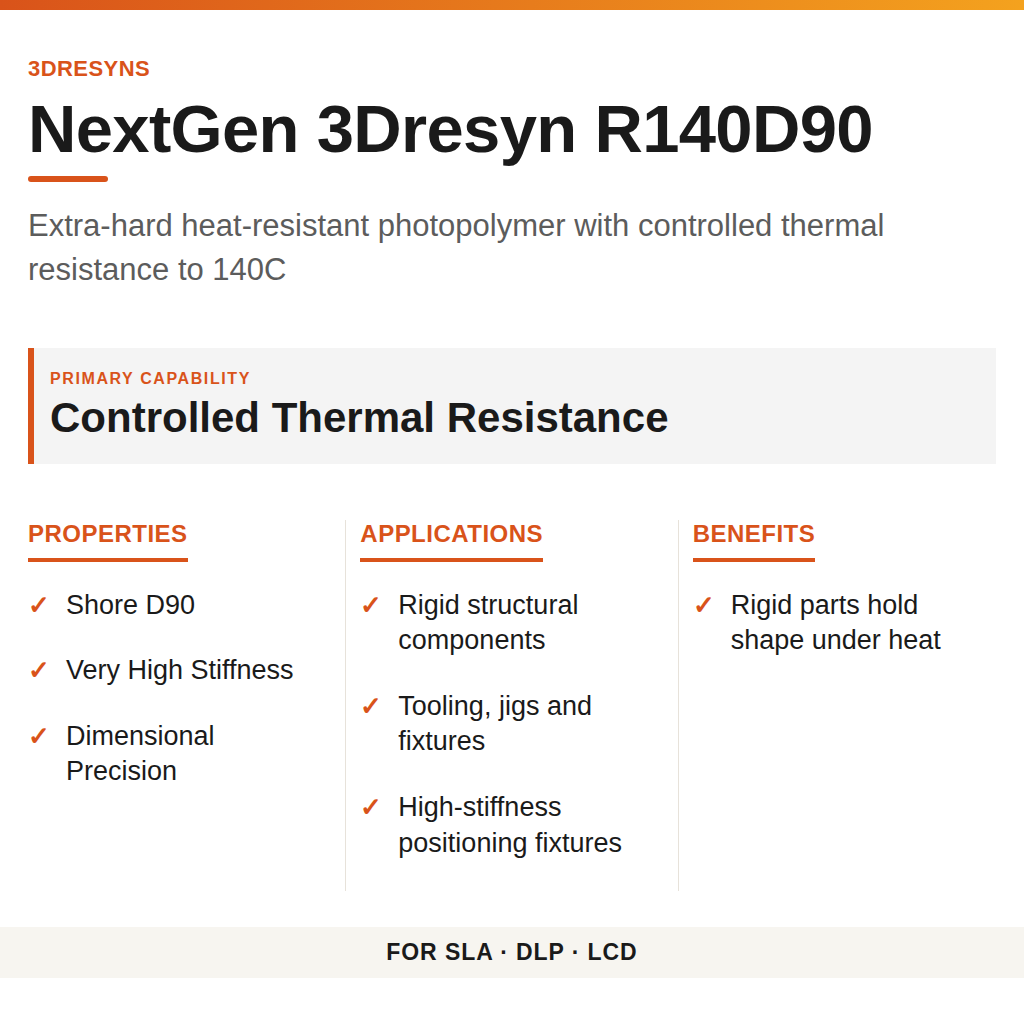
Need maximum heat resistance and rigidity → choose R290D90, R190D90 or R140D90
-
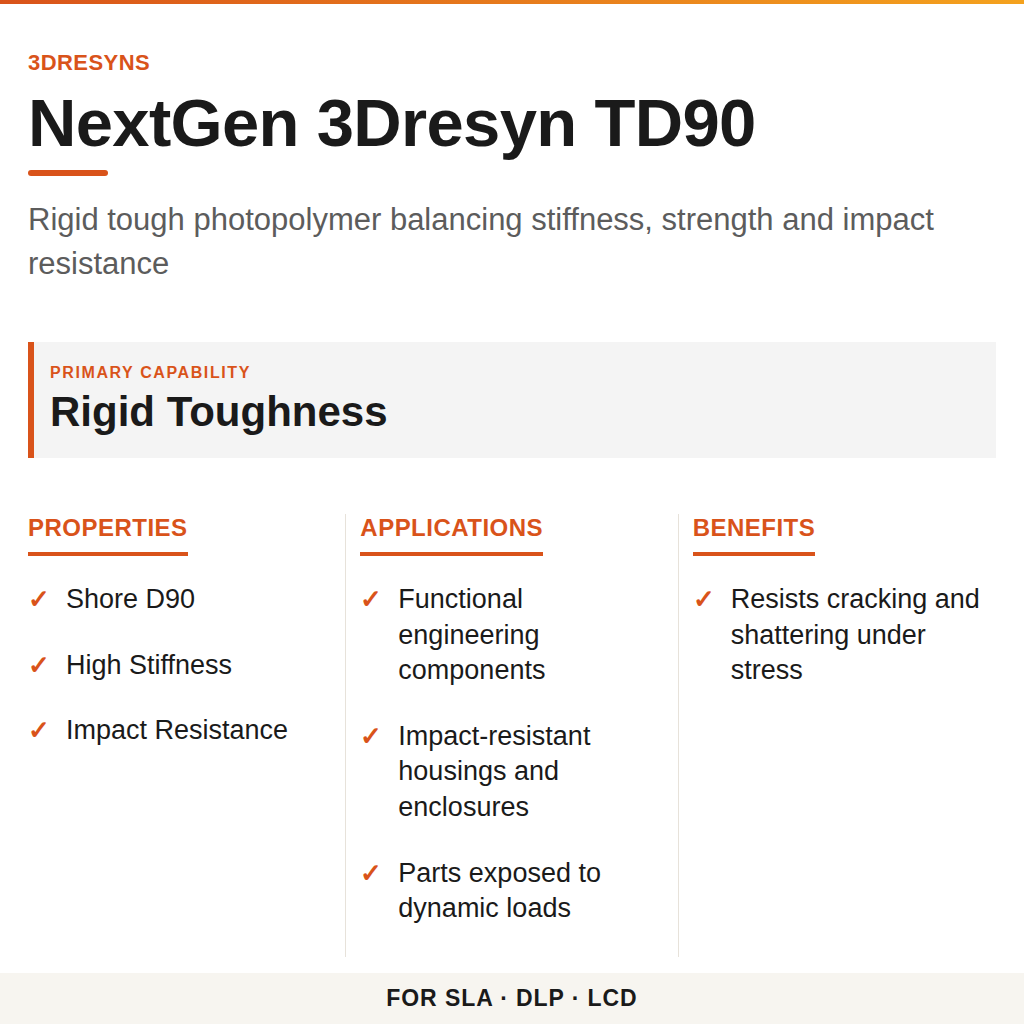
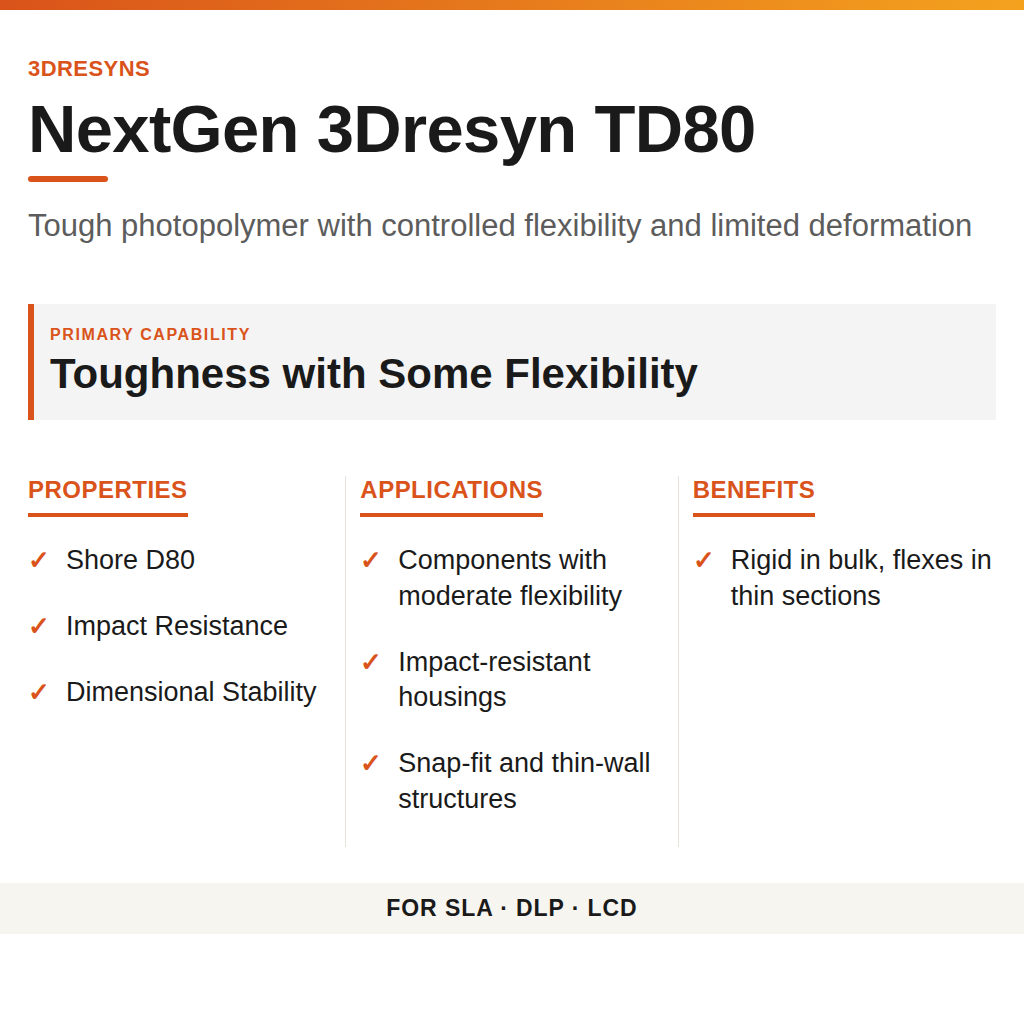
Need structural toughness with high strength → choose TD90 or TD80
-
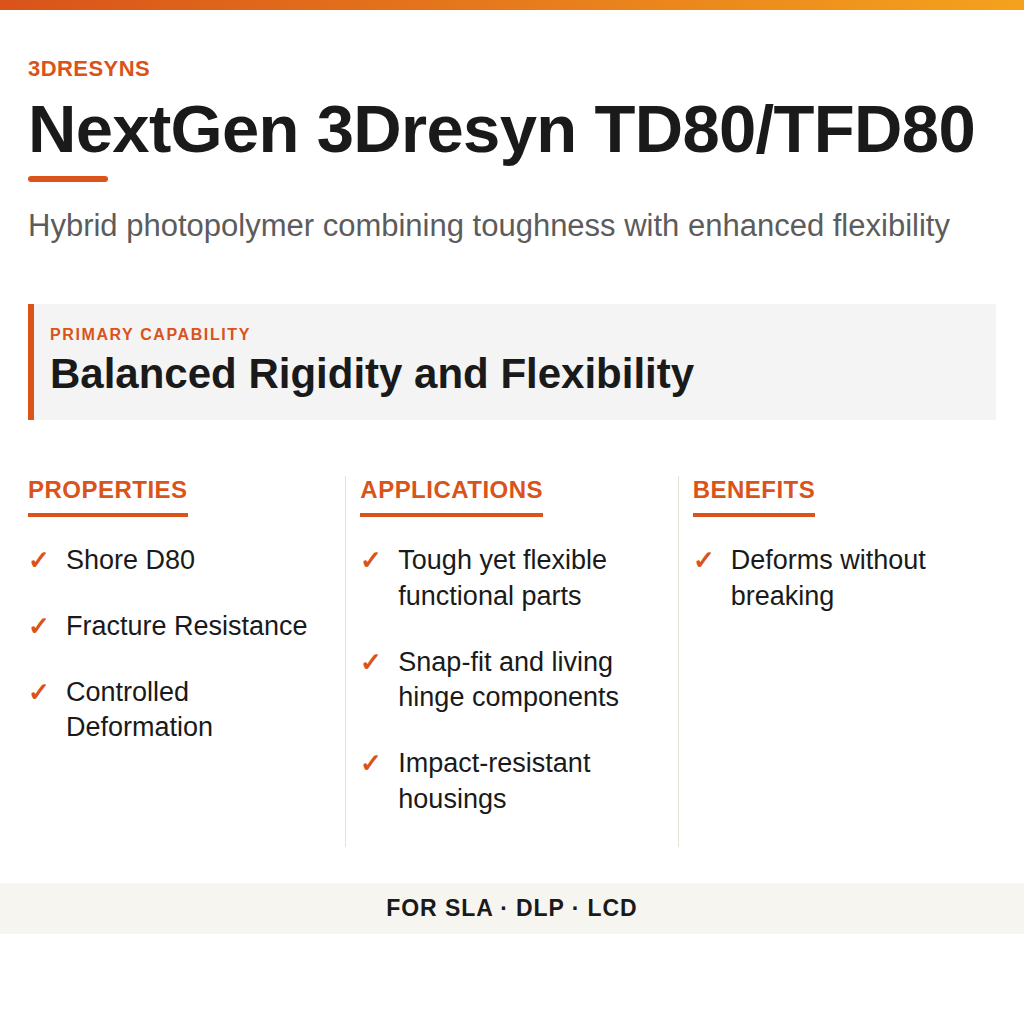
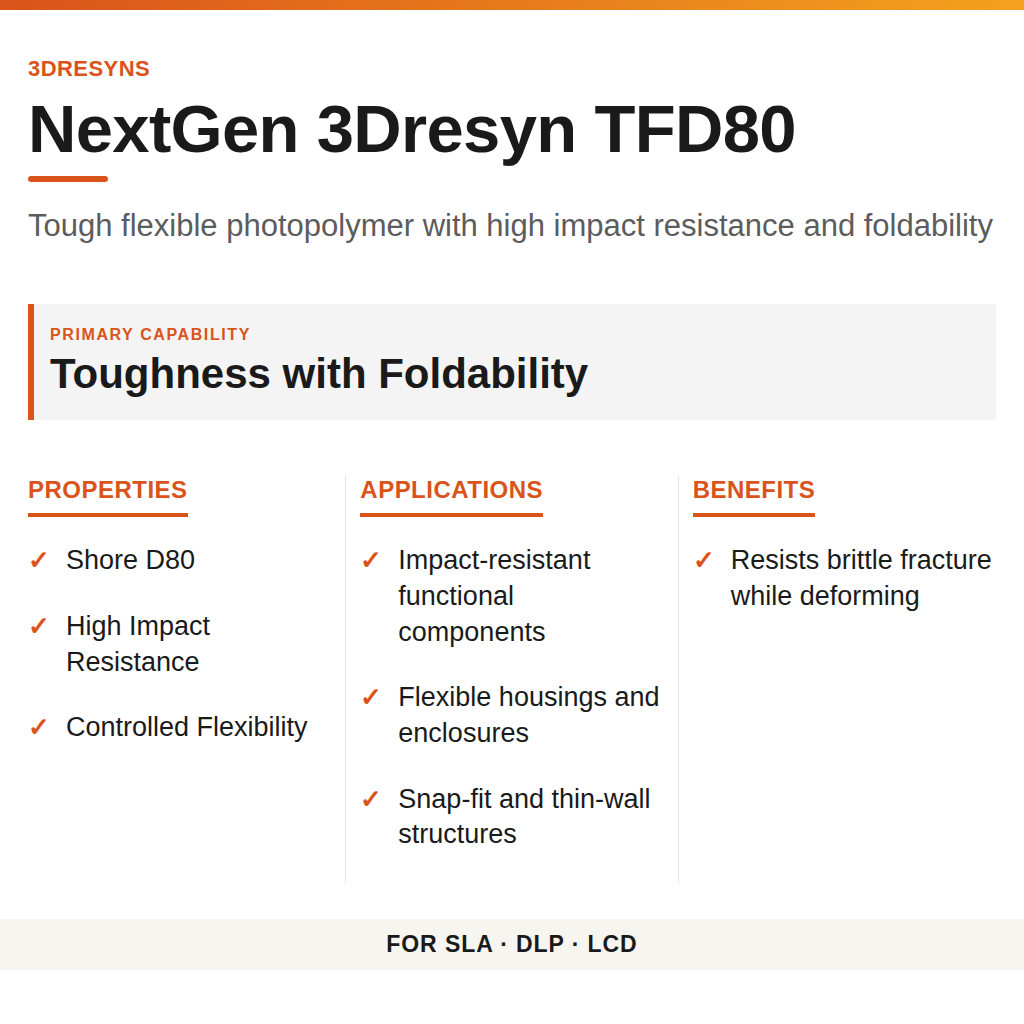
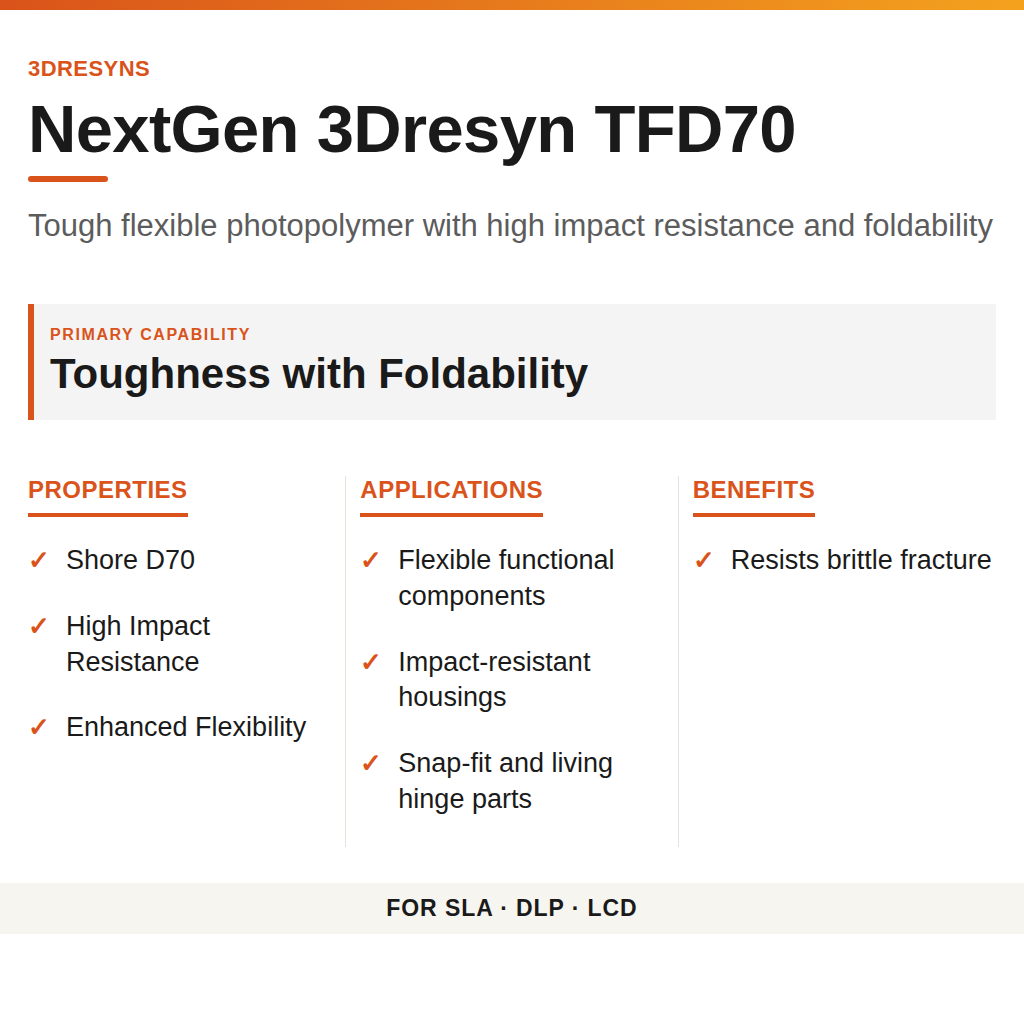
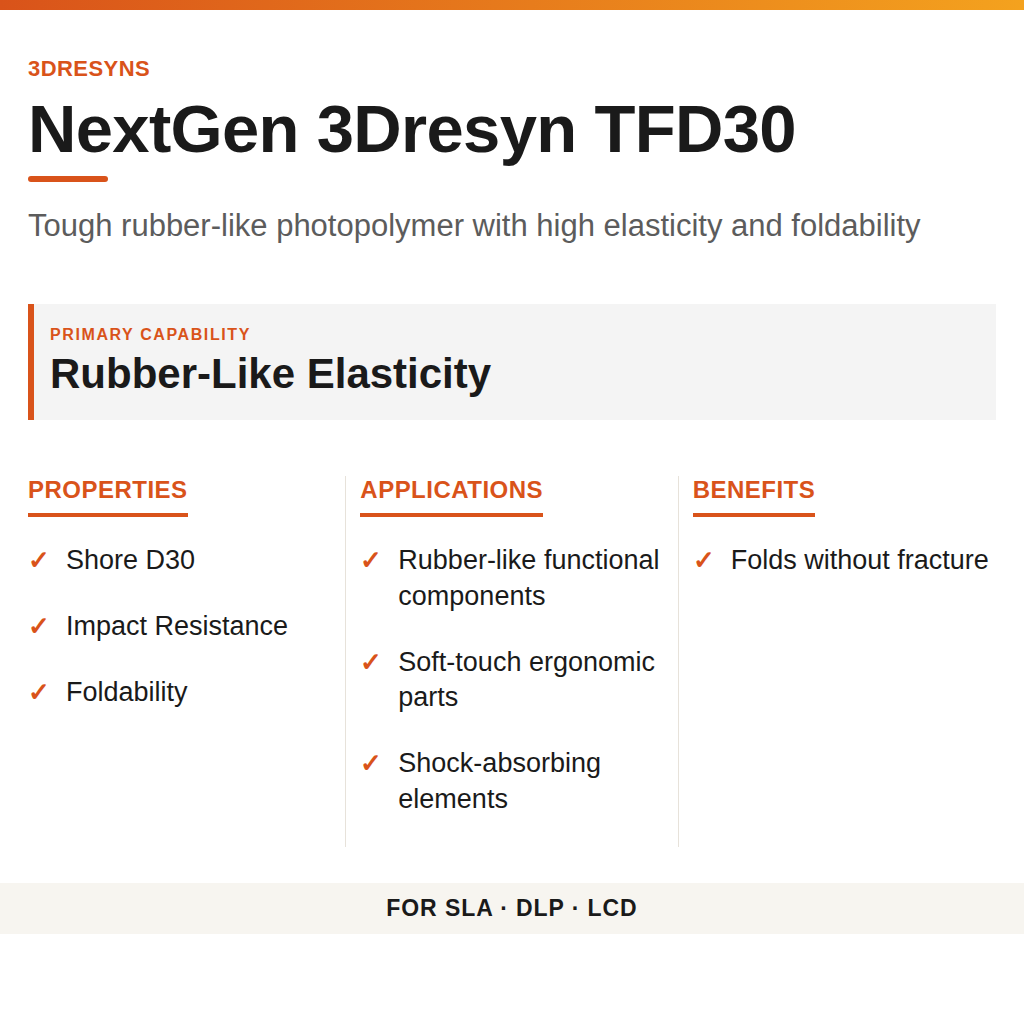
Need semi-rigid or foldable behaviour → choose TD80/TFD80, TFD80, TFD70 or TFD30
-
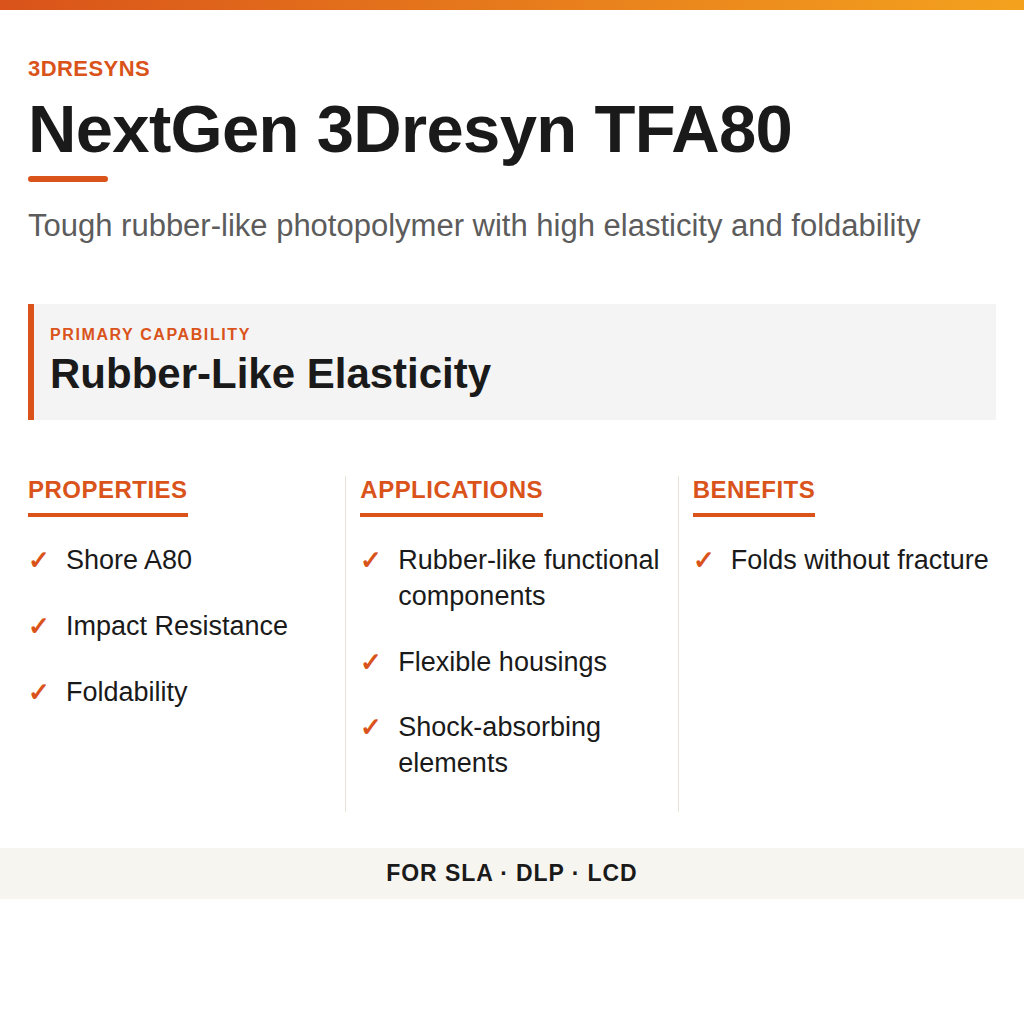
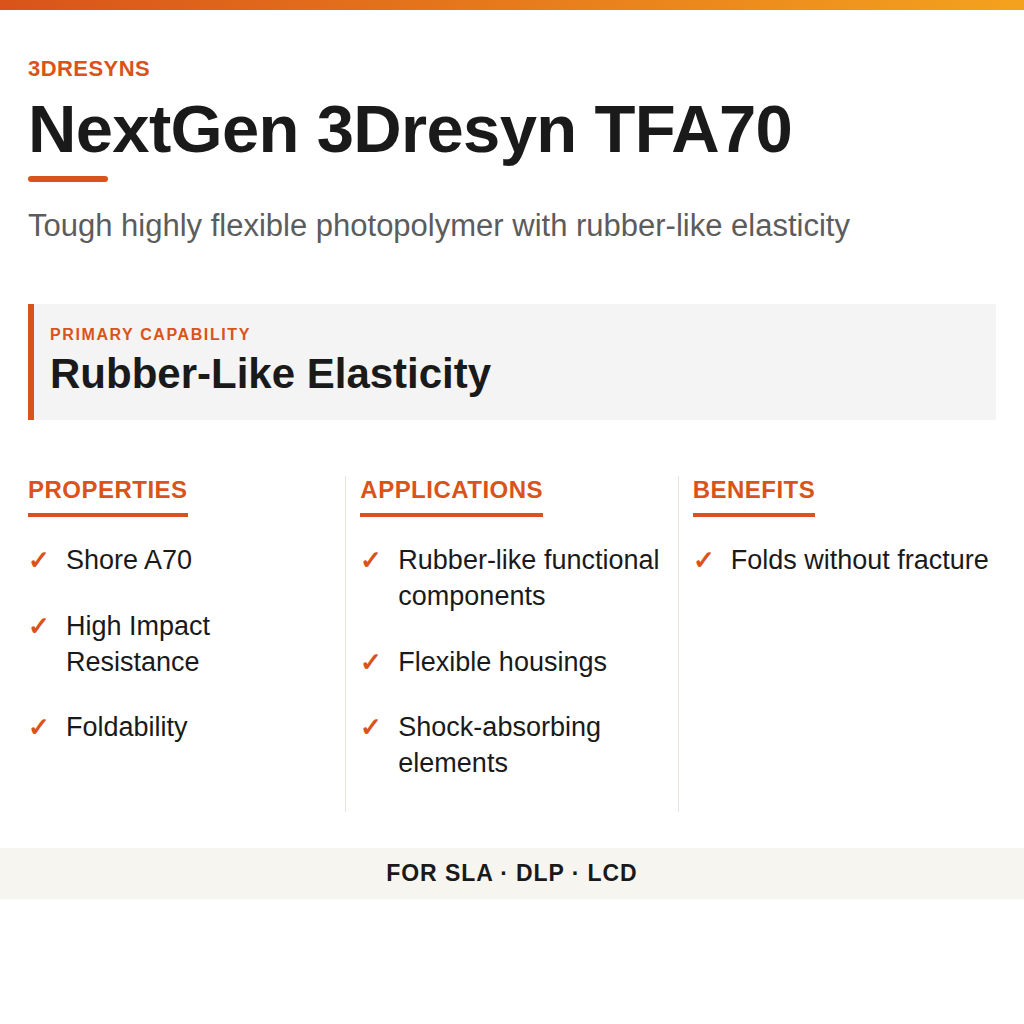
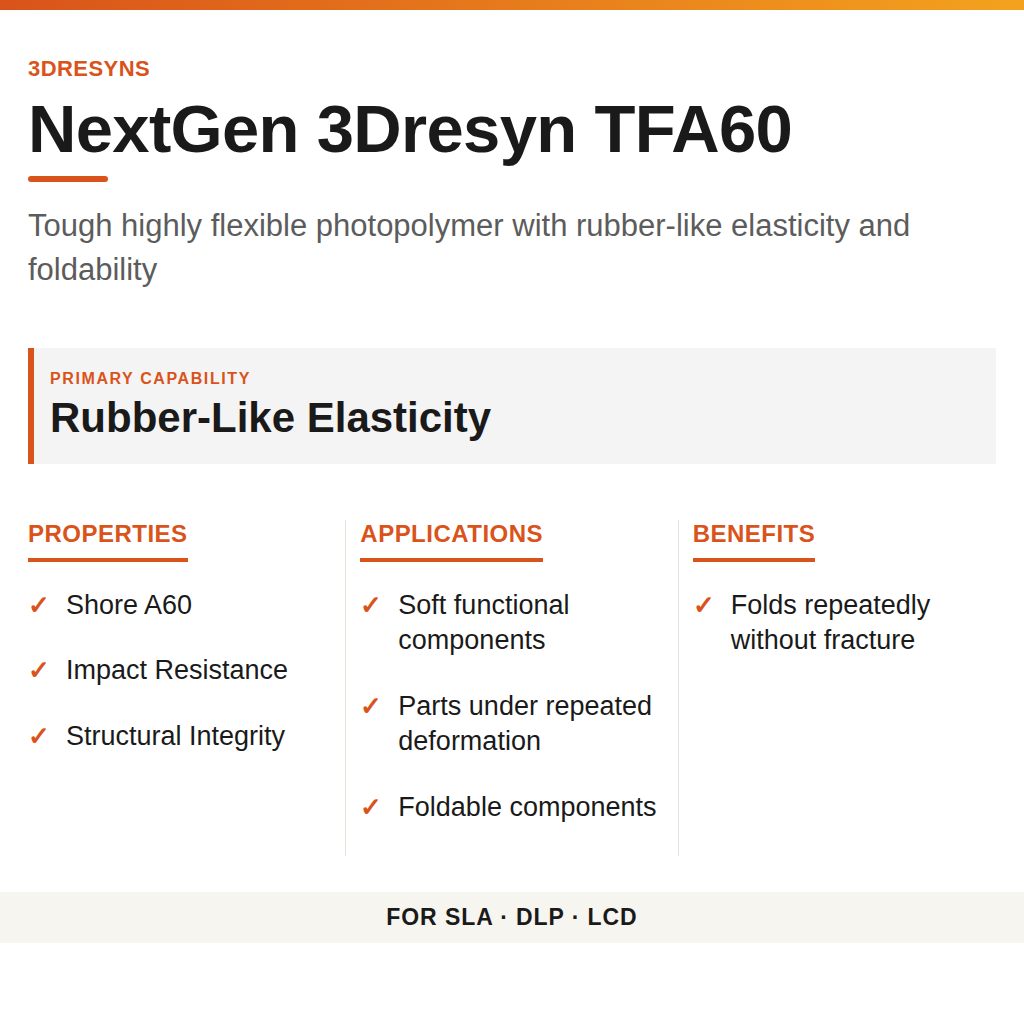
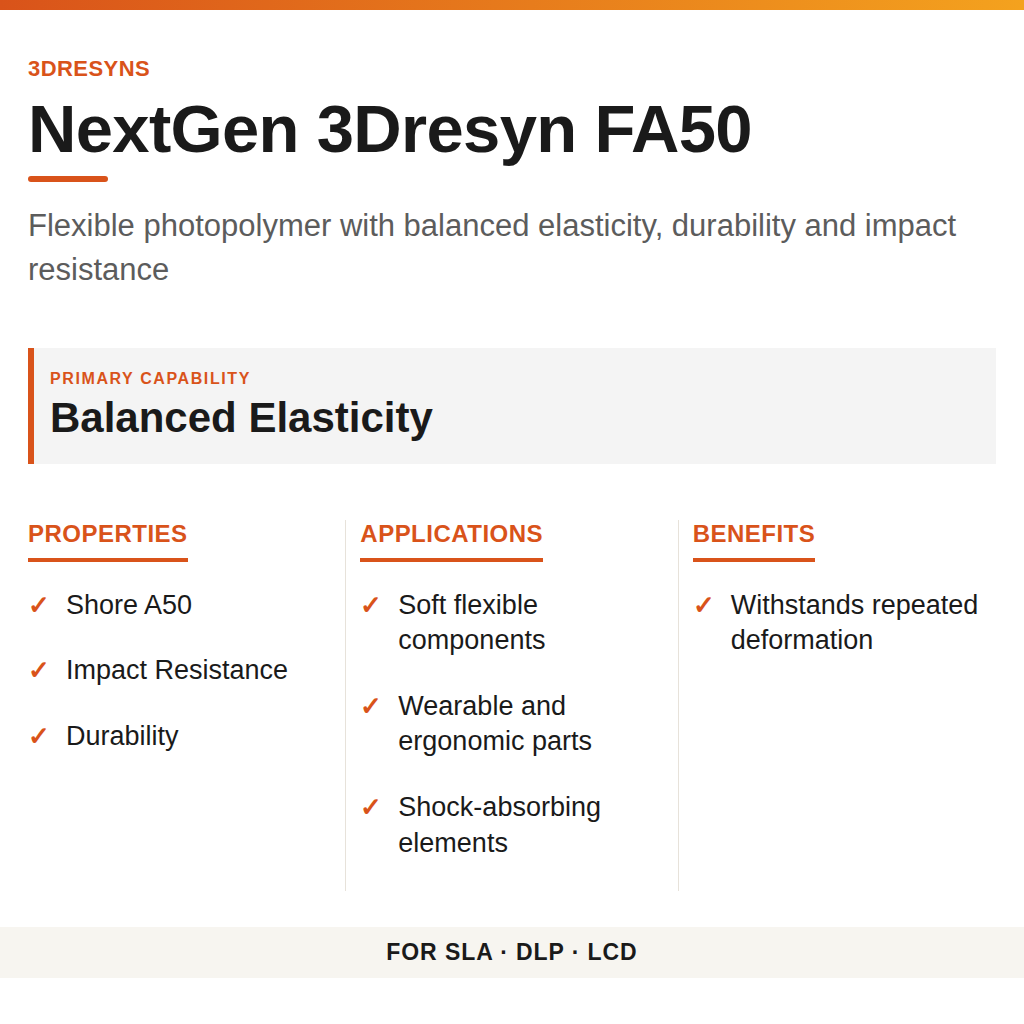
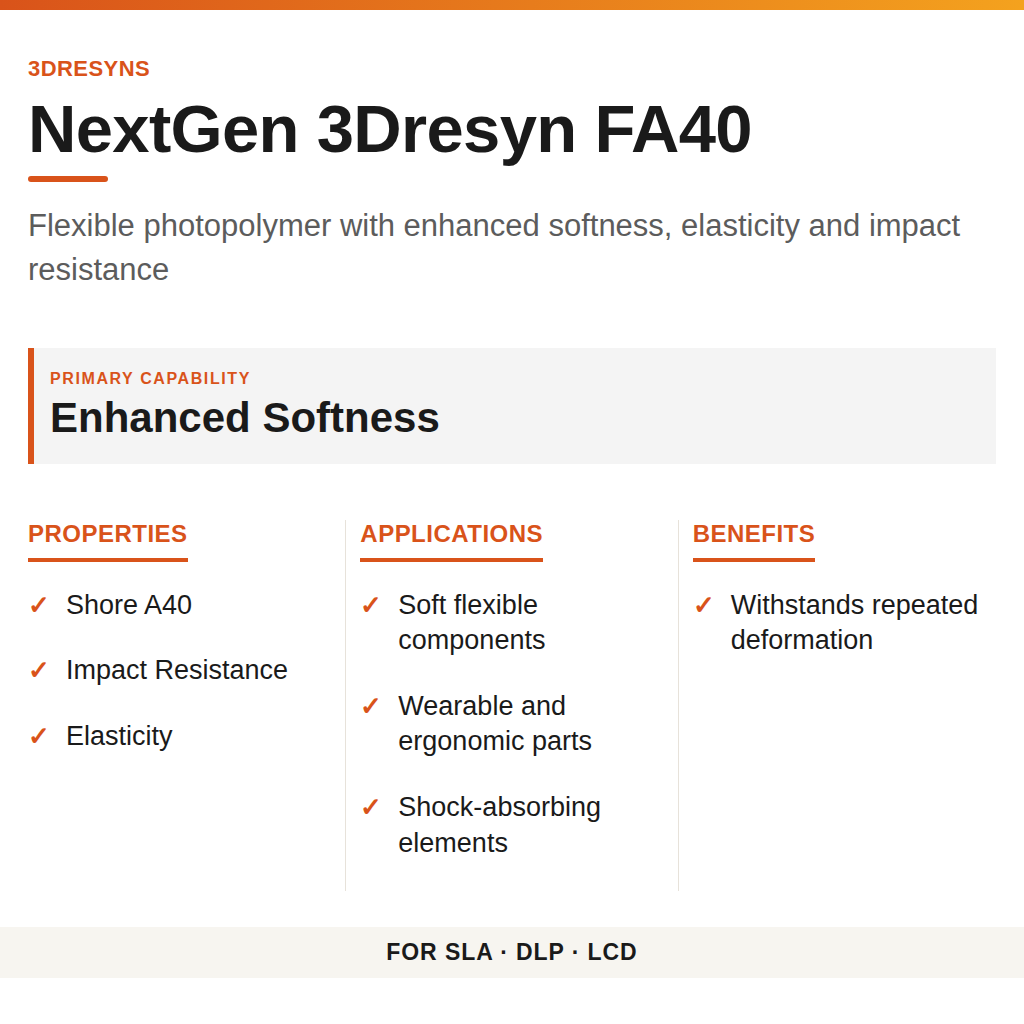
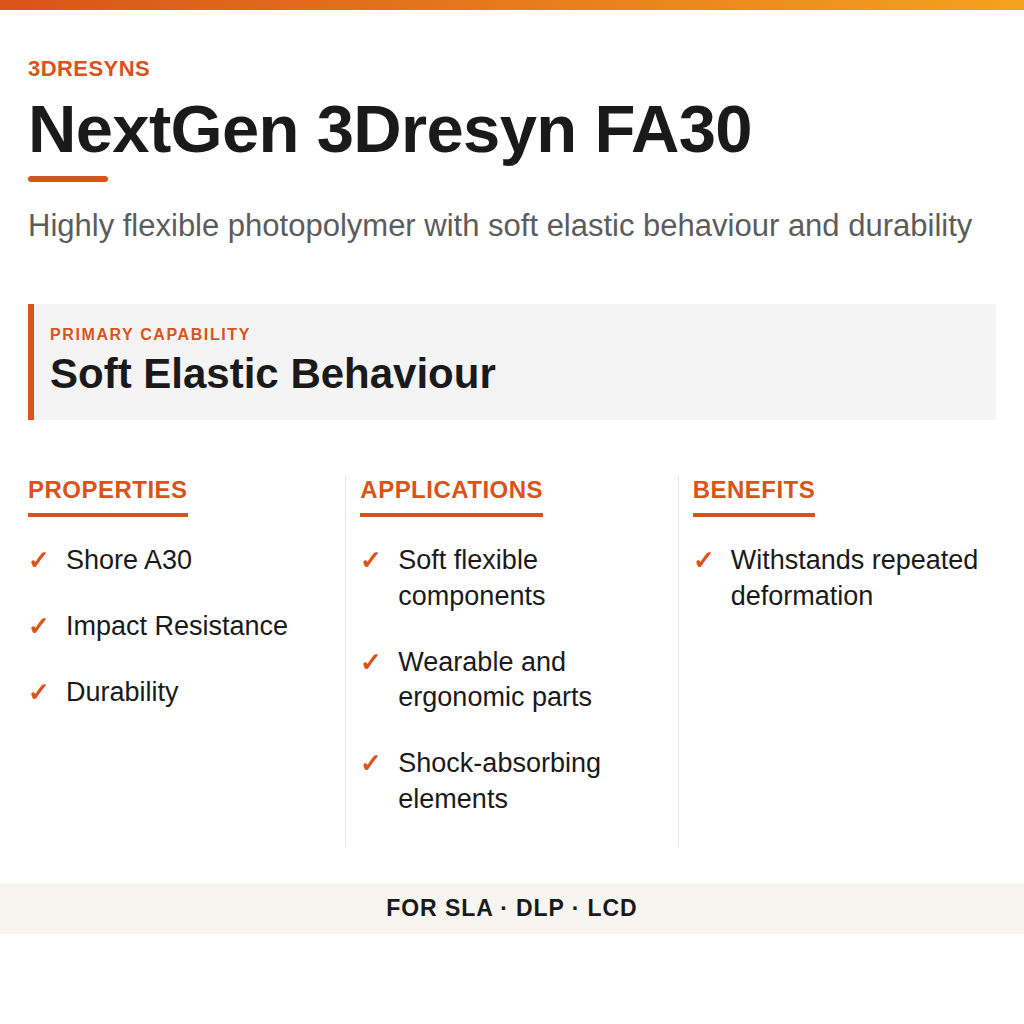
Need soft flexible behaviour → choose TFA80, TFA70, TFA60, FA50, FA40 or FA30
-
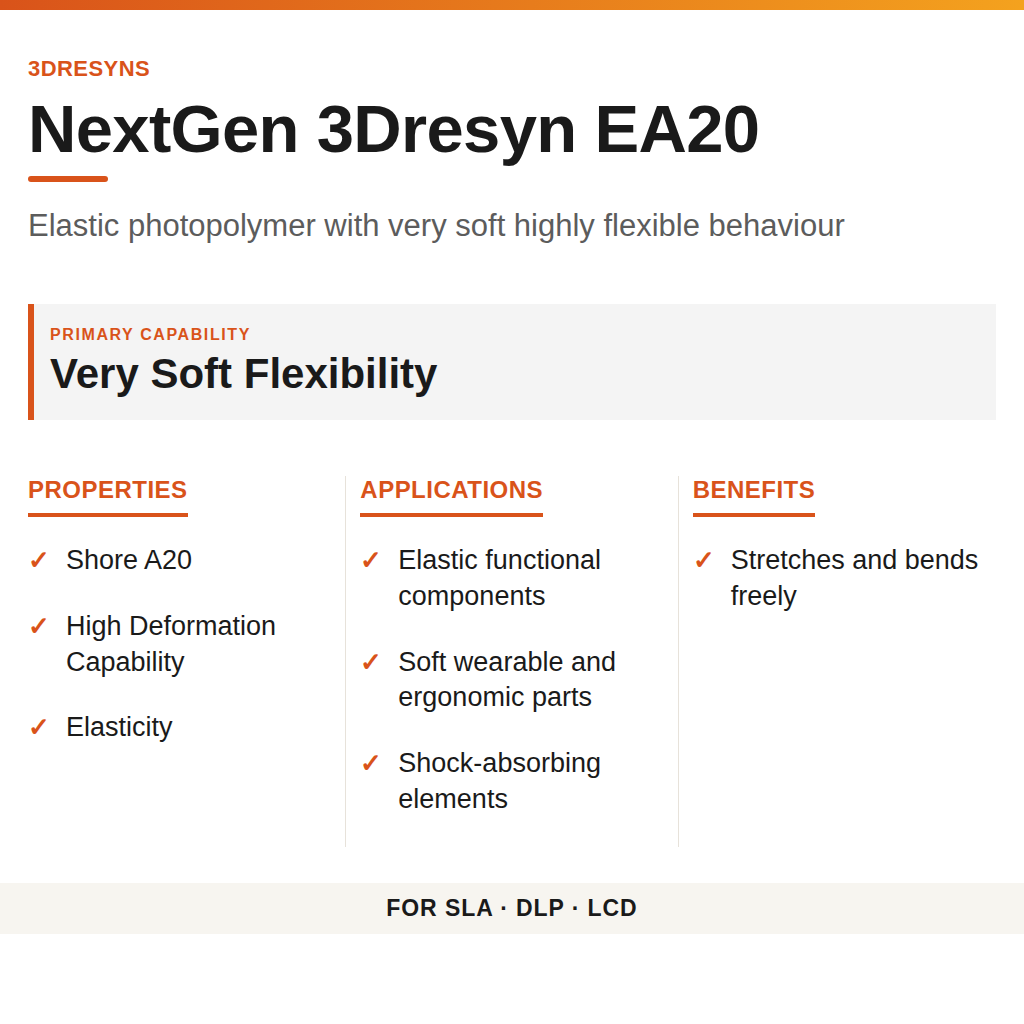
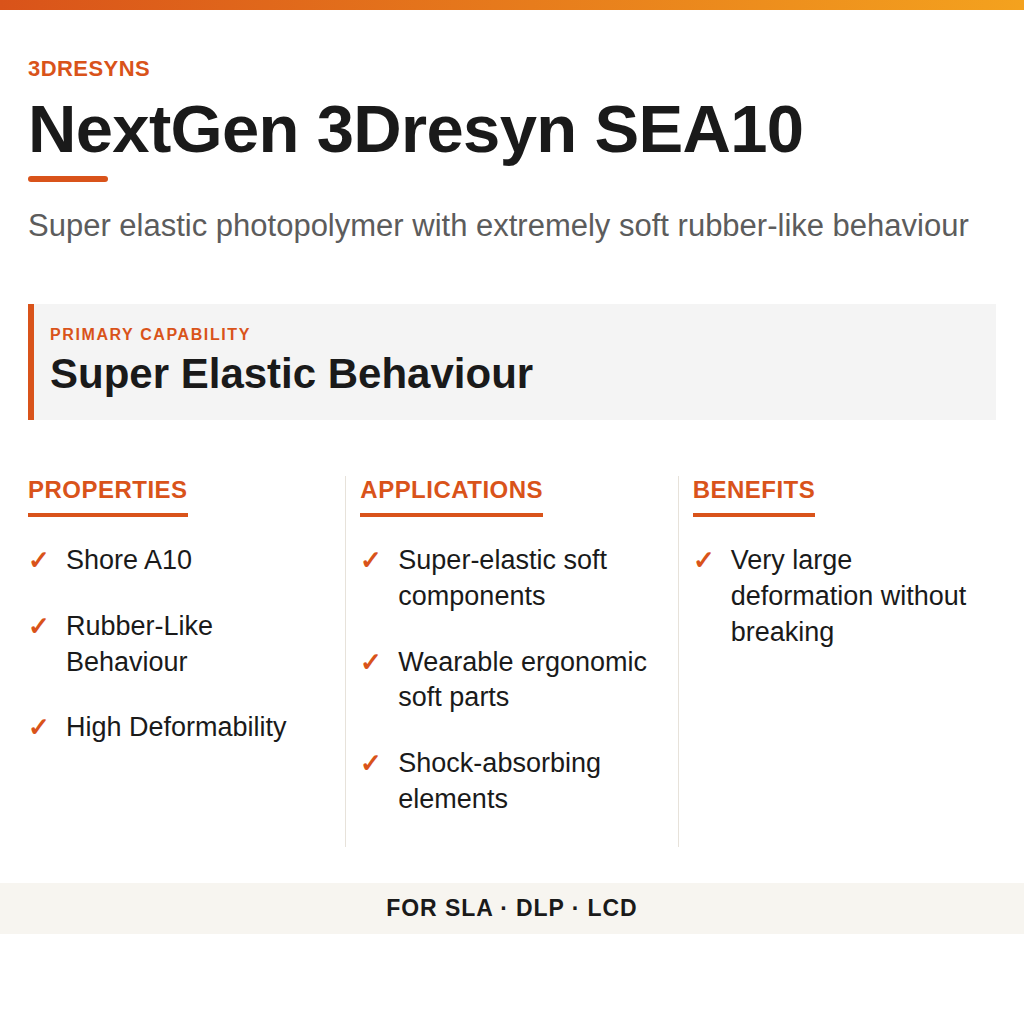
Need very high elasticity → choose EA20 or SEA10
Workflow principle
Performance comparison depends on functional response in service
These materials should be selected by combining thermal resistance, stiffness, strength and allowable deformation according to the actual part function.
The NextGen platform is best interpreted as a structured engineering system for functional prototype selection, material benchmarking and performance-driven design validation.
Not sure if this is the right performance level?
Next generation engineering resins balance toughness, rigidity, thermal resistance and printability for functional parts and advanced prototyping.
They are ideal when standard materials are insufficient, but full thermoplastic-like performance is not required.
Compare engineering resin tiers →
NextGen material comparison table
Use the table below to compare the products in this collection by key thermomechanical and mechanical properties.
Mobile: scroll horizontally to view all columns. The first column remains visible while scrolling.
Mechanical properties can vary depending on light wavelength and power, printer settings, post-curing conditions, post-processing and the overall workflow used to produce the final part.
These NextGen materials should be understood as a structured engineering platform for selecting performance by functional behaviour. Final suitability must always be validated for the intended geometry, loading condition, temperature range and manufacturing workflow.